Best Toys for Autistic Kids: By How They Play (And Why Lining Them Up Counts)
The toys that work for how autistic kids actually play: construction for visual-spatial builders, open-ended tactile play, cause-and-effect, visual tracking, and figures for collectors and liners-up. Plus why lining up toys is real play, and the electronic-toy caution.
Key Takeaways
- Autistic play is real play. Lining up cars, sorting by color, spinning wheels, and watching marbles drop are legitimate, developmentally meaningful play styles, not deficits to train away. The best toys work WITH how your child plays instead of demanding a different child.
- Buy by play function, not age grading: construction toys for visual-spatial builders, open-ended tactile materials, cause-and-effect toys for kids building the I-did-that connection, visual-motion toys for watchers, and realistic figures for collectors, sorters, and world-builders.
- Open-ended beats single-outcome. A toy with one right way to play (press the button, hear the song) exhausts itself fast; tiles, sand, tracks, and figures get played a hundred ways across years, including ways the box never imagined.
- Go easy on electronic toys. Research comparing electronic and traditional toys found electronic ones reduce the back-and-forth interaction between parent and child during play, which is exactly the ingredient autistic kids benefit from most.
- The toy is also the bridge. Parallel play beside your child with the same materials, narrating without demanding, is how many autistic kids let a parent into their play world; the right open-ended toy gives you both something to do there.
The toy aisle has a theory about your child: that play means pretend tea parties, turn-taking games, and toys used the way the box intends. Then your kid spends forty minutes arranging dinosaurs in a perfect arc by size, and some voice (a relative, a feed, a worry in your own head) asks whether that's "really playing."
It is. Arranging, sorting, watching, spinning, pouring, and lining up are real play styles with real developmental content, and the best toys for autistic kids are the ones that work with those styles instead of demanding different ones. This guide sorts toys by play function, the way your child actually uses them:
| How your kid plays | The toy category | Our pick |
|---|---|---|
| Builds, stacks, makes patterns and structures | Magnetic construction | MAGNA-TILES Classic 32 |
| Touches everything, pours, molds, squishes | Open-ended tactile material | Kinetic Sand 3.25lb |
| Pushes, pulls, pops, repeats: I-did-that play | Cause-and-effect toys | Nutty Toys pop tubes |
| Watches motion: wheels, water, things that drop | Visual tracking builds | Marble Genius run |
| Collects, sorts, lines up, builds little worlds | Realistic mini figures | Safari Ltd TOOB sets |
| Lives inside one deep interest | More of exactly that interest | The special-interest rule below |
The Reframe That Makes Toy Buying Easy
Most toy disappointment in autism households comes from buying against the child's play style: the elaborate pretend set for a kid who sorts, the turn-taking game for a kid who parallel-plays, the talking robot for a kid who covers their ears. Watch a week of your child's actual play and you'll see the pattern: builder, toucher, watcher, sorter, repeater, or some mix. Buy more capacity for what they already do, and the toy gets used for years.
Two rules sharpen it. Open-ended beats single-outcome: tiles, sand, track, and figures get played a hundred ways; a press-the-button toy does one thing until it bores. And the special-interest rule from the gift guide applies double to toys: the deeper version of the current obsession (the next TOOB of animals, the expansion set, the field guide) is the most reliable purchase in existence. That gift guide covers the occasion side of all this, who's buying, unwrapping accommodations, what to tell grandparents; this page is the everyday-play side.
A Caution About Electronic Toys
Worth its own section because the marketing points the other way. Research comparing electronic toys with traditional toys and books (a JAMA Pediatrics study of parent-toddler play) found that during electronic-toy play, parents talked less and responded less, and children vocalized less. The interaction the toy replaces is precisely the ingredient autistic kids, especially those building communication, benefit from most. Add the sensory-overload risk of lights and sounds for sound-sensitive kids, and the default tilts firmly toward unpowered, open-ended materials. Not a ban: a beloved electronic toy a seeker adores can stay. But when in doubt, buy the toy without the battery compartment. And when a screen genuinely is needed, for AAC or downtime, that becomes a hardware question rather than a toy one, which the durable tablet guide and its kid-proof case companion cover.
How We Chose
By play function, not age grading or trend. Picks earn their place by being genuinely open-ended (playable many ways across years), tolerant of autistic play styles (a marble run doesn't care if you watch it forty times; tiles don't object to being grouped by color), durable in real households, and free of forced audio. No invented star ratings.
Toys That Fit How Your Kid Plays
For the builder and pattern-maker: MAGNA-TILES Classic
The most-recommended construction toy in autism parent communities, for concrete reasons: tiles snap together with magnets (instant success, no fine-motor gatekeeping), the translucent colors reward sorting and pattern-making as much as building, and the same box serves a 3-year-old stacker and a 10-year-old architect. Flat-laying patterns, color-sorting, and symmetrical builds are all first-class ways to play here, which is exactly the point.

MAGNA-TILES Classic 32-Piece Magnetic Set
For the toucher: Kinetic Sand
The open-ended tactile material that behaves predictably: it molds, slices, and pours the same way every time, which makes it a sensory experience a cautious kid can control completely. It's the classic calm-down and focus station, it contains better than most messy play (the resealable bag matters), and for tactile-defensive kids it's often the bridge material, interesting enough to touch, never sticky or wet. Pair it with the sensory-friendly activities rotation for rainy days.
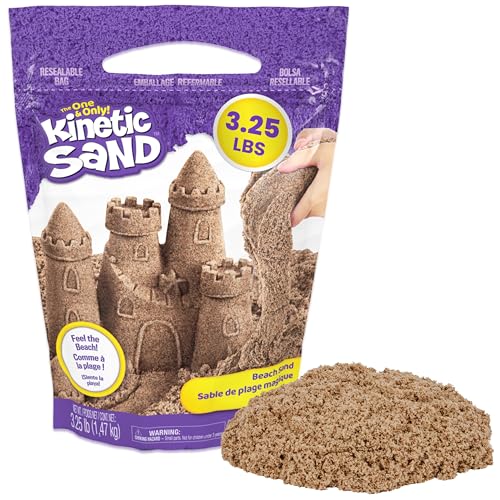
Kinetic Sand 3.25lb Beach Play Sand (Resealable)
For the cause-and-effect player: pop tubes
Push, pull, pop, bend, connect, repeat: pop tubes are pure I-did-that play, with a satisfying physical and auditory response to every action. That loop (my action caused that result) is foundational play for toddlers and for any child building agency, they double as fine-motor work and fidgets, and an 8-pack means siblings and parallel play work without negotiation. The best dollar-per-play-hour ratio on this list.
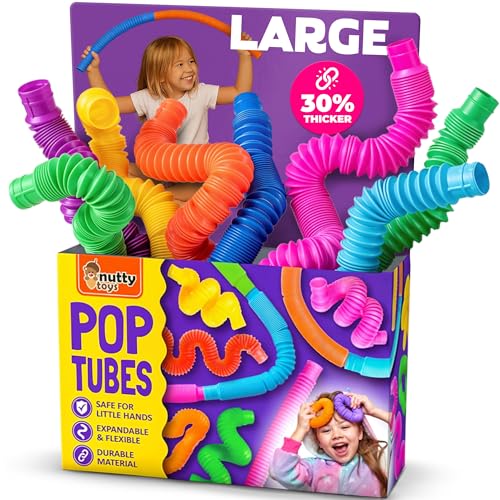
Nutty Toys Pop Tubes (Large 8-Pack)
For the watcher: a marble run
Some kids' deepest play is visual: watching wheels, water, and things that drop and roll. A marble run honors that completely, build the track (construction play), drop the marble (cause-and-effect), watch the run (visual tracking, as many times as the watching needs to happen). It's also the rare toy that scales socially: solo watching, parallel building, and eventually taking turns dropping marbles, all on the child's timeline. Same shrinking-visual fascination that makes visual timers work, pointed at joy instead of transitions.

Marble Genius Marble Run Super Set (150 Pieces)
For the collector, sorter, and world-builder: Safari Ltd TOOB figures
Tubes of small, realistic, hand-painted figures (dinosaurs, ocean animals, farm animals, dozens of themes), and the answer to the lining-up question in product form. They sort, they sequence, they populate little worlds, they march in arcs by size, and because they're anatomically faithful rather than cartoonish, they feed the encyclopedic side of animal special interests too. Start with the theme matching your child's current interest; the dinosaur tube is the classic for a reason.

Safari Ltd Dinos TOOB (12 Hand-Painted Mini Figures)
How to Play With a Kid Who Plays Differently
The toys above share a property: they support parallel entry. Sit beside your child with the same materials and do what they're doing: line up your own figures, build your own tile stack, pour your own sand. No questions, no redirection, no script. For many autistic kids this is the door into shared play; they notice, they tolerate, and on their own timeline they include you (handing you the next piece is a social milestone disguised as logistics). Sharing a favorite toy with another child usually comes much later than sharing with you, and when that day is close, a short sharing social story can explain the part that worries most kids: the toy comes back after the other child's turn. If your child is building communication, these materials also create natural requesting moments; the AAC guide covers giving them a channel for it. Play activity cards can give those moments a visual prompt for choosing what to play next.
And keep the toy in its lane: play differences alone are not a crisis, but if you're seeing them alongside the broader pattern (communication, social engagement, sensory differences), the signs guides walk what does and doesn't distinguish them.
The Bottom Line
Watch how your child already plays, then buy more capacity for exactly that: tiles for the builder, sand for the toucher, pop tubes for the repeater, a marble run for the watcher, figure sets for the sorter, and always, always the deeper version of the special interest. For the child whose play lives in their fingers, a busy board turns latches and buckles into fine-motor practice, and if forming letters is the hard part, the pencil grips guide covers the grips that help with letter formation. Skip the battery aisle by default, join the play on your child's terms, and let the dinosaur arc be the masterpiece it is.
Products Mentioned in This Article
MAGNA-TILES Classic 32-Piece Magnetic Set
Kinetic Sand 3.25lb Beach Play Sand (Resealable)
Nutty Toys Pop Tubes (Large 8-Pack)
Marble Genius Marble Run Super Set (150 Pieces)
Safari Ltd Dinos TOOB (12 Hand-Painted Mini Figures)
Prices and availability are accurate as of the date/time shown and are subject to change. Any price and availability information displayed on Amazon at the time of purchase will apply to the purchase of this product.
Sensory overwhelm shows up differently in every child.
Beacon learns about YOUR child and gives guidance specific to them.
What Would Beacon Say?
"What sensory strategies actually work for my child?"
Beacon factors in your child's specific sensitivities (sound, light, texture, movement) and current regulation, then builds a sensory plan you can start tonight.

Spectrum Unlocked Editorial Team
Editorial Team
The Spectrum Unlocked editorial team combines lived experience as autism parents with research-backed guidance to create resources families can trust.
Frequently Asked Questions
- What are the best toys for an autistic child?
- The ones matched to how the child already plays. For builders and pattern-makers: magnetic tiles and construction sets. For tactile players: kinetic sand and moldable materials. For kids building cause-and-effect understanding: pop tubes and responsive toys. For watchers: marble runs and motion toys. For collectors, sorters, and liners-up: sets of realistic mini figures. Open-ended toys with no single right way to play outperform single-outcome electronic toys almost universally, and anything connected to the child's special interest beats everything else on this page.
- Is lining up toys instead of playing with them a problem?
- Lining up toys IS playing with them. Arranging, sorting, sequencing, and creating visual order is a real play style with real developmental content: classification, spatial reasoning, pattern-making, and the deep satisfaction of a completed system. It's also one of the recognizable signs of autistic play, which is why parents get told to worry about it, but the consensus among neurodiversity-affirming clinicians is to join it rather than disrupt it. Sit down, hand your child the next piece, line up your own row. Entering their play on its own terms builds more connection than redirecting it ever will.
- What toys should I avoid for an autistic child?
- Three categories earn caution. Loud, flashing electronic toys: beyond the sensory-overload risk for sound-sensitive kids, research comparing toy types found electronic toys reduce parent-child verbal interaction during play, which is the most valuable thing play produces. Single-outcome toys that do one trick and exhaust themselves within a week. And toys far above your child's current play stage bought aspirationally; a board game requiring turn-taking a child doesn't have yet becomes a frustration object, not a stretch goal. None of these are absolute rules; a beloved light-up toy a sensory-seeking child adores is a fine thing.
- What are good toys for a nonverbal autistic 3 year old?
- Toys that don't assume speech as the entry ticket: cause-and-effect toys (pop tubes, poppers, anything with a satisfying physical response), tactile materials like kinetic sand, simple construction like magnetic tiles, and motion toys like marble runs. Two bonuses worth engineering: toys that naturally create requesting moments (pieces you hand over one at a time create natural AAC or gesture practice), and parallel-play-friendly materials where you can play alongside without demanding interaction. Speech level says nothing about play intelligence; assume competence and watch what they gravitate toward.
- Are electronic learning toys good for autistic toddlers?
- Less than the packaging promises. A study in JAMA Pediatrics comparing electronic toys with traditional toys and books found that during electronic-toy play, parents talked less, responded less, and children vocalized less, exactly the interaction ingredients early communication grows from. Electronic toys also tend to be single-outcome (press, light, song, repeat), which exhausts play value fast. They're not poison; a sound-tolerant kid who loves a particular electronic toy can keep it. But dollar for dollar, open-ended materials plus an engaged adult outperform anything with a battery.
- How do I play with my autistic child who ignores me when I try?
- Stop trying to redirect their play and start joining it. Sit beside them, take the same kind of toy they're using, and copy what they're doing: line up your own cars, build your own tile stack, pour your own sand. No questions, no instructions, minimal narration. This parallel-play entry respects the autistic interaction style, and for many kids it's the door: they notice, they tolerate, eventually they include. The toys that support it are the open-ended ones where two people can do the same thing side by side without negotiating a script.