
Best Teacher Gifts: What Teachers Say They Actually Want
Two surveys of teachers say the same thing: the mug is not the problem, the twentieth mug is. Nine gifts teachers ask for, sorted by job, most under $20.
Key Takeaways
- The problem was never the mug. It is the twentieth mug. In one survey of teachers, mugs were both the most commonly received gift (67.5%) and the gift most often named as unwanted (62.5%), which is a statement about volume rather than taste. One mug chosen for a specific person lands beautifully. The fifth one that year does not.
- The gift teachers rate highest costs nothing. In a survey of 800 US teachers, a handwritten card or letter was the most loved gift at 51.5%, ahead of cash or gift cards at 45.25%. Have your child write the note, and let it be specific about one thing the teacher did.
- Classroom supplies are the biggest gap between what teachers want and what they get. They rank third among most-loved gifts at 32.88%, yet only 22.5% of teachers report receiving them. Almost nobody buys the thing teachers are quietly paying for themselves.
- Spend less than you think. 43.4% of teachers said $10 to $20 is a reasonable amount and 24.1% said under $10, so a thoughtful small gift is not a compromise, it is the actual preference.
- Pool the money if you can. A class of families putting in $5 each buys the one useful thing no individual family would think to buy, and it saves the teacher a cupboard of duplicates.
There is a measurable gap between what parents buy teachers and what teachers say they want, and it is bigger than you would guess. In one survey, mugs were the single most commonly received gift, landing with 67.5% of teachers. In the same survey, mugs were also the gift teachers most often named as one they receive but do not particularly want, at 62.5%. Meanwhile only 22.5% of teachers said they ever receive classroom supplies, which is a category teachers rank among the things they love most.
That gap is this whole guide. Below is what the survey data actually says, then nine gifts drawn from the categories teachers ask for, most of them under $20.
What Teachers Actually Say, In Numbers
Two independent surveys, one of 800 US teachers by Study.com and one of a teacher community by Miss Jacobs Little Learners, agree more than they disagree:
- A handwritten note wins. It was the most loved gift at 51.5%, ahead of everything that costs money. Have your child write it, and make it specific.
- Gift cards come second. 45.25%, valued for flexibility, and teachers frequently spend them on the classroom rather than themselves.
- Classroom supplies come third. 32.88% name them among the most loved, and only 22.5% ever receive any. This is the biggest gap on the list.
- The least wanted are alcohol (38.88%), homemade food (34.63%), and trinkets or knick-knacks (32.13%). Note that mugs are not on that list. Volume is the mug's problem, not the mug.
- Small is fine. 43.4% said $10 to $20 is a reasonable amount, 24.1% said under $10, and 20.6% said price does not matter.
- The thought genuinely counts. 85% of teachers rated the thought behind a gift 4 or 5 out of 5 for importance.
How these picks were chosen. No lab, no invented survey of our own, and no claim that Spectrum Unlocked polled anybody: the numbers above come from two published surveys, both linked at the bottom so you can read them yourself. The products are drawn from the categories teachers actually rate highly, checked live and in stock on Amazon on the date at the bottom of this page. Prices and stock move, so confirm on the listing.
The Best Teacher Gifts, Sorted by the Job

Best gift for the teacher who has everything: a handwritten note
It is free, it is first in the data, and it is the only gift on this page a teacher is likely to still have in ten years. The trick is specificity. "Thank you for being a great teacher" is pleasant and forgettable. "Thank you for noticing when I was struggling with reading and never making a thing of it in front of everyone" is the one that goes in the drawer and stays there.
Have your child write it in their own handwriting, mistakes included. If your child does not write, they can draw, sign, stamp, or dictate it to you. If your child is not able to communicate their own message, write what you have observed instead, because a parent noticing the specific thing a teacher does is just as rare and just as welcome.
There is nothing to buy here, and it outranks everything below.
Best small gift teachers actually ask for: Paper Mate Flair Pens
If there is one item teachers name unprompted, it is these. They are the pens teachers use for grading, planning, and anything they want to look nice, and they are consumable, which means there is no such thing as owning too many. A 24-count set lands under twenty dollars, which is exactly the range most teachers named as reasonable.
This is the safest small gift on this page: useful, used up, and impossible to already have too many of in a way that matters.

Paper Mate Flair Felt Tip Pens, Medium Point, Assorted Colors, 24 Count

Best gift nobody thinks to give: Scotch Thermal Laminating Pouches
Here is the 22.5% gap made concrete. Teachers laminate constantly, they usually buy the pouches themselves, and no one has ever given them a box as a gift. A 200-count box costs less than a decent candle and will be gone by spring. (If the teacher does not own a machine yet, the laminator guide covers which one to pair the box with.)
This is doubly true in a special education classroom, where visual schedules, choice boards, task cards, and labels all get laminated so they survive daily handling. If your child is in a self-contained or resource room, this is close to the most useful thing you can hand over.

Scotch Thermal Laminating Pouches, Letter Size, 3 mil, 200-Pack

Best gift for a class to pool for: Amazon Basics Thermal Laminator
The classic pooled-gift problem is that twenty families each buy a small thing and the teacher receives twenty small things. Twenty families putting in a few dollars each buys one machine the teacher uses every week for years, and most classrooms either share one down the hall or the teacher owns one personally.
Pair it with the pouches above and you have covered a genuine running cost of the job. Ask the teacher or the room parent first whether the room already has one, because two laminators is its own version of the mug problem.
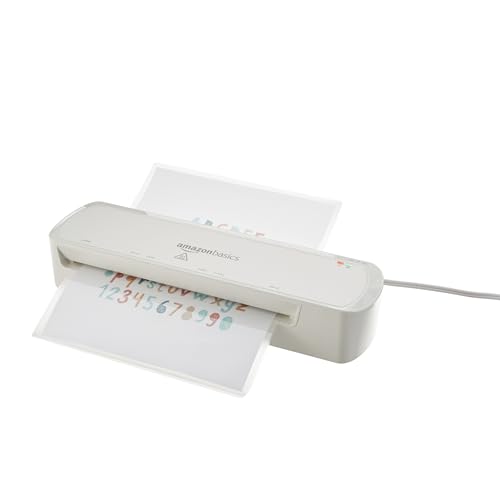
Amazon Basics 9-Inch Thermal Laminator Machine
Best gift for a special education classroom: VELCRO Brand Sticky-Back Dots
Hook-and-loop dots are the currency of a special education room. Every visual schedule, every first-then board, every token strip, and every choice board is held together by them, and they are consumed constantly as materials get remade for new students and new routines.
A general education teacher will find a use for these. A special education teacher will genuinely be pleased, because it is the specific thing they run out of and quietly reorder themselves.

VELCRO Brand Sticky-Back Dots, 250 Sets
Best under-$10 gift: EXPO Dry Erase Markers
If your budget is under ten dollars, which a quarter of teachers said is perfectly reasonable, buy the thing that runs out fastest. Dry erase markers die constantly, get borrowed, and are the single most common thing a teacher discovers they are out of at the worst possible moment.
Low odor is the version to buy, because the teacher is standing next to them all day in a room that may not have windows that open.
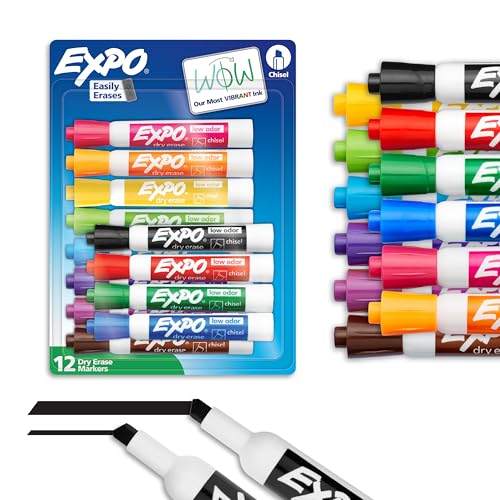
EXPO Dry Erase Markers, Low Odor Ink, Assorted Colors, Chisel Tip, 12 Count
Best desk-drawer staple: Post-it Super Sticky Notes
Another consumable that no teacher has ever thrown away. Sticky notes do the daily work of a classroom: reminders on a desk, a quiet prompt for a student who cannot be called out loud, labels on the board, notes home. They cost very little, and a multipack lasts a term.
A small, honest gift that will be used up entirely, which is the highest compliment a classroom item can receive.

Post-it Super Sticky Notes, 3 x 3 in, Neon Fizz, 6 Pads, 70 Sheets Per Pad
Best gift for the teacher who laminates everything: KTRIO Sheet Protectors
The cheaper cousin of lamination and, for a lot of daily materials, the better one, because the page can be swapped out. Slide a worksheet in, write on it with a dry erase marker, wipe it, reuse it tomorrow. That single habit saves a teacher a stack of photocopies a week.
Useful in any classroom, and particularly in rooms running the same routine sheets every day.

KTRIO Sheet Protectors 8.5 x 11, Top Loading, 50 Pack
Best reusable upgrade: Dry Erase Pockets
The purpose-built version of the sheet-protector trick, with a sturdier sleeve and a proper seal. Teachers use them for morning work, math practice, name tracing, and any activity a student repeats often enough that printing it daily is wasteful.
A practical, slightly more generous gift that still sits in the range most teachers named, and one that reduces the teacher's own printing costs for years.

SUNEE Oversized Reusable Dry Erase Pocket Sleeves, 10 x 14 in, 30-Pack
Best gift a teacher would never buy themselves: Time Timer MOD
Almost everything above is a consumable the teacher is already paying for. This one is different: a visual countdown timer that shows time remaining as a shrinking colored wheel, so a child who cannot yet read a clock can still see how long is left.
It is a genuinely useful classroom tool, it is the kind of thing that lives on a school purchase-order wish list and never quite gets bought, and it costs about what a nice candle costs. In a special education or early years classroom it is not a novelty, it is a transition support that prevents the meltdown at the end of an activity. Spectrum Unlocked's guide to sensory strategies for the classroom covers where a visual timer fits alongside the rest.

Time Timer MOD Home Edition (Rainbow Wheel)
Gifts for Male Teachers
This gets asked constantly, and the answer is slightly deflating: there is no separate list. The three categories teachers rate highest, a note, a gift card, and classroom supplies, are not gendered in any way, and every item above works exactly the same.
The reason the question comes up at all is that the physical teacher-gift shelf in most shops is florals, candles, and pastel mugs, so parents shopping that shelf hit a wall. The fix is to stop shopping that shelf. Buy the pens, buy the pouches, or hand over a gift card to somewhere specific he has actually mentioned, which reads as far more thoughtful than a generic card precisely because it proves someone was listening.
If You Teach Or Support A Special Education Classroom
The general advice holds, but a self-contained or resource room has a different consumption pattern and it is worth knowing.
Everything gets laminated, and then remade. Visual supports cover far more of the day than in a general education room, and they are rebuilt as students change and routines change. Pouches, velcro dots, and sheet protectors are not filler gifts in this room, they are the actual running costs.
The classroom is not the only person to thank. Special education rooms usually run with paraprofessionals and aides who are with your child all day, sometimes more directly than the teacher, and who are very often given nothing at all. If an aide works with your child, a small gift card and a note that names what they specifically do is unusual enough that people remember it for years. This is the single highest-impact suggestion on this page and it costs almost nothing.
Ask before buying anything sensory. Fidgets, weighted items, and sensory tools look like obvious gifts for these rooms, and they are the ones most likely to be wrong: what regulates one child overloads another, and teachers are careful about what enters the room. Ask first, or give the gift card and let the teacher choose.
If you are putting together a bigger list, Spectrum Unlocked's guides to special education classroom must-haves and setting up a self-contained classroom cover what these rooms actually run on, and the classroom wishlist guide is the version where the school or the PTA is paying.
What To Skip, And Why It Is Not Really About The Mug

The survey data is fairly blunt about what does not land, and it is worth reading carefully, because the popular version of this advice is unfair to mugs.
Alcohol. The most disliked category at 38.88%, and the reasons are obvious once stated: the teacher may not drink, may be in recovery, or may simply find a bottle from a family awkward to accept.
Homemade food. Disliked by 34.63%, which surprises people, and it is not about your baking. A teacher receiving food from twenty households has no way to know about kitchens, allergies, or how long something sat in a bag, and most quietly throw it away and feel guilty about it.
Generic trinkets. 32.13%. Anything whose entire concept is that it says teacher on it. This is the real category the mug complaint belongs to.
And the mug itself, which deserves a fair hearing. Mugs are not hated. In the Study.com survey, personal items including mugs and candles were actively liked by 27.5% of teachers, and one teacher described a favorite gift as a mug from a student who had noticed how much coffee she drank, given with a gift card. The mug was fine. The noticing was the gift. What teachers are tired of is the twentieth undifferentiated one in a season, which is a volume problem, not a taste problem. If you want to give a mug, put a gift card in it and have your child write why they picked that one.
If You Have $5, $20, Or $50
Around $5. A handwritten note, which is the top-rated gift in the data anyway, plus dry erase markers. You are not underspending, you are buying exactly what was asked for. If several families can each spare that much, the coordinated version of this idea is its own guide: our Teacher Appreciation Week plan turns twenty $5 contributions into one gift that beats everything on this page.
Around $20. The note plus one consumable from the list, or a $20 gift card to somewhere specific. This is the range most teachers named as reasonable, and it is where the best value on this page sits.
Around $50, or a pooled class gift. The laminator, a class set of books for the classroom library, or a larger gift card explicitly marked for the classroom. At this level, coordinate with other families rather than going alone, and check with the room parent so the teacher does not end up with two of something.
And if you are a teacher reading this rather than a parent shopping for one, the guide to the best shoes for teachers covers the purchase no one will ever buy you and your feet will thank you for.
Survey figures on this page come from two published sources, neither of them ours: Study.com's survey of 800 US teachers, conducted December 7 to 10, 2024, and the Miss Jacobs Little Learners teacher gifts survey of its teacher community. Spectrum Unlocked did not run a survey and does not claim one. Product availability and prices checked against live Amazon listings on August 8, 2026.
Some links on this page are affiliate links. If you buy through them, we may earn a small commission at no extra cost to you.
Products mentioned in this article
Paper Mate Flair Felt Tip Pens, Medium Point, Assorted Colors, 24 Count
Scotch Thermal Laminating Pouches, Letter Size, 3 mil, 200-Pack
Amazon Basics 9-Inch Thermal Laminator Machine
VELCRO Brand Sticky-Back Dots, 250 Sets
EXPO Dry Erase Markers, Low Odor Ink, Assorted Colors, Chisel Tip, 12 Count
Post-it Super Sticky Notes, 3 x 3 in, Neon Fizz, 6 Pads, 70 Sheets Per Pad
KTRIO Sheet Protectors 8.5 x 11, Top Loading, 50 Pack
SUNEE Oversized Reusable Dry Erase Pocket Sleeves, 10 x 14 in, 30-Pack
Time Timer MOD Home Edition (Rainbow Wheel)
Prices and availability are accurate as of the date/time shown and are subject to change. Any price and availability information displayed on Amazon at the time of purchase will apply to the purchase of this product.
Need help preparing for YOUR next IEP meeting?
Beacon learns about YOUR child and gives guidance specific to them.
What would Beacon say?
"Help me prep for my IEP meeting"
If you asked Beacon "Help me prep for my IEP meeting" it would pull your child's goals, challenges, and history, and give you the exact questions to ask, red flags to watch for, and what to push back on.

Spectrum Unlocked Editorial Team
Editorial Team
The Spectrum Unlocked editorial team combines lived experience as autism parents with research-backed guidance to create resources families can trust.
Frequently asked questions
- What gifts do teachers actually want?
- Two independent surveys of teachers point the same way. A handwritten note from the student comes first, then a gift card, then supplies and resources for the classroom. In the Study.com survey of 800 US teachers, handwritten cards or letters were the most loved gift at 51.5%, cash or gift cards at 45.25%, and classroom-supporting gifts at 32.88%. The pattern behind those numbers is that teachers value things they can either keep forever at no cost, or actually use. What they are lukewarm about is decorative items that arrive by the dozen every December.
- Do teachers really not want mugs?
- It is more specific than that, and the distinction matters if you were about to buy one. Mugs are not disliked as objects. They are disliked as the fifth identical item in a season. In the Miss Jacobs Little Learners teacher survey, mugs were the most commonly received gift at 67.5% and also the item 62.5% of teachers named as received often but not wanted. In the Study.com survey, personal items including mugs and candles were actively liked by 27.5% of teachers. So a mug is fine when it is clearly chosen for that person, and it is much better when there is a gift card inside it. What you want to avoid is the generic version bought because it says teacher on the side.
- How much should I spend on a teacher gift?
- Less than most parents assume. Asked what a reasonable gift price is, 43.4% of teachers said $10 to $20, 24.1% said $0 to $10, and 20.6% said the price does not matter at all. Teachers are also acutely aware that families have different budgets and that they teach children from all of them, which is part of why an expensive gift can sit awkwardly. If your budget is tight, the highest-rated gift in the survey data is a handwritten note, and it is free. If you want to give something bigger, the efficient route is pooling with other families rather than stretching alone.
- What should I get a male teacher?
- The same things, and the honest answer is that the question usually comes from a gap in the gift aisle rather than a gap in preferences. The categories teachers rate highest, a note, a gift card, and classroom supplies, are not gendered at all, and the reason male teachers are harder to shop for is that the default teacher gift shelf is stocked with florals and candles. Skip the shelf and buy from the list below. If you want something personal rather than practical, a gift card to somewhere specific he has mentioned beats a generic one, because the specificity is the part that reads as thoughtful.
- What is a good gift for a special education teacher or a paraprofessional?
- A special education classroom burns through consumables at a rate a general education room does not, because visual supports cover more of the day and everything gets laminated, velcroed, and remade. Laminating pouches, hook-and-loop dots, and sheet protectors are genuinely welcome there in a way they might not be elsewhere. The other thing worth knowing is that paraprofessionals and classroom aides are frequently in the room all day and receive almost nothing, so if there is an aide who works with your child, including them is unusual and lands hard. A small gift card and a note naming what they specifically do is enough.
- Is a gift card impersonal?
- The survey data says teachers do not experience it that way; cash or gift cards ranked second among most loved gifts at 45.25%, behind only a handwritten note. The reason is flexibility. Teachers spend their own money on their classrooms, so a gift card often becomes something for the students rather than a treat for themselves. If it still feels impersonal to you, the fix is not to replace it with a trinket, it is to pair it with the note. A card your child wrote, tucked in with a gift card to a place the teacher actually goes, is close to the top of both surveys at once.
- Should we do a group gift from the whole class?
- If you can organize it, yes, and it solves the duplicate problem at the same time. Twenty families spending $5 each is a hundred dollars, which buys a laminator, a class set of books, or a genuinely useful piece of equipment the teacher would never expense. One family spending a hundred dollars alone is uncomfortable for everyone. Keep participation optional and the amount small enough that nobody has to explain why they are out, and let families who prefer to give their own note still do that. The gift that arrives instead of twenty separate small items is usually the one still in use years later.