The Best Laminator for Teachers: The Machine Matters Less Than the Pouches
The best laminators for teachers and homeschool families: a budget machine that does the whole job, the Scotch upgrade, a wide-format for anchor charts, and the pouch thicknesses that actually decide how your cards hold up.
Key Takeaways
- The pouch thickness matters more than the machine. A 3 mil pouch makes a flexible laminated sheet; a 5 mil pouch makes a stiff card. Most disappointing lamination is the right machine fed the wrong pouch.
- A budget machine genuinely does the job. Home thermal laminators all melt the same pouches; what you pay more for is width, speed, and warm-up time, not a better seal.
- Buy 5 mil pouches for anything a child will handle every day: picture cards, schedule pieces, token boards. Buy 3 mil for posters, labels, and anything that lives on a wall.
- A laminated worksheet plus a dry erase marker is a reusable page. For practice sheets a child repeats, laminating once replaces reprinting every week.
- If you make anchor charts or oversized visuals, buy width once. A 13 inch machine takes poster-sized paper that a standard 9 inch machine physically cannot.
Every laminator conversation in a staff room is about machines. Scotch or the cheap one, is the expensive Fellowes worth it. That is the less important half of the decision, because home thermal laminators all do the same thing: heated rollers melt the adhesive inside a pouch. What changes how your cards come out, and how they survive a classroom, is mostly the pouch you fed the machine.
So this guide covers both halves, machines and pouches, because they are one purchase pretending to be two.
The short answer
- Just need a laminator that works? The Amazon Basics 9 inch machine, and put the money you saved into pouches.
- Laminate every week? The Scotch PRO TL906. Same job, smoother and faster at it.
- Cards a child handles daily? Whatever the machine, use 5 mil pouches. This is the difference between a card and a floppy sheet.
- Anchor charts and oversized visuals? You need 13 inches of width. No 9 inch machine can do this, at any price.
- High volume, shared between rooms? The Fellowes Saturn 3i: wider, quicker to warm up, built for the workload.
Pouch thickness is the real decision
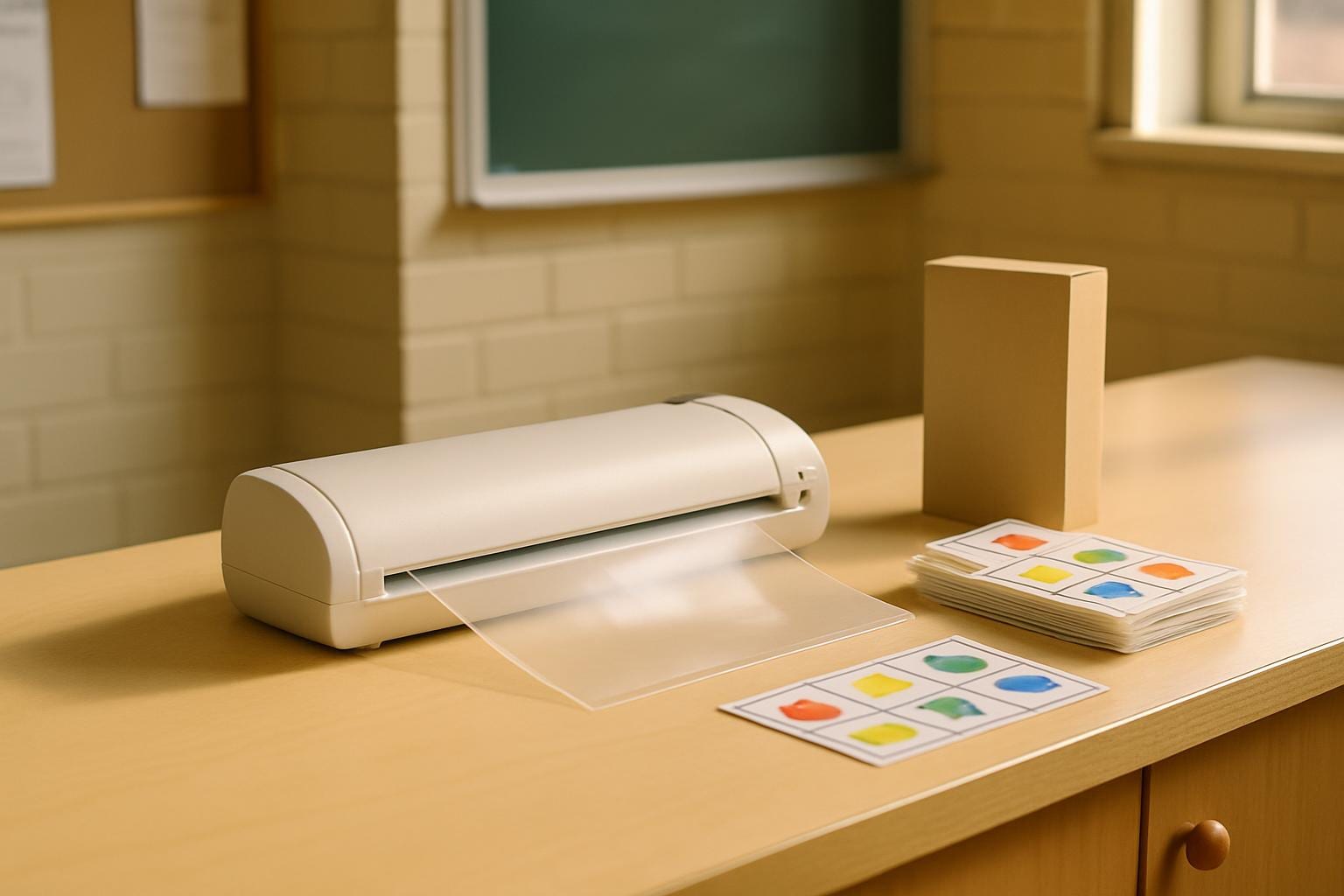
Laminating pouches are measured in mil, a thousandth of an inch of plastic per side, and the number decides what you get back from the machine.
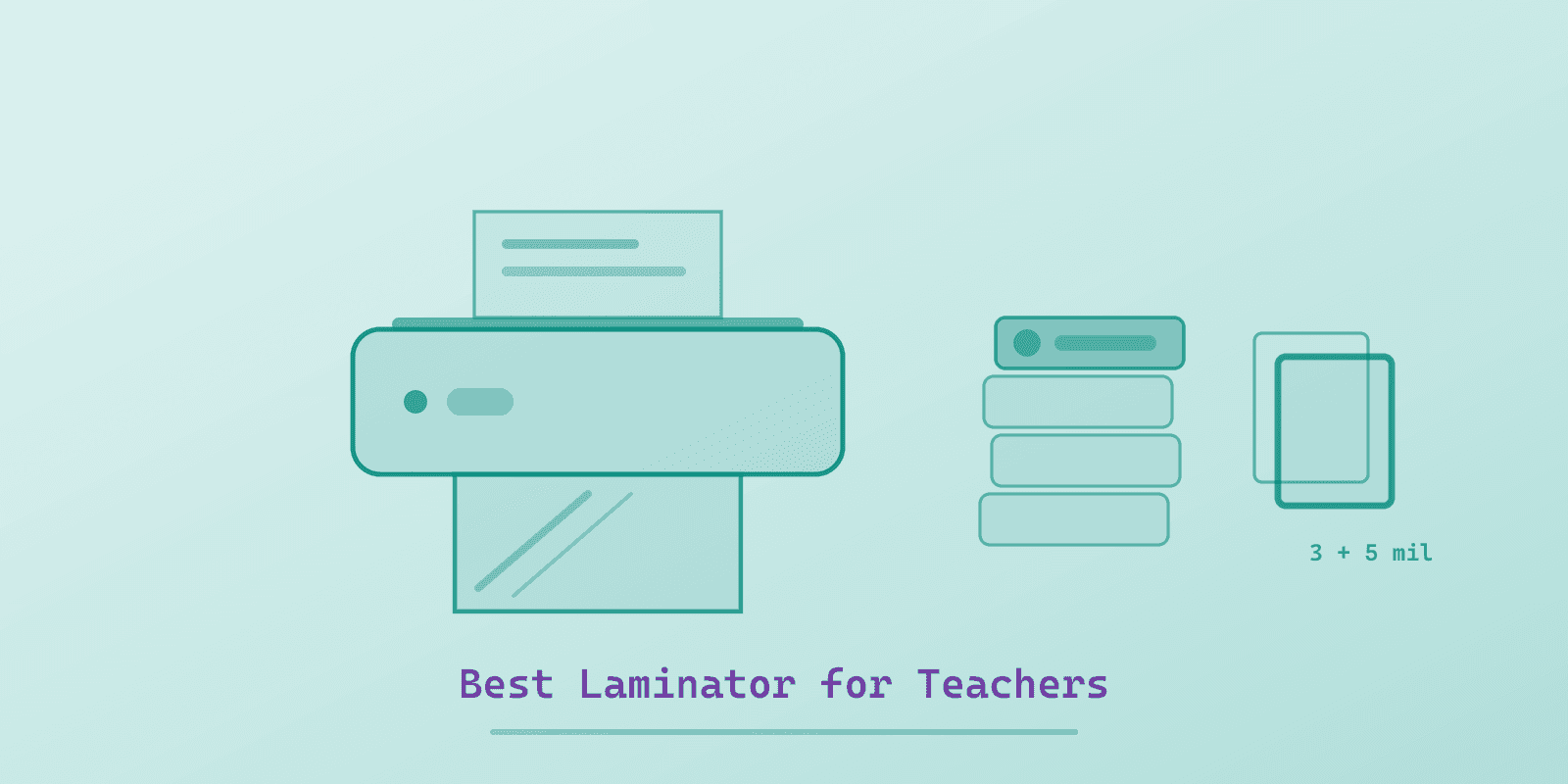
3 mil is the standard. It makes a flexible, lighter laminate, costs the least per sheet, and is right for posters, labels, name tags, and anything that lives on a wall rather than in a child's hands.
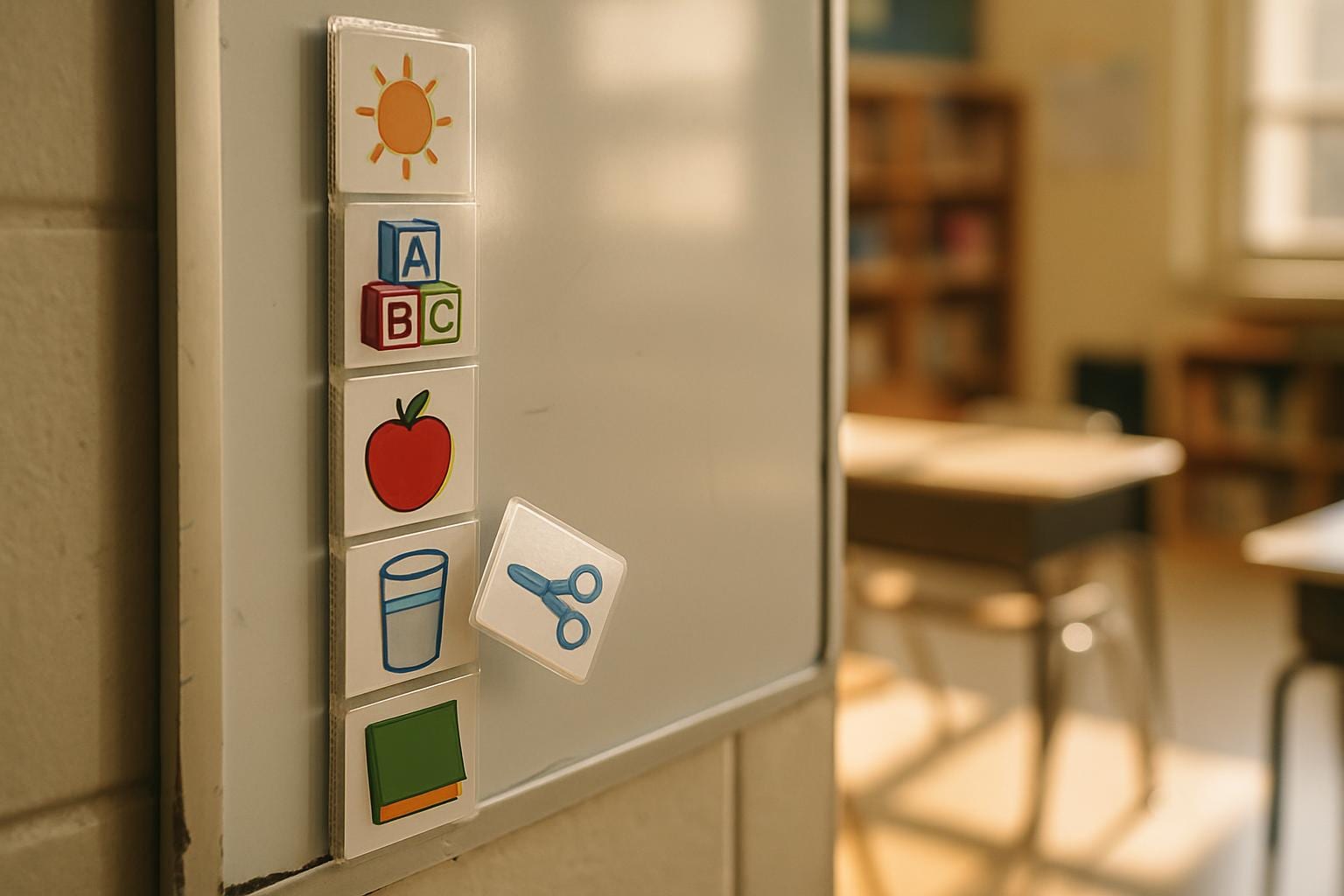
5 mil makes a stiff, card-like laminate. This is what picture cards, schedule pieces, token boards, and anything on velcro need, because those pieces are gripped, peeled, and dropped every single day. A 3 mil picture card curls and creases within weeks; a 5 mil card survives the year.
Most disappointment with a new laminator is a mismatch here, not a machine fault. If your laminated cards feel flimsy, the fix costs a pouch upgrade, not a new machine. Check the machine's pouch rating before buying, and run 5 mil on the higher heat setting.
One more habit that saves pouches: cut cards apart after laminating, not before. Feeding a pouch of loose pre-cut pieces is how edges shift and jams happen. Laminate the whole sheet, then cut, leaving a small sealed border around each piece. A picture sequence is the classic case, and apple sequencing cards like the free apple picking sheet go through the pouch as one page before the four cards are cut apart.
The budget machine that does the whole job
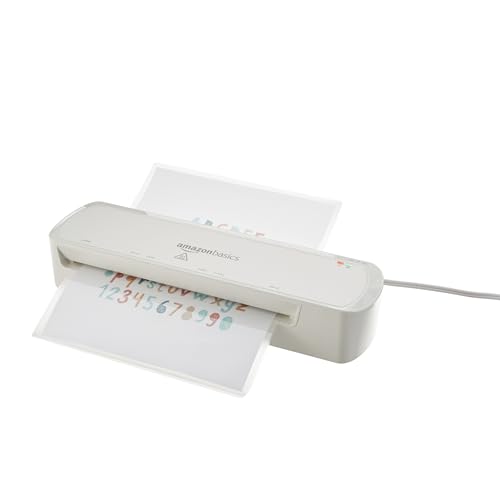
There is no polite way around this: the Amazon Basics 9 inch thermal laminator costs about half of what the Scotch below does and does the same fundamental job. It takes letter-size pouches, has two heat settings so it runs both 3 mil and 5 mil, and has a jam release lever for the day you feed something crooked.
What you give up is speed and patience. It is slower per sheet and takes a few minutes to warm up, which matters if you laminate stacks weekly and not at all if you laminate a handful of pieces at a time.
For a homeschool room, this is almost certainly the machine. The volume of a single family rarely justifies more, and the savings buy a lot of 5 mil pouches. If you are outfitting a homeschool room from scratch, the laminator is one line on the wider homeschool supplies list, which covers the rest of the setup.
Amazon Basics 9-Inch Thermal Laminator Machine
The teacher classic, upgraded
Ask teachers what laminator they own and Scotch is the answer that comes back most often. The PRO TL906 is the version of that machine worth buying: it runs noticeably smoother than the entry-level Scotch models, handles 3 mil and 5 mil pouches, and its output comes out flat and clear without the wavy edge cheap runs sometimes have.
Pick it over the budget machine if you laminate most weeks and the waiting starts to grate. The seal is not meaningfully better; the experience of producing fifty cards on a Sunday evening is.

Scotch PRO TL906 Thermal Laminator Machine, 9 Inch
The heavy-rotation upgrade
The Fellowes Saturn 3i 125 is what you buy when lamination is a workload rather than a chore. It is 12.5 inches wide, so it takes legal-size paper and small posters, it warms up in about a minute where budget machines take several, and it feeds faster. The listing ships with a starter kit of pouches to get going.
The honest question is whether you produce enough volume to feel those differences. A resource teacher laminating for a caseload, a team sharing one machine, or anyone running weekly class sets will. A teacher laminating occasionally will not, and should buy the Scotch and better pouches instead.

Fellowes Saturn 3i 125 Thermal Laminator, 12.5 Inch, with Pouch Starter Kit
The wide one for anchor charts
Width is the one thing money must buy, because no amount of care gets an 11 by 17 chart through a 9 inch machine. The extra wide Scotch takes input up to 13 inches, which covers anchor charts, oversized calendars, big visual schedules, and center signs, and its own listing pitches it at teachers for exactly that reason.
It laminates letter-size pouches too, so it can be the only machine you own. Buy it if oversized visuals are part of your classroom; skip it if they are not, because the width is the whole reason it exists.

Scotch Thermal Laminator, Extra Wide 13 Inch Input
The pouches to actually buy
Three packs cover a classroom, and the honest ranking is by what gets laminated, not by brand.
Scotch 3 mil letter pouches are the everyday box: posters, labels, signs, games that live in a folder. This is the pack to keep stocked, and the one to grab when the school's roll laminate feels like cling film.
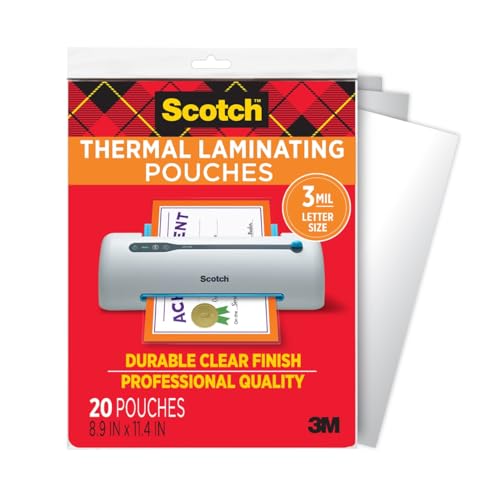
Scotch Thermal Laminating Pouches, Letter Size, 3 Mil
Scotch 5 mil letter pouches are for the pieces that work for a living. Picture cards, first-then boards, token boards, schedule pieces, and any laminated sheet a child writes on with dry erase marker daily. Stiff enough to stay flat on velcro, thick enough to survive being peeled off it a thousand times.

Scotch Thermal Laminating Pouches, Letter Size, 5 Mil, 100 Count
Amazon Basics laminating sheets are the budget way into a first box, a 100-pack for around the price of lunch, with one honest caveat: they are 2.8 mil, a shade thinner than Scotch's 3 mil. For posters, labels, and wall visuals the difference does not matter. For anything a child handles, step up to the 5 mil pack above rather than saving on thickness.

Amazon Basics Clear Thermal Laminating Sheets, 9 x 11.5 Inch, 2.8 Mil, 100-Pack
The dry erase trick that pays for the machine
A laminated page takes dry erase marker and wipes clean. That turns any practice worksheet into a reusable one: laminate it once, and a child traces, writes, wipes, and repeats, instead of you printing the same page every week.
This works with any worksheet, including everything the free worksheet maker prints: name tracing sheets, line tracing pages, and letter practice. Print the page, laminate it in 5 mil so it stays flat, and one sheet lasts a semester. For a child practicing the same strokes daily, this is genuinely cheaper than paper.
The same goes for the visuals this site's tools generate: visual schedule cards, PECS cards, and token boards are exactly the handled-every-day pieces that 5 mil lamination is made for. Velcro adapted books are the most lamination-hungry printable of all, since every page and every moving card gets pouched: the I spy colors book and the classroom I spy book each run about a dozen pieces, and one laminating session turns them into books that survive a whole year of small hands. The three holiday hunts, I spy Halloween, I am thankful and I spy Christmas, are the same job once a season: pouch a class set in the first week of October, November and December and it lasts the month. The free picture word cards on the Christmas words page are another December set worth pouching, since small cards are the first thing to bend and tear. The farm animals and zoo animals hunts are the year-round pair, and the one laminating session covers both. The step-by-step adapted book guide covers that whole build, down to which side of the velcro goes on the cards.
What about cold laminators and self-seal pouches?
Self-seal pouches need no machine: peel and press. They are fine for the occasional single card and for anything heat could damage, like crayon drawings or photos on delicate paper. Per sheet they cost several times what thermal pouches do, and pressing them on evenly without bubbles takes practice, so they are a supplement rather than a replacement. If you laminate more than a handful of pieces a month, the machine pays for itself quickly.
How these were chosen
Every product here was checked live on Amazon on the day this guide was written: in stock, buyable, and sold at the listed price rather than through a marketplace reseller. Two candidates were dropped during that check, one because a third-party seller had tripled its price, and one because it cost more than the better-reviewed machine beside it. Spectrum Unlocked's tools generate the picture cards, schedules, and worksheets that get laminated in special education classrooms every day, and this guide reflects how those materials actually get used and destroyed.
Once a stack is laminated, the next step is holding it together: the best binding machine guide covers turning laminated pages into a durable book, and how to bind a book at home walks the no-machine ring method for a few dollars.
Products mentioned in this article
Amazon Basics 9-Inch Thermal Laminator Machine
Scotch PRO TL906 Thermal Laminator Machine, 9 Inch
Fellowes Saturn 3i 125 Thermal Laminator, 12.5 Inch, with Pouch Starter Kit
Scotch Thermal Laminator, Extra Wide 13 Inch Input
Scotch Thermal Laminating Pouches, Letter Size, 3 Mil
Scotch Thermal Laminating Pouches, Letter Size, 5 Mil, 100 Count
Amazon Basics Clear Thermal Laminating Sheets, 9 x 11.5 Inch, 2.8 Mil, 100-Pack
Prices and availability are accurate as of the date/time shown and are subject to change. Any price and availability information displayed on Amazon at the time of purchase will apply to the purchase of this product.
Planning for a room where every student needs something different?
Beacon remembers your students and your setting, so you are not re-explaining them every time.
What would Beacon say?
"Help me plan a week for a mixed-goal group"
Beacon works from the goals and levels already in your room, then gives you something you can run on Monday. Not a blank template to fill in on Sunday night.

Spectrum Unlocked Editorial Team
Editorial Team
The Spectrum Unlocked editorial team combines lived experience as autism parents with research-backed guidance to create resources families can trust.
Frequently asked questions
- What is the best laminator for teachers?
- For most teachers, an inexpensive 9 inch thermal laminator plus good pouches does the whole job. The Amazon Basics 9 inch machine is hard to argue with at its price, and the Scotch PRO TL906 is the step up if you laminate often and want faster, smoother runs. The honest secret is that pouch thickness affects your results more than the machine does: 3 mil for flexible sheets, 5 mil for stiff cards.
- What is the best laminator for homeschool?
- The same machines that suit teachers suit a homeschool room, and usually the budget end makes the most sense because volume is lower. A 9 inch thermal laminator handles letter-size pages, which covers worksheets, schedule cards, and labels. If you laminate frequently used pieces like picture cards or chore charts, spend the savings on 5 mil pouches rather than a fancier machine.
- What is the difference between 3 mil and 5 mil laminating pouches?
- Mil is a thousandth of an inch of plastic per side. A 3 mil pouch produces a flexible, lighter laminate that suits posters, labels, and wall visuals, and it costs less per sheet. A 5 mil pouch produces a stiff, card-like laminate that stands up to daily handling by children, which is what picture cards, schedule pieces, and token boards need. Check your machine's rating before buying 5 mil; most home machines take both, on a higher heat setting.
- Can I reuse worksheets by laminating them?
- Yes, and it is one of the best reasons a teacher or homeschool parent owns a laminator. A laminated worksheet takes dry erase marker and wipes clean, so a tracing page or a practice sheet becomes reusable instead of being reprinted every time. Sheets a child writes on repeatedly are worth 5 mil pouches so the page stays flat.
- Do cheap laminators ruin pouches or jam more?
- Mostly no. Home thermal laminators are simple machines: heated rollers melting the adhesive inside a pouch. Cheap machines are narrower, slower, and warm up less quickly, but the seal quality on a properly fed pouch is similar. Jams usually come from feeding a pouch open end first, using a pouch thicker than the machine's rating, or laminating something with cut edges poking out of the pouch, and those habits jam expensive machines too.
- Is a wide-format laminator worth it for a classroom?
- Only if you actually make oversized visuals. A 13 inch machine takes poster-sized paper for anchor charts, calendars, and large schedules, which a 9 inch machine physically cannot. If your lamination is letter size, the wide machine is money spent on width you never feed it.
- Should I get a personal laminator or use the school's big one?
- School roll laminators are great for big jobs but they come with a queue, an off switch at four o'clock, and usually thin film. A personal machine means laminating the six cards you need tonight, at home, in five minutes. Many teachers use both: the school machine for bulk, a desktop machine for the constant small jobs, and their own 5 mil pouches for pieces that need to be stiff.
- What should a special education teacher laminate?
- The pieces that get handled hardest: picture cards for communication boards, visual schedule pieces, first-then boards, token boards, and choice cards. These are touched, moved, and peeled off velcro every day, which is exactly what 5 mil lamination is for. Laminated visuals also wipe clean, which matters for anything that travels between home and school.