Best Shoes for Teachers: 10 Picks for a Day Spent Standing on Concrete
Ten teacher shoes sorted by the job they do: max cushion for concrete floors, hands-free slip-ons, wide widths, heel pain, a men's pick, and an insole fix.
Key Takeaways
- The surface under you decides the shoe. A classroom built on a concrete slab with thin tile over it returns almost none of the shock your foot sends down, so cushioning has to come from the shoe. This is why a pair that felt fine on a carpeted campus can hurt in a new building.
- Cushion and support are two different things and you usually need both. Cushion is the soft stack under the foot that absorbs impact. Support is the shaped footbed and firm heel that stop the foot rolling inward. A very soft shoe with no structure often makes arch and heel pain worse, not better.
- Flat canvas sneakers are the most common mistake. Skate-style shoes and canvas high-tops have almost no arch shape and a thin flat insole, which is exactly the wrong combination for six hours upright on a hard floor, however comfortable they feel for the first hour.
- If a new pair is not in the budget, a supportive insole in the shoes you already own is the one upgrade that does not ask you to buy shoes at all, and it improves every pair in your closet at once.
- Special education teachers need one more thing from a shoe than the job description suggests: the ability to get down on the floor, get back up fast, and move quickly, which rules out backless clogs on any day you might need to run.
You already know the part nobody outside the building understands: teaching is a standing job. Not a walking job, not a desk job, a standing job, on a floor that is almost always a concrete slab with something thin laid over it. By the last period your heels ache, your lower back has opinions, and the shoes that felt perfect in the store two months ago feel like boards.
This is the shoe side of that problem. Ten picks, each chosen for a different job, plus the honest part most roundups skip: which popular teacher shoes come with a condition attached, and why the fix worth trying first is not a shoe at all.
What Actually Decides Whether a Shoe Survives Your Day
Four things, and brand is not one of them:
- Cushion, measured under the heel. Concrete returns none of the shock you send into it, so the shoe has to absorb it. This is the single biggest difference between a pair that works and a pair that does not.
- Support, which is not the same as cushion. Support is the shaped footbed and the firm heel cup that keep your arch from flattening out over six hours. A very soft shoe with no structure can make arch and heel pain worse, because your foot sinks and then collapses.
- The right width. An arch support only works if your arch is sitting on it. Buy a longer shoe to get more room and your foot slides forward off the support entirely, which is why width matters more than most people think.
- Whether you will actually wear it. A supportive shoe you leave in the closet because it looks orthopedic with your work clothes does nothing. Fit the shoe to your dress code and your morning, or it will not get worn.
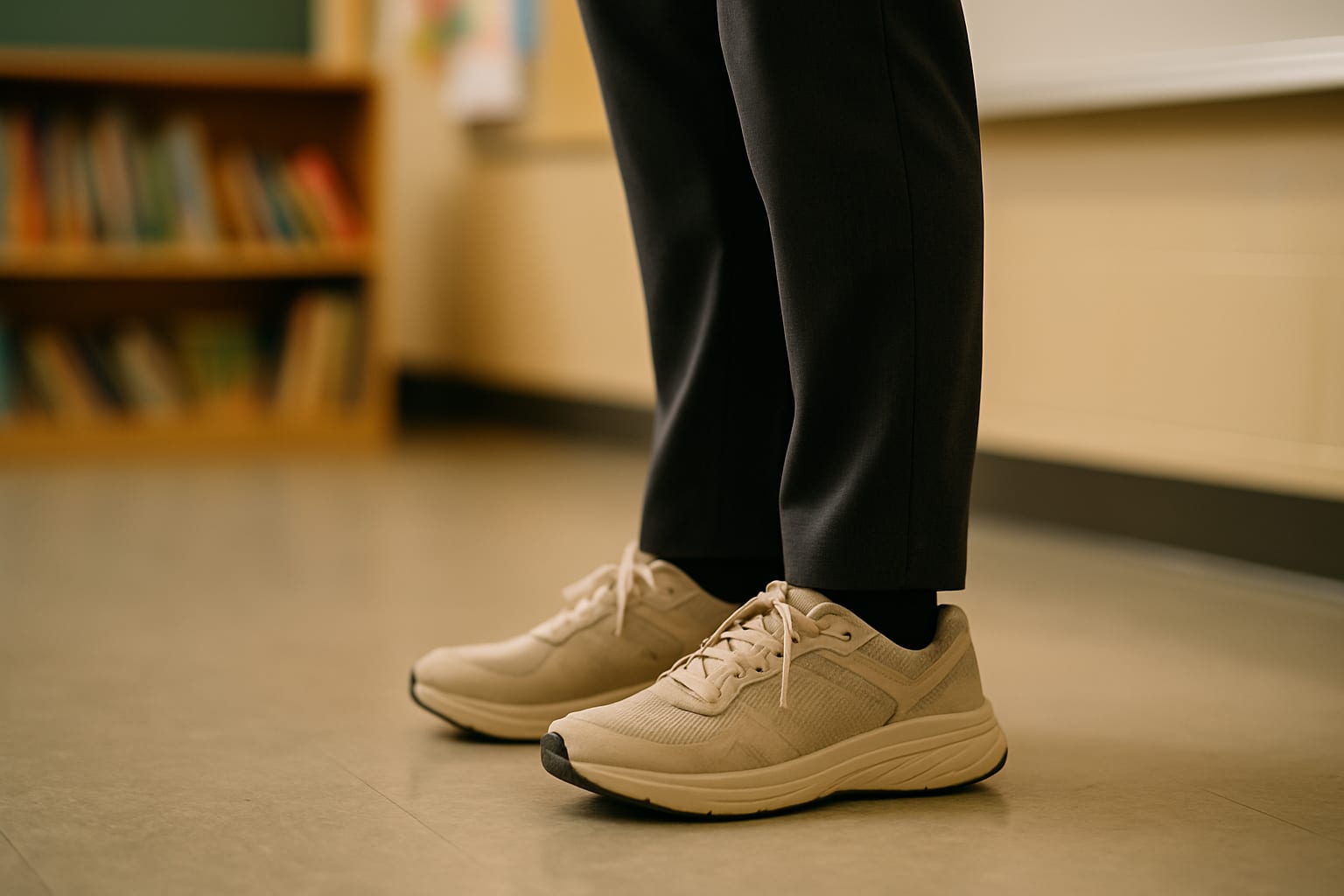
Everything below is sorted against those four, plus the practical realities of a school day: getting shoes on in a hurry, cleaning them when something spills, and whether they can still be walked in at 3pm.
How these were chosen. No lab, no invented star ratings, and no claim that every pair here has been worn for a semester. Each pick was matched to a specific job a teacher's day creates, checked against the maker's own published materials for the feature it is recommended for, and confirmed live and in stock on Amazon on the date at the bottom of this page. Where a shoe carries an outside credential, such as the American Podiatric Medical Association's Seal of Acceptance, that is named so you can check it yourself rather than take my word for it. Footwear sizing and stock move constantly, so confirm the size, width, and color you need on the listing.
The Best Shoes for Teachers, Sorted by the Job
Best for concrete floors and all-day standing: HOKA Bondi 8
When the floor is the problem, the answer is stack height. The Bondi is Hoka's most cushioned road shoe, and the entire design brief is putting as much foam between you and the ground as a shoe reasonably can. On a concrete slab that is not a luxury, it is the mechanism: foam absorbs the shock your floor refuses to.
This is deliberately the Bondi 8 rather than the current Bondi 9, and that is the single best money-saving trick in running shoes: last year's model does the same job for less, because the shops are clearing it to make room. Teachers are not racing anyone. Buy the older generation of a good shoe rather than the current generation of a cheaper one.
This is the pick for the teacher whose room has a bare or barely covered concrete floor, who has been told to expect back or knee ache from standing, or who has simply run out of patience with thin shoes. It looks like a running shoe, because it is one, so check your dress code first. The dark colorways pass in most buildings.

HOKA ONE ONE Bondi 8 Women's Road Running Shoes
Best for heel pain and plantar fasciitis: Vionic Women's Walk Max Sneaker
Plantar fasciitis is the injury this profession hands out, and it responds to arch support more than to softness. Vionic builds shoes around a contoured orthotic footbed rather than expecting you to add one, and the brand's products are widely carried with American Podiatric Medical Association acceptance, which is a credential you can verify rather than a marketing adjective. The Walk Max pairs that built-in footbed with a cushioned midsole, so you get the support and the shock absorption in one shoe.
Worth saying plainly: a shoe is a support, not a treatment. Heel pain that is worst on your first steps out of bed, or that has been going for months, deserves a podiatrist rather than a fourth pair of shoes.

Vionic Women's Walk Max Sneaker
Best hands-free slip-on: Skechers Slip-Ins Go Walk Flex
The teacher-specific problem no running brand designs for: you are carrying a laptop, a coffee, and a stack of papers, and you need to get out of the building. Skechers' Slip-ins use a firm heel panel that holds the collar open so the shoe takes your foot without your hands, then closes behind you. Unlike a traditional slip-on, the heel stays put once you are in it, so you get the speed without the shoe flopping off at the back.
This is also the pick if bending down to tie laces is genuinely uncomfortable, whether from back pain, pregnancy, or knees that have done twenty years of kindergarten.

Skechers Women's Slip-Ins Go Walk Flex Relish
Best lightweight casual pick, with one condition: Hey Dude Women's Wendy
The most popular casual shoe in staff rooms right now, and it earns that on weight and convenience: it is feather-light, it goes on without ceremony, the stretch upper forgives a foot that swells through the day, and most of the range is machine washable, which matters more in a classroom than in an office.
Here is the condition, and I would not card this shoe without it. The footbed is soft but essentially flat, with very little arch structure, which is the one thing a concrete floor punishes hardest. Worn as your only shoe for a full standing week, this is a plausible route to heel pain. Worn on a light day, a testing day, a planning day, or the walk in and out of the building, it is genuinely great. And bought together with the supportive insole further down this list, dropped in to replace the original, it becomes a shoe you can stand in, which is exactly what a lot of teachers have already worked out for themselves.
Buy it for what it is: the comfortable, light, easy shoe. Just do not ask it to do the concrete-floor job alone.

Hey Dude Women's Wendy Lace-Up Loafers
Best for wide feet: Skechers Women's Arch Fit Big Appeal, Wide Width
Wide feet are common, badly served, and the reason a lot of teachers wrongly conclude that supportive shoes hurt. The Arch Fit line is built around a removable podiatrist-designed insole, and this particular listing is the wide-width version rather than a standard shoe you hope runs generous, which is why it holds this slot.
Two things to get right. First, wide is a different measurement from long, so do not size up in length to buy room. Second, take the insole out, stand on it, and check that no part of your foot spills over the edge. That thirty-second test tells you more than any size chart.

Skechers Women's Arch Fit Big Appeal Sneaker, Wide Width
Best men's pick: Brooks Men's Ghost 17
Male teachers get almost nothing written for them, and the honest answer is that the best value in the category is a neutral cushioned running shoe worn for teaching rather than for running. The Ghost is the plainest, most neutral shoe in that class: a tall cushioned midsole, a firm heel, and a shape that does not shout. It also carries the American Podiatric Medical Association's Seal of Acceptance and is certified under the PDAC A5500 diabetic shoe code, which are outside credentials rather than in-house claims.
For a dress-code building, the plain dark colorways read as ordinary shoes at a distance, which is usually all the dress code is really asking.

Brooks Men's Ghost 17 Sneaker
Best with dress pants and a dress: On Women's Cloud 5
Some teachers cannot or will not wear a chunky trainer with work clothes, and every list that ignores that is written by someone who does not have to get dressed for this job. The Cloud 5 is the trim, low-profile answer: firmer and slimmer underfoot than the maximum-cushion picks, with a clean silhouette that sits under dress pants without announcing itself.
Be clear about the trade. You are buying a shoe that looks right in exchange for less foam than the Bondi. If your floor is bare concrete and your feet already hurt, take the cushion and solve the outfit another way. If your building is carpeted and the dress code is the real constraint, this is the pick, and it sits at the premium end of this list.

On Women's Cloud 5 Sneakers
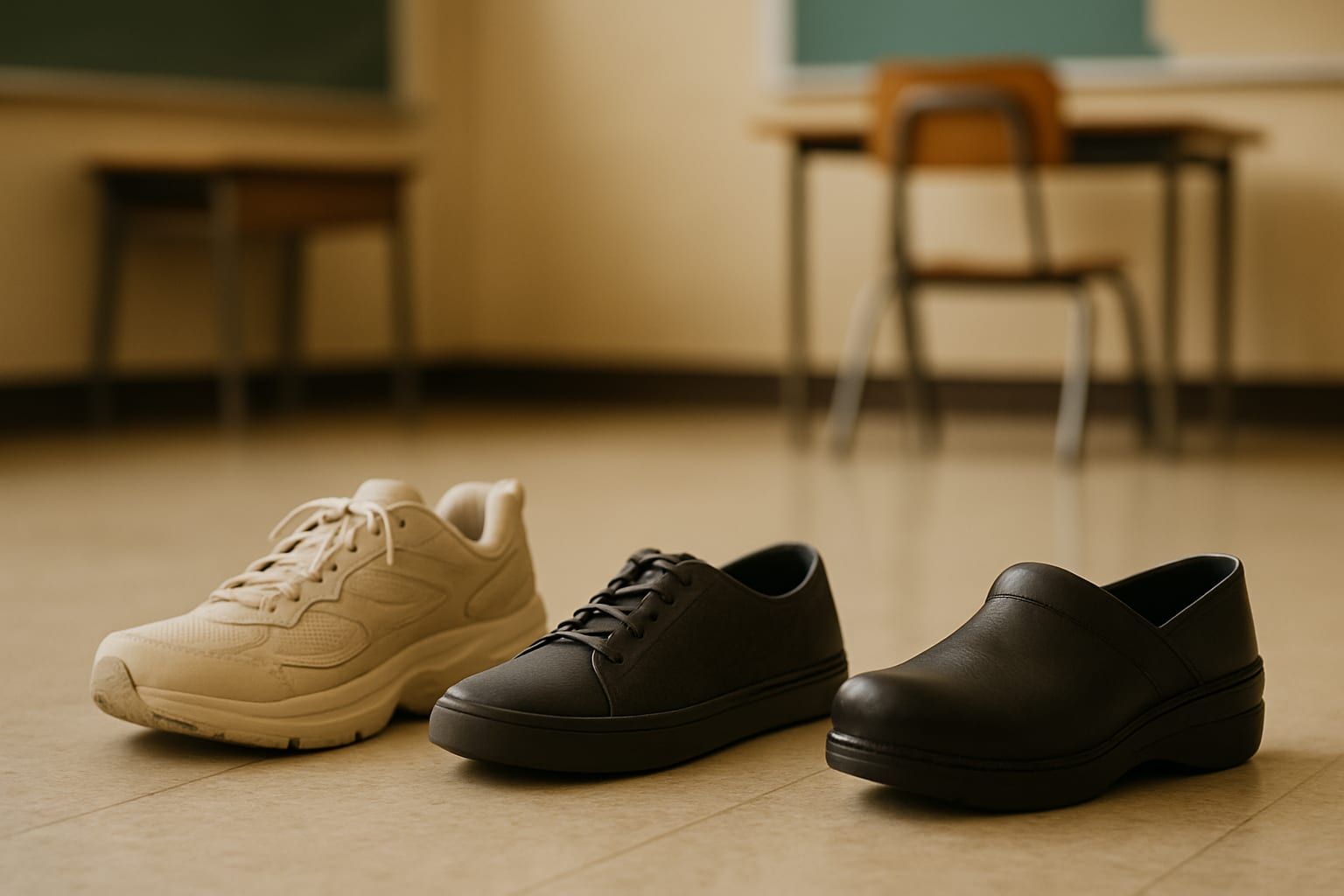
Best when sneakers are not allowed: Dansko Women's Professional Clog
The shoe nurses have worn through twelve-hour shifts for decades, for a reason that applies exactly to teaching: a rocker-shaped sole that rolls you forward instead of making your foot do the work, over a contoured midsole with a reinforced roomy toe box. If your building rules out athletic shoes, this is the pick that gives up the least.
Two honest caveats. It is a firm shoe with a real break-in period, so buy it during a break rather than the week before school starts. And it is a clog, so the heel is open, which brings us to the next section.

Dansko Women's Professional Clog
Best footbed that molds to your foot: Birkenstock Unisex Boston Soft Footbed Clogs
The cork-latex footbed is the point. It starts firm and gradually takes the shape of your own foot with wear, which is why people who love these will not wear anything else. The Boston is the closed-toe clog in the range, which is the version that belongs in a classroom, and the Soft Footbed adds a foam layer over the cork so the break-in is gentler than the standard version.
Same caveat as the Dansko, and it matters more here: the heel is open. This is a shoe for a day at your own desk and your own room, not for a day you might have to move fast.

Birkenstock Unisex Boston Soft Footbed Clogs
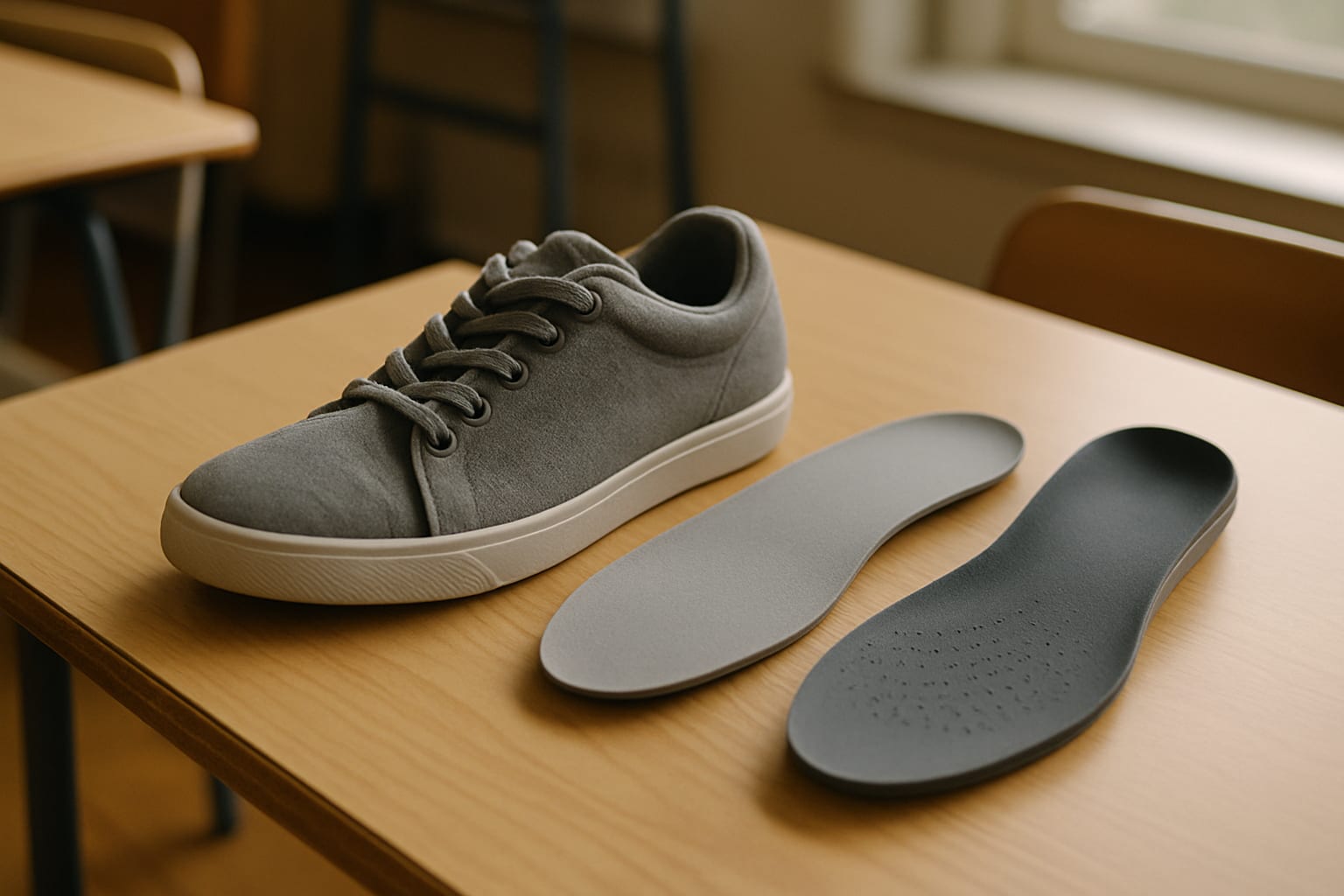
Best upgrade for shoes you already own: Superfeet Green Insoles
The fix I would try first if money is tight, because it is the only pick here that does not ask you to buy shoes. A firm insole with a deep heel cup and a high arch shape adds the structure that most everyday sneakers simply do not have, and it moves from shoe to shoe as pairs wear out. If your current shoes are cushioned but shapeless, this is the missing half.
Three things to get right. These are sold by size range rather than by exact shoe size, so check which range covers you before ordering. The shoe needs a removable original insole, so you are replacing rather than stacking. And expect a week or two of break-in, because a firm insole feels wrong before it feels right. That is normal, and it is not a sign you bought the wrong thing.

Superfeet All-Purpose Support High Arch Insoles (Green)
If You Teach Special Education, Three More Things Matter
The general teacher-shoe advice above still applies, but a self-contained or resource room asks for things a general education classroom does not, and no mainstream roundup accounts for them.
You need to be able to move fast. Elopement is real, and so is the moment a student needs you across the room right now. That single fact rules out backless clogs on any day it could happen, however comfortable they are. If you love a clog, keep it for planning days and testing weeks, and keep a closed, secure pair in the room.
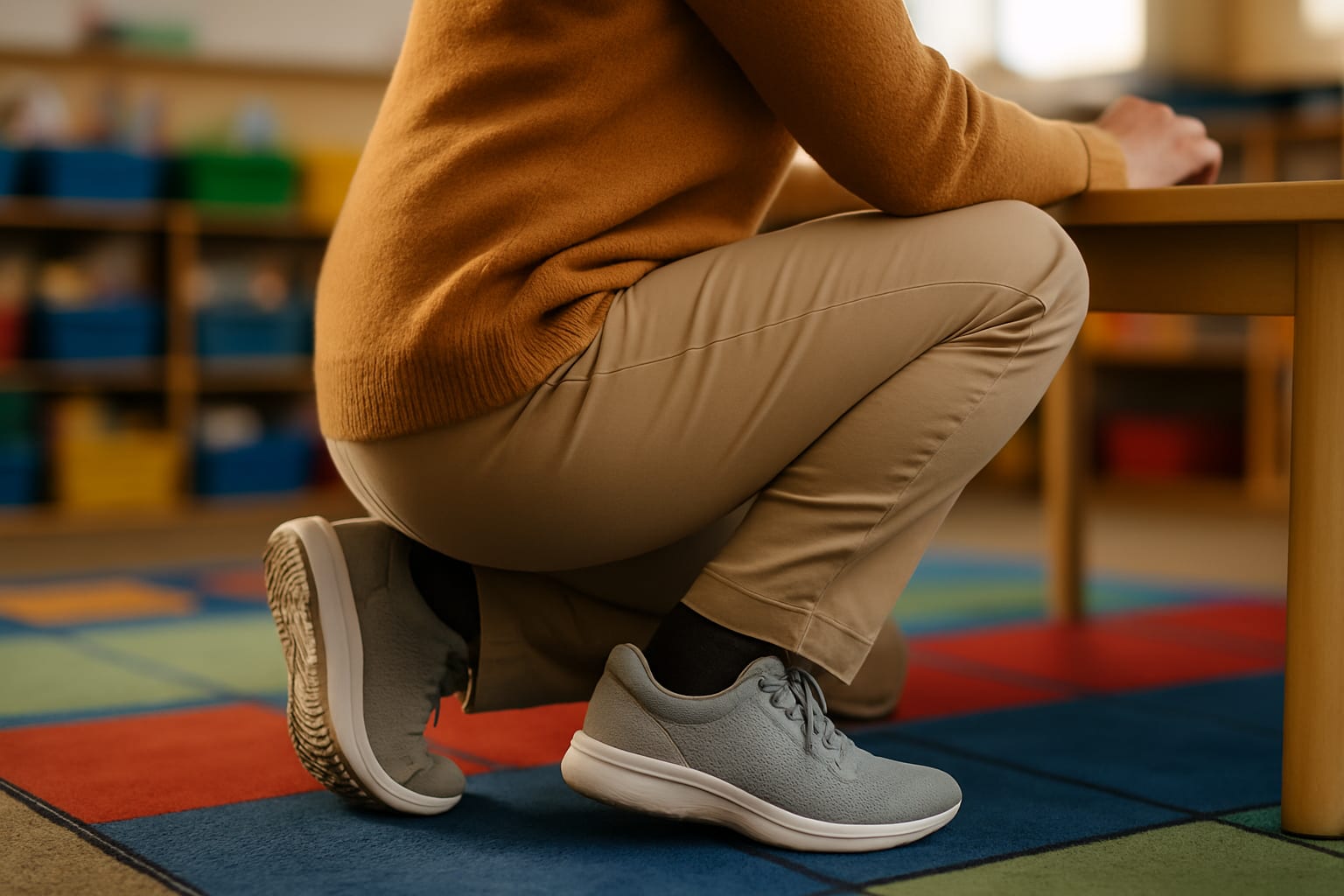
You will be on the floor. Sitting on the carpet, kneeling for a transfer, getting up and down twenty times a day. That asks for a shoe with a sole flexible enough to kneel in and enough grip to push back up from a crouch on a smooth floor, which rules out the very stiffest options and anything with a slick outsole.
You need to be able to clean them. Toileting programs, feeding programs, art, and the ordinary chaos of a room where sensory play is part of the curriculum. A wipeable upper, or at minimum a machine-washable one, is a practical requirement rather than a nice-to-have. Check the maker's care instructions before you assume a knit upper survives a washing machine.
If you are setting up or restocking a room, the shoes are one line on a much longer list. Spectrum Unlocked's guides to special education classroom must-haves and setting up a self-contained classroom cover the rest of it, and the classroom wishlist guide is built for the version of this where somebody else is paying.
The Popular Picks I Would Not Put on a Concrete Floor
These come up constantly whenever teachers talk about shoes, and it would be dishonest to leave them out just because they are not on the list.
Flat canvas sneakers and skate shoes. Enormously popular in classrooms, and they have a genuine argument: skate shoes carry real padding, and a canvas sneaker goes with anything. But the insole is thin and flat and the arch shape is essentially absent, which is the exact profile that produces heel pain over a term on a hard floor. If these are your shoes and your feet are fine, carry on. If these are your shoes and your feet hurt, this is your answer, and an insole is the cheap version of fixing it.
Ultralight casual slip-ons worn as your only shoe. This is the qualified one, which is why it is on the list above rather than banished from it. Light foam slip-ons are comfortable the way a slipper is comfortable: they cushion, but there is little structure holding your arch up, and on a hard floor that is the half that matters. As a light-day shoe, or with a supportive insole swapped in, they are a fine pick. As the shoe you stand in five days a week on concrete, they are the most common way a teacher acquires heel pain while wearing something that feels great in the shop.
Barefoot and minimalist shoes. These have real advocates and a real rationale, and for some feet on some surfaces they work well. But they deliberately remove cushioning and arch support, which is the opposite of what a concrete floor asks for, and switching to them abruptly is a well-known way to acquire an injury. If you want to try them, transition slowly and do not make a school day the place you test it.
None of this is a claim that anybody wearing these is doing it wrong. It is a claim about which shoe suits which floor.
Making a Pair Last a Whole School Year
Rotate two pairs if you possibly can. Foam midsoles need roughly a day to decompress after a long shift, and a shoe worn every single day flattens measurably faster than two shoes worn alternately. Two mid-priced pairs in rotation will outlast one expensive pair worn daily, and they cover you on the day one gets soaked at recess duty.
Watch the midsole, not the upper. Teachers usually replace shoes when they look worn, but cushioning dies long before canvas does. If the shoe is visibly compressed on one side, or if the ache came back after months of relief, the foam is done even if the shoe looks fine.
And take the free wins before the paid ones. An anti-fatigue mat where you actually stand, at your desk and at the board, does work no shoe can do, and two cheap mats often beat one expensive pair. Feet up for ten minutes at lunch is not indulgent, it is drainage.
And if you landed here as a parent looking for something to buy a teacher rather than as a teacher buying for yourself, shoes are the wrong call, because fit and size are personal. Spectrum Unlocked's guide to the best teacher gifts covers what surveyed teachers say they actually want instead, and the Teacher Appreciation Week plan is the class-wide version of the same idea.
If you are shopping for shoes for a student rather than for yourself, the questions are completely different ones. Spectrum Unlocked's guide to sensory-friendly shoes covers the seam, tag, and closure battles that decide whether a shoe gets worn at all, and the toe-walking shoes roundup covers the gait side of the question.
Product features checked against the makers' own published materials and live Amazon listings on August 8, 2026. Outside credentials named on this page can be verified directly: the American Podiatric Medical Association Seal of Acceptance program publishes its criteria and its list of accepted products. General guidance on plantar fasciitis and standing-related foot pain follows Mayo Clinic and Cleveland Clinic guidance. This is a shopping guide, not medical advice; persistent foot pain belongs with a podiatrist.
Some links on this page are affiliate links. If you buy through them, we may earn a small commission at no extra cost to you.
Products mentioned in this article
HOKA ONE ONE Bondi 8 Women's Road Running Shoes
Vionic Women's Walk Max Sneaker
Skechers Women's Slip-Ins Go Walk Flex Relish
Hey Dude Women's Wendy Lace-Up Loafers
Skechers Women's Arch Fit Big Appeal Sneaker, Wide Width
Brooks Men's Ghost 17 Sneaker
On Women's Cloud 5 Sneakers
Dansko Women's Professional Clog
Birkenstock Unisex Boston Soft Footbed Clogs
Superfeet All-Purpose Support High Arch Insoles (Green)
Prices and availability are accurate as of the date/time shown and are subject to change. Any price and availability information displayed on Amazon at the time of purchase will apply to the purchase of this product.
Planning for a room where every student needs something different?
Beacon remembers your students and your setting, so you are not re-explaining them every time.
What would Beacon say?
"Help me plan a week for a mixed-goal group"
Beacon works from the goals and levels already in your room, then gives you something you can run on Monday. Not a blank template to fill in on Sunday night.

Spectrum Unlocked Editorial Team
Editorial Team
The Spectrum Unlocked editorial team combines lived experience as autism parents with research-backed guidance to create resources families can trust.
Frequently asked questions
- What shoes do teachers actually wear all day?
- In practice teachers split into four camps: a cushioned everyday sneaker, a hands-free slip-on for speed, a supportive clog for buildings with a dress code, and whatever they already own with a better insole dropped in. All four can work. What separates a good outcome from sore feet by lunch is not the brand but whether the shoe has real cushion under the heel and a shaped footbed that keeps the arch from collapsing over a six-hour day. A cushioned sneaker with a structured footbed is the safest starting point for most teachers, and it is where this list starts.
- What are the best shoes for teachers standing all day on concrete?
- Concrete is the hardest surface most people ever work on, and a thin layer of tile or vinyl over a slab does not change that. It gives nothing back, so every step sends the shock straight up into your heel, knees, hips, and lower back. The answer is a maximum-cushion shoe with a tall foam stack, which is the whole design brief behind shoes like the Hoka Bondi. If you want to feel the difference for free first, stand on an anti-fatigue mat at your desk and at the spot where you teach most, then judge the shoe. Two thin cheap mats often beat one expensive pair of shoes.
- What are the best shoes for teachers with plantar fasciitis?
- Plantar fasciitis is heel pain from an irritated band of tissue along the bottom of the foot, and it responds to two things in a shoe: arch support that stops the band being stretched with every step, and a cushioned heel that softens the landing. That points either to a shoe with a built-in contoured orthotic footbed, or to a supportive insole added to a cushioned shoe you already like. Avoid completely flat shoes and avoid walking barefoot on hard floors at home, which is often the part of the day doing the real damage. Persistent heel pain is worth a podiatrist's opinion rather than another purchase, especially if it is worst on the first steps out of bed.
- Are Vans, Converse, and other flat sneakers bad for teachers?
- They are not bad shoes, they are just the wrong tool for a hard floor. Skate-style and canvas sneakers were designed for board feel and durability, which means a flat, thin insole and almost no arch shape. Plenty of teachers wear them for years without trouble, and if that is you, nothing here says stop. But if your feet, heels, or lower back ache by the end of the day and these are what you wear, they are the first thing to change. One version of that change does not involve new shoes at all: a supportive insole dropped into the pair you own, which is a real fix rather than a compromise.
- What are the best shoes for male teachers?
- The same rules apply, and the good news is the men's running-shoe market is where cushioning technology shows up first. A neutral cushioned running shoe worn for teaching rather than running is the strongest value in the category, and some carry podiatric credentials worth checking, such as the American Podiatric Medical Association's Seal of Acceptance. Look for a tall cushioned midsole, a firm heel counter that does not squash when you pinch it, and a removable insole so you can swap in more support later. Dress-code buildings can usually make a dark, plain-upper running shoe work where a bright one would not.
- How do I know if I need wide shoes?
- The reliable test costs nothing. Take the insole out of a shoe you already wear, stand on it with your full weight, and look down. If any part of your foot spills over the edge, particularly at the ball of the foot, you need a wider size rather than a longer one. Going up a full length to buy width is the most common sizing mistake, and it leaves your arch sitting behind the shoe's arch support, which cancels out the very thing you paid for. Most major brands publish wide and extra-wide widths, and some Amazon listings are the wide version specifically, so read the title rather than assuming.
- Can I just put insoles in the shoes I already own?
- Often, yes, and it is the highest-value change on this whole page. A firm supportive insole adds the arch shape and deep heel cup that most everyday sneakers lack, without replacing the shoes, and it moves with you from shoe to shoe as pairs wear out. Two conditions: the shoe needs a removable original insole so you are not stacking one on top of another, and it needs enough depth that your foot does not sit too high in the shoe once the new one is in. Expect a break-in period of a week or two, because a firm insole feels strange before it feels good.