Special Education Classroom Must-Haves for Self-Contained Classrooms
The special education and self-contained classroom must-haves teachers actually buy, from velcro dots and laminating pouches to the calm-down corner, sorted by job and by grade band.
Key Takeaways
- The list that comes up over and over in sped teacher groups is short and unglamorous: velcro dots, laminating pouches and a laminator, kinetic sand, bubbles, a squeeze pillow, fidgets, dot markers, and squishies, plus a handful of bigger buys teachers say earn their cost, like a weighted lap pad, a wobble stool, a blackout sensory tent, a spinning chair, a huge beanbag, classroom headphones, and a visual timer. Nothing on it is exotic, and that is the point. It is the stuff that runs out or gets used every day.
- Buy the free tools first. Visual schedules, token boards, and first-then boards do not need a purchase at all; Spectrum Unlocked's makers build and print them free, and a laminated set from one of those makers is the actual behavior-and-visuals must-have, not a store SKU.
- Ask what your school already provides before you spend your own money. Some districts stock laminators and velcro by the roll; others hand a new sped teacher an empty room. Check the supply closet and your department budget first, then fill the real gaps.
- A lot of this list doubles as a classroom Amazon wishlist. Parents, PTAs, and DonorsChoose donors can fund consumables like pouches and dot markers far more easily than they can fund furniture, so a short public list of exactly these items tends to get funded fastest.
- This is a shopping list, not a room plan. If you are arranging zones, stations, and the visual system from scratch, start with Spectrum Unlocked's self-contained classroom setup guide and come back here to stock what it describes.
If you have spent any time in r/specialed or a sped teacher Facebook group, you have seen the question in some form: what are the real sped classroom must-haves, not the Pinterest version with a $400 sensory swing. The real one, the one that comes up in nearly every thread, is short: velcro dots, laminating pouches and a laminator, kinetic sand, bubbles, a squeeze pillow, fidgets, dot markers, and squishies. Around that core sit a few bigger buys teachers consistently say earn their cost: a weighted lap pad, a wobble stool, classroom headphones, and a visual timer. This update adds seven more that come from a working self-contained classroom rather than a search results page, from a blackout tent and a spinning chair to the garage oil-change mat that quietly does the job of a play tray costing several times as much. This is that list, organized by the job each item does in your room, with a grade-band breakdown and an honest note on what to buy versus what to build free.
One thing first: this is a shopping list, not a room plan. If you are still arranging zones, stations, and the visual system itself, start with Spectrum Unlocked's self-contained classroom setup guide; it covers the room, and this list covers what goes in it.
The special education classroom must-haves list
Here is the shorthand version, the one worth screenshotting:
- Velcro dots for anything that needs to attach and detach: schedule icons, token boards, visual supports.
- Laminating pouches and a laminator so those visuals survive a school year of little hands. (Choosing the machine and the pouch thickness gets its own laminator guide.)
- Kinetic sand for a quiet, contained sensory input at the calm-down table.
- Bubbles for a portable, no-mess sensory break or transition tool.
- A squeeze pillow for deep-pressure input a student can access independently.
- A weighted lap pad for deep pressure that stays put through seated work.
- Fidgets for hands that need to stay busy during instruction.
- Squishies as a second, softer fidget option for kids who want texture over motion.
- A pop-up blackout tent so the calm-down corner is an actual retreat, not just a labeled rug square.
- A spinning chair for the vestibular input (spinning, rocking) nothing handheld can deliver.
- An oil-change mat as the cheap, washable containment surface under every sensory-play activity.
- A wobble stool for the student who focuses better with movement built into sitting.
- A huge beanbag as a break-choice destination and an independent-work spot in one.
- Desk privacy shields for independent work stations, testing, and a distraction-free reset.
- Dot markers for fine-motor and independent-work tasks that need almost no verbal instruction.
- Dry-erase pockets for reusable worksheets that skip the laminator queue.
- Classroom headphones for listening centers, device time, and testing.
- A visual timer so every work block and break has a visible end.
- Mr. Potato Head for speech and language work, from body parts to following directions.
- A mystery box (a rigid birthday gift box) for the cheapest vocabulary routine in the building.
- A slides clicker so you can start, stop, and advance from anywhere in the room.
- A free visual behavior system (token board, first-then board, or full visual schedule) rather than a bought one, because this piece should not cost anything.
The rest of this post goes through each job in more depth, plus what changes by grade band.
Prep and organization supplies
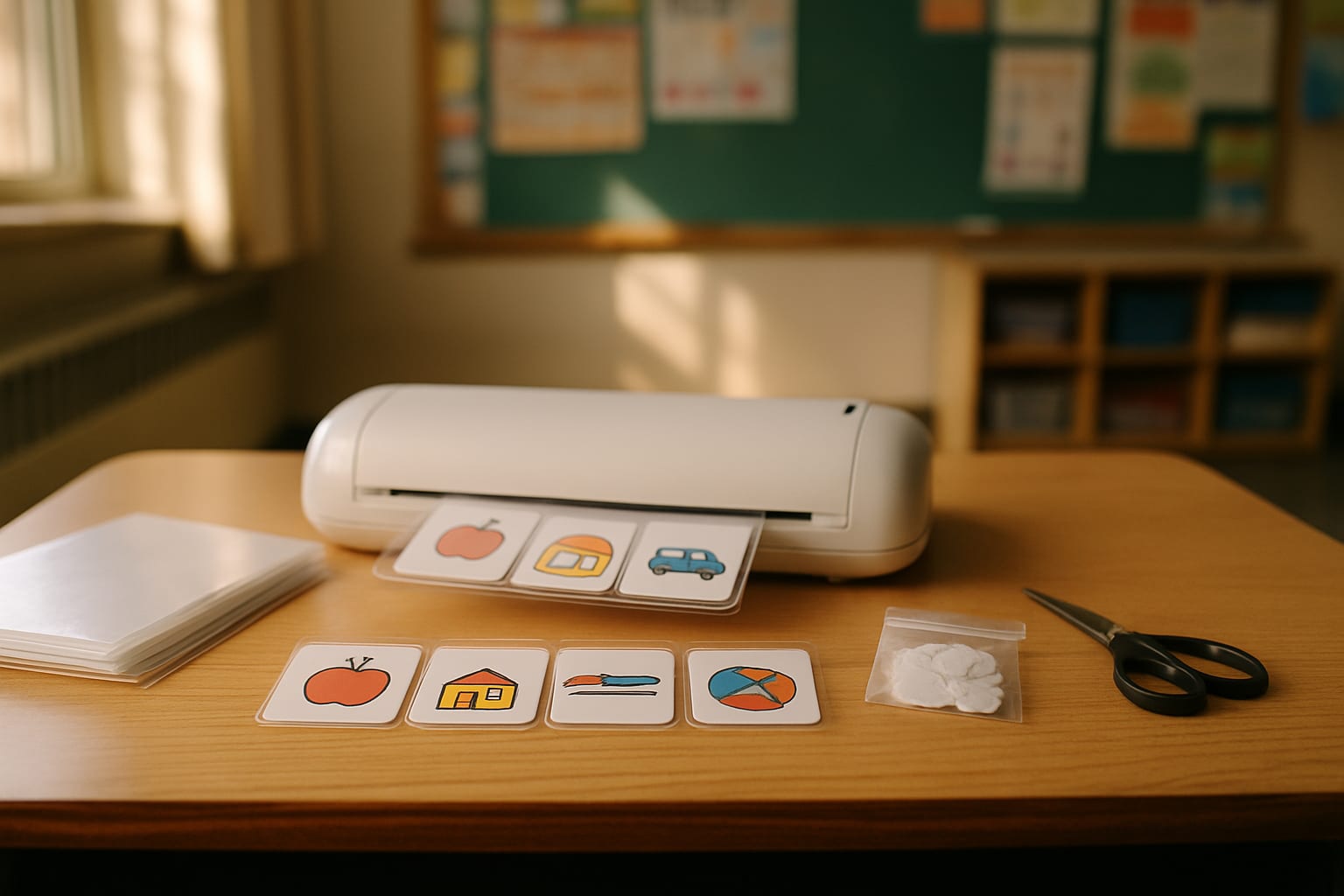
These are the two items that make every other visual support in the room possible.
Velcro dots
Every visual support you make (schedule cards, token pieces, communication icons) needs to attach somewhere and come back off cleanly. Sticky-back hook-and-loop dots are the unglamorous workhorse behind nearly all of it, and a single 250-set bag lasts most classrooms most of a year.

VELCRO Brand Sticky-Back Dots, 250 Sets
Laminating pouches and a laminator
Paper visuals do not survive a classroom. Laminate anything that will be touched, moved, or velcroed more than once: schedule cards, token boards, task-box labels, communication boards. A letter-size 200-pack of pouches covers a semester of visual-making for most rooms.

Scotch Thermal Laminating Pouches, Letter Size, 3 mil, 200-Pack
If your school does not already have a shared laminator in the workroom, a basic desktop thermal laminator is a genuinely worthwhile buy, not a nice-to-have. It is the tool that turns a paper printout into something that survives September through June.
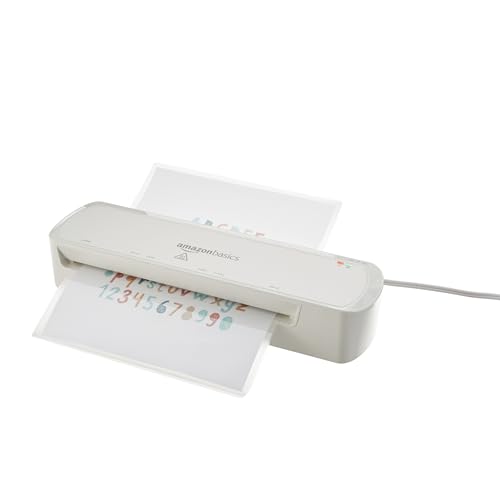
Amazon Basics 9-Inch Thermal Laminator Machine
A laminator only earns its place if something is feeding it pages, and the machine doing that is the one nobody budgets for properly. If yours is on its last legs, the best printer for teachers compares them on cost per page rather than sticker price, which is the number that decides what a year of printing actually costs you.
The calm-down corner
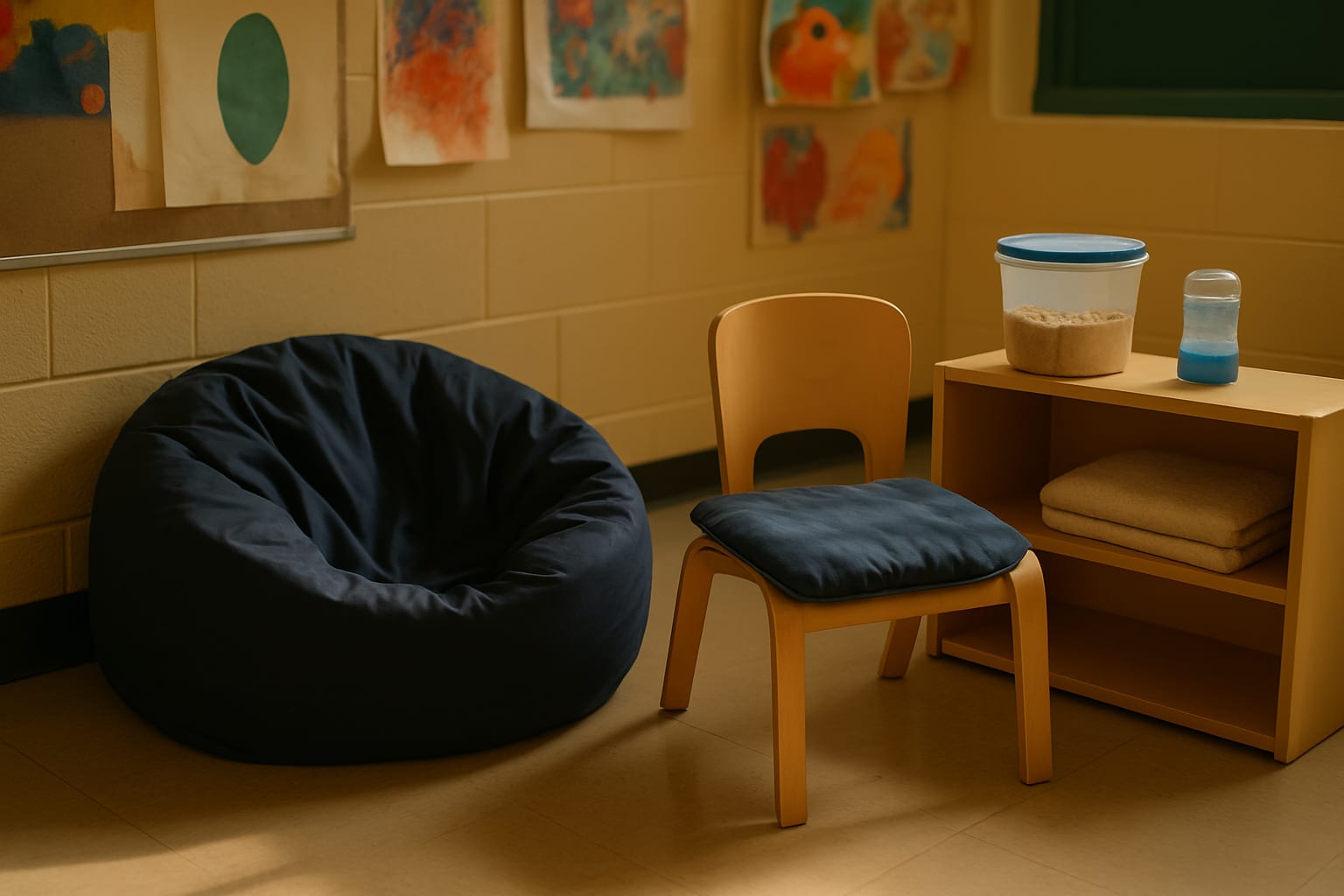
A small, rotating set of sensory items covers most regulation needs without turning the corner into a toy bin. The light over the corner matters as much as what sits in it: a magnetic fluorescent light cover softens that one fixture in minutes, no tools involved. These are the classroom deep-dive picks; for a fuller breakdown matched to a specific sensory need, see the dedicated guides linked under each one.
Kinetic sand
Contained, quiet, and mess-light compared to loose sand or water beads, kinetic sand gives slow, repetitive tactile input that many kids find organizing. Keep it in a bin with a lid and a designated spot so it stays a calm-down tool rather than a floor cleanup.
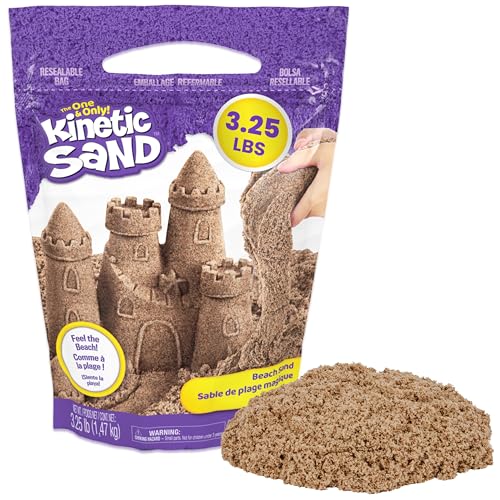
Kinetic Sand 3.25lb Beach Play Sand (Resealable)
Bubbles
A no-spill bubble tumbler is one of the few sensory tools that works as both a calm-down option and a transition cue: blowing bubbles slows breathing on its own, and watching them pop gives a visual, low-stimulation focus point. The no-spill design matters in a classroom; a bottle that tips over on a rug is a bubble tool nobody wants to reach for twice.

Little Kids Fubbles No-Spill Bubble Tumbler
A squeeze pillow
Deep-pressure input a student can access on their own, without an adult needing to deliver it, is one of the most independent calm-down tools available. A pressure-activated squeeze pillow gives that input in a single, contained object.
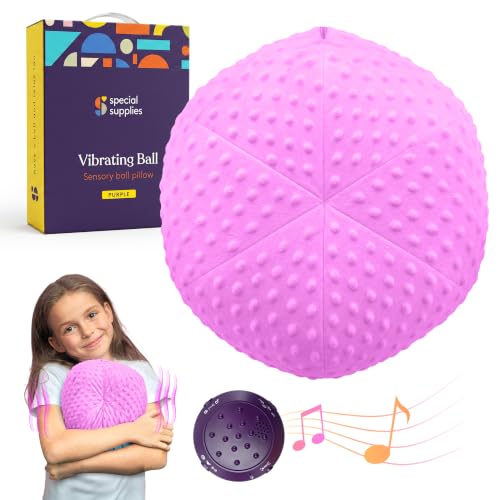
Special Supplies Vibrating Squeeze Ball Pillow
A weighted lap pad
A squeeze pillow delivers deep pressure a student actively seeks out; a weighted lap pad delivers it passively, resting on the lap through circle time or seated work without the student doing anything at all. That also makes it the one calm-down tool that regularly leaves the corner: plenty of teachers keep one at the desk of a student who settles with weight. A five-pound pad suits most elementary students; the full weighted lap pads guide covers weights by age and more options.
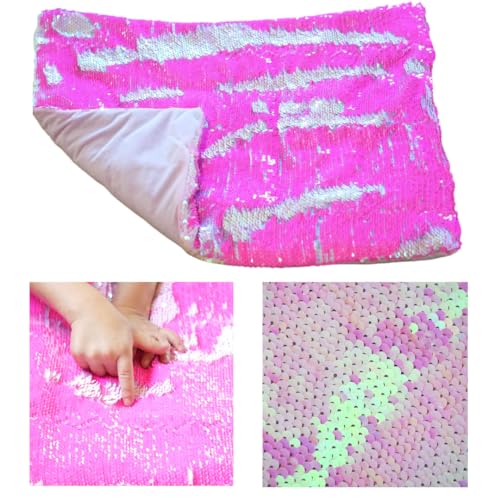
SENSORY4U Weighted Lap Pad
Fidgets
Fidgets belong in the calm-down corner and at the desk both. A simple silicone pop fidget covers the pressing-and-popping need for a wide range of kids and is cheap enough to keep several in rotation.

Silicone Bubble Pop Fidget Toy (5 Pack)
For a fuller sensory-need breakdown (stretchy, twisty, chewable, and more), see the full guide to sensory and fidget toys for autistic kids.
Squishies
A softer, texture-first alternative to a pop fidget. Mesh squishy balls give the same squeeze-and-release regulation as a stress ball with a different tactile feel, which matters because different kids seek different textures, and a corner with only one texture option runs out of usefulness fast.

Fun Express Glitter Mini Stress Balls with Mesh Design, 24 Pack
A pop-up blackout tent
A calm-down corner works because it feels separate from the rest of the room, and a pop-up blackout tent makes that separation literal. Step inside and the fluorescent glare, the visual clutter, and a good share of the noise are simply gone, even in full daylight. ODOXIA's tent pops open in seconds, fits one child, and folds flat when the room changes. For the student who regulates by retreating rather than by squeezing or watching something, this is the piece that finally does it.

ODOXIA Pop-Up Blackout Sensory Tent (Small)
A spinning chair
Spinning, rocking, and swinging are vestibular input, and it is the one sensory need the rest of the corner cannot touch: no fidget or squeeze pillow moves a student through space. A bowl-style spinning chair delivers that input in a contained, floor-level way that a classroom can actually supervise. Pterying's large version seats a child cross-legged inside the bowl, spins with the student's own body weight, and takes up to 220 pounds, so it keeps working well past the early grades. Put it on the sensory-time rotation with a visual timer and it becomes a scheduled input, not a toy fight. For the wider comparison, including what to do when a student is heavier than the 220-pound limit nearly every bowl chair shares, see the sensory spinning chairs guide.

Pterying Large Spinning Chair for Autistic Kids, 21 x 19 Inches
An oil-change mat for sensory play
Not a typo. A garage oil-change mat is an absorbent felt sheet with a waterproof, non-slip rubber back, which is exactly the spec of a sensory-play surface, at a fraction of the price of a purpose-made play tray. Kinetic sand, water beads, shaving cream, rice bins: the activity happens on the mat, spills soak in or stay put instead of reaching the carpet, and cleanup is shaking it off over a trash can. GOLENER's 29 by 36 inch mat covers a small table or a floor spot, and it goes in the washing machine when it needs more than a shake.

GOLENER Washable Oil Spill Mat, 29 x 36 Inches
Flexible seating and focus
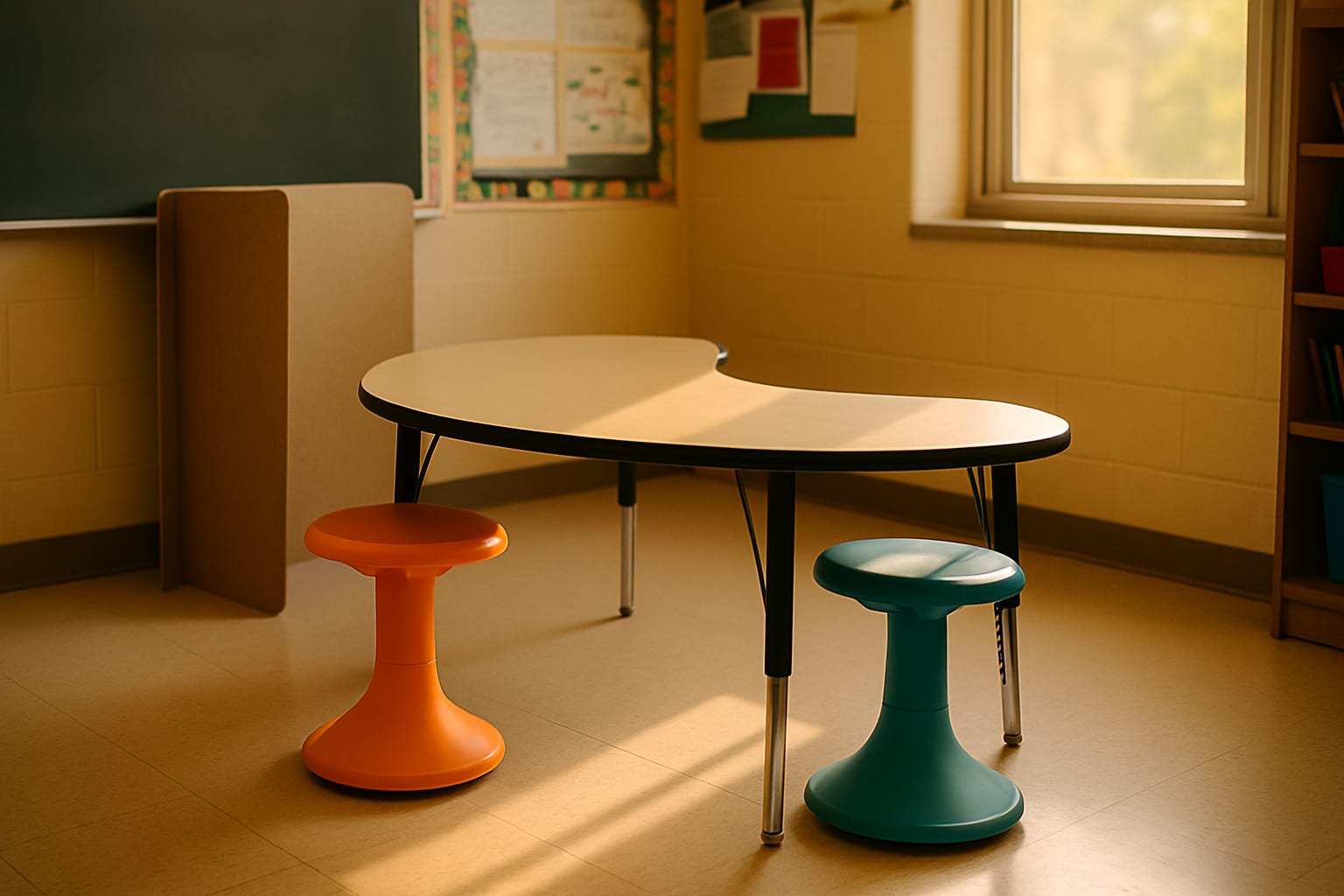
Three bigger-ticket items earn their place in a special education room by solving problems no consumable can: the student who needs to move, the student who cannot filter out the rest of the room, and the student who needs somewhere to land.
A wobble stool
Some students genuinely focus better with movement built into sitting, and a wobble stool provides that movement without the student leaving the seat. The ECR4Kids ACE stool sits at a fixed 18 inches, which suits upper elementary and middle school desks rather than the smallest chairs, so check your desk height before ordering. Add one or two and let students rotate through them rather than re-seating the whole room at once. A wobble cushion does a smaller version of the same job on an existing chair for about a third of the price, which makes it the right first step if you are not sure movement seating will stick.

ECR4Kids ACE Active Core Engagement Wobble Stool, 18-Inch Seat Height
Desk privacy shields
An independent work station only works if the student at it is not watching everything else in the room. Folding privacy shields turn any desk into a study carrel for independent work, testing, or a distraction-free reset, then fold flat and store when the station changes. A 16-pack covers a self-contained class with spares.

Desk Privacy Shields, Waterproof Study Carrel Dividers, 16-Pack
A huge beanbag
A giant beanbag is two pieces of furniture in one: a break-choice destination a student can pick off the choice board, and an independent-work spot for the reader who focuses better sprawled than seated upright. Big Joe's 4-foot Fuf is genuinely huge next to an elementary student, it is filled with shredded foam rather than beads (so it holds its shape instead of flattening by October), and the cover zips off and washes, which in a self-contained room is not optional. Park it in the corner and let the choice board decide who lands on it.

Big Joe Fuf 4Ft Foam Bean Bag Chair with Removable Cover, Desert Rose Lenox
Instruction supplies
Dot markers
Dot markers (also called bingo daubers) are one of the most versatile independent-work tools in a special education room: they build fine-motor control, work for matching and counting tasks, and need almost no verbal instruction to use correctly, which matters for a student working independently at a task-box station.

Do A Dot Art! Rainbow Washable Dot Markers (6-Pack)
Dry-erase pockets
Not everything needs the laminator. A dry-erase pocket turns any printed worksheet into a reusable wipe-clean surface, which is exactly what a task-box station or a handwriting practice sheet needs: the same page used daily without printing and laminating a class set every week. Our free worksheet maker is built for that pairing: print one page per student, slide it into the pocket, and the same sheet works all week. The sheet inside swaps out in seconds, which laminate cannot do, and SUNEE's oversized 30-pack covers a full class set in ten colors.

SUNEE Oversized Reusable Dry Erase Pocket Sleeves, 10 x 14 in, 30-Pack
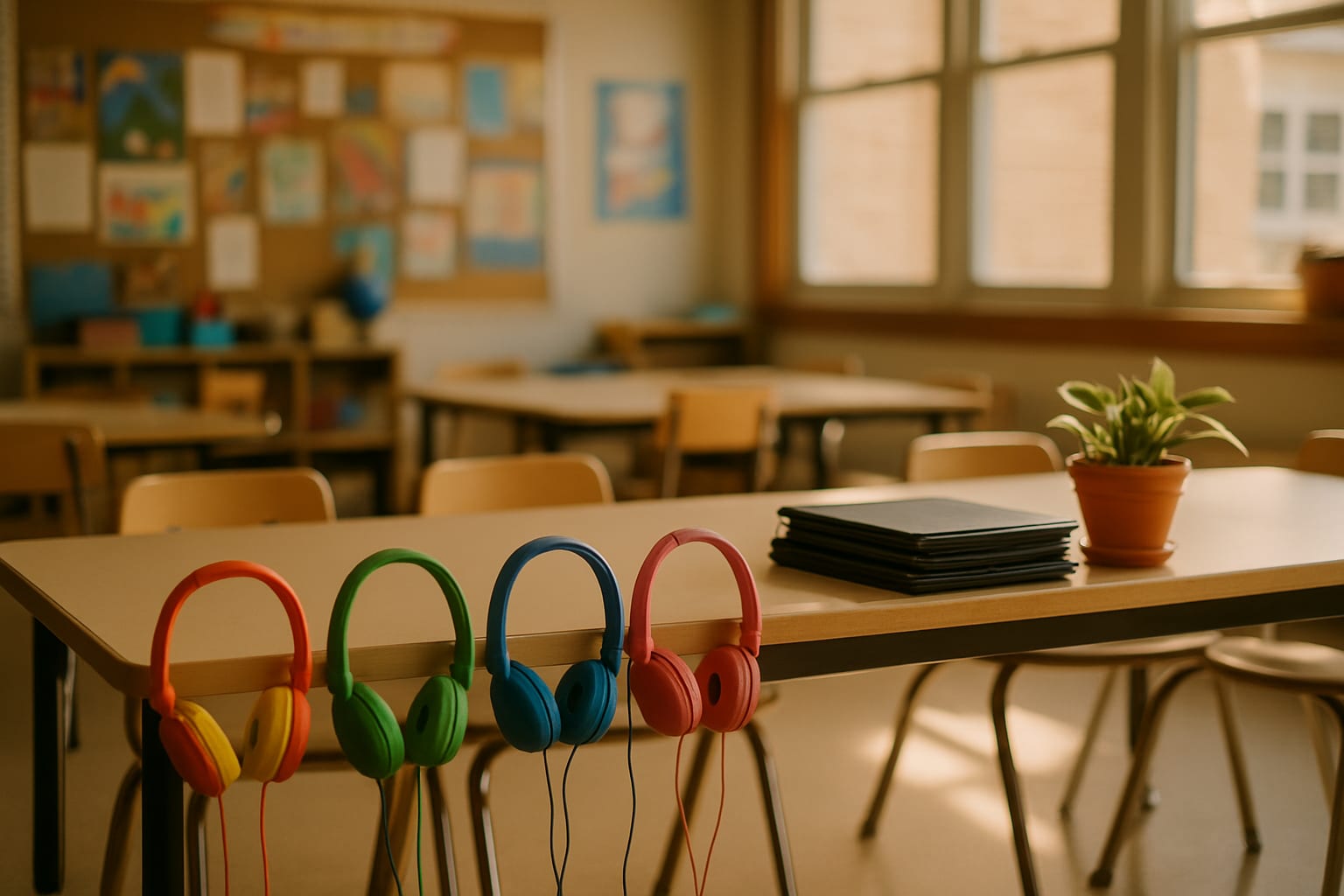
Classroom headphones
Listening centers, computer-based instruction, and testing accommodations all assume working headphones, and in a special education room they break or wander off faster than anywhere else in the building. A bulk classroom pack with volume limiting keeps a rotation alive without replacing the whole set the first time one pair fails. These are audio headphones for device time; for noise reduction on a sound-sensitive student, the ear defenders guide covers that separate job.

AILIHEN Classroom Headphones Kids 10-Pack, 85dB Volume with Mic and SharePort
Visual timers
A visual timer belongs in almost every instruction block, from independent work to a calm-down break, because it makes an abstract amount of time into something a student can see counting down. The classic 8-inch disk timer remains the classroom standard for a reason: the shrinking red disk reads from across the room, silently, with no numbers a student has to interpret.

Time Timer Original 8 inch Visual Timer
Spectrum Unlocked's full roundup of visual timers for autistic kids covers more picks by classroom job, from wearable options for older students to timers built into wake-up clocks.
Mr. Potato Head
Ask a speech-language pathologist what lives in their therapy bag and a Potato Head is usually in it. One toy covers a remarkable number of language targets: requesting parts, naming body parts, following directions ("put the blue shoes on first"), prepositions, turn-taking, and describing the ridiculous result at the end. The Create Your Family set is the classroom version of the idea, with three potato bodies and 44 parts and pieces, so a small group builds at the same time instead of waiting on one spud. It earns a spot in the speech rotation even if no SLP ever sets foot in your room.

Potato Head Create Your Family Set, 44 Pieces
A mystery box
A mystery box is the cheapest vocabulary routine in the building: put an object inside, and students ask questions, reach in without looking, describe what they feel, and guess. The trick is that the box itself has to read as an event, which is why a rigid birthday gift box beats a shoebox. BIOBROWN's 9-inch cube is sturdy cardboard with a full lid and a birthday print, and it is deep enough that a reaching hand cannot sneak a look at what it is holding. Rotate one object a day and the same box carries a vocabulary block all year.

BIOBROWN Birthday Design Gift Box with Lid, 9 x 9 x 9 Inches
A slides clicker
If any part of your instruction runs through slides or videos, a wireless presenter buys back your position in the room. Start and stop a video from beside the student who needs you next to them, advance a slideshow activity from the back table, and never be trapped behind the laptop again. DinoFire's clicker is the budget classroom standard: plug the USB receiver in, and the buttons cover slide advance, hyperlinks, and volume from a hundred feet away, on one AAA battery.

DinoFire Wireless Presenter with Volume Control
Behavior and visuals: free before you buy
This is the one category on the must-haves list where the right answer is usually not a purchase. Token boards, first-then boards, and full visual schedules are the backbone of a special education classroom's behavior system, and Spectrum Unlocked builds and prints all three free:
- The Visual Schedule Maker builds a printable, laminate-ready daily schedule in minutes.
- The Token Board Maker builds a reinforcement board sized to however many tokens a student is working toward.
- The First-Then Board Maker builds the simplest version of the same idea for a student who needs one clear step at a time.
Build one, print it, and laminate it with the pouches above. That is the actual must-have here: the free tool plus the lamination, not a store-bought board. The same free-first rule covers the first week of school: the All About Me worksheet packet includes a symbol-supported version, so the getting-to-know-you activity works for students who do not write yet. And it covers your own desk too: the free special education teacher planner has the IEP dates tracker, caseload page, and para schedule that no store-bought planner includes.
Self-contained classroom must-haves? Same list
If you searched for self-contained classroom must-haves instead of special education classroom must-haves, you landed in the right place. The list does not change; a self-contained room just leans harder on a few of these items. The calm-down corner sees more daily use because it usually serves as a designated regulation space rather than an occasional break spot, so restock the kinetic sand, bubbles, and squeeze pillow supply more often than you would in a resource room. Velcro dots and laminating pouches also run out faster in a self-contained classroom, because visual supports typically cover more of the day: a full visual schedule, a token board, and communication supports at every station, rather than one or two visuals used occasionally.
From preschool to high school: must-haves by grade band
The categories on this list stay the same at every age. What changes is the size, the discretion, and how independently a student uses each item.
Preschool. Go bigger and more supervised: chunky dot markers a small hand can grip, larger velcro dots that are easier to place, and sensory bins (kinetic sand, bubbles) used with an adult nearby rather than left out for independent access. Squishies and fidgets should be big enough that they are not a choking risk.
Elementary. This is where independent work systems really kick in: laminated task cards, a dot-marker station for fine-motor practice, and a fidget rotation a student can choose from without asking. The calm-down corner starts to include a visual choice board so students pick their own regulation tool.
Middle school. Swap anything visibly "for little kids" for something more discreet. A quiet stress ball or a mesh squishy reads as normal in a middle schooler's hand in a way a squeaky pop fidget does not. Visual timers stay useful, but a smaller, less toy-like model fits the room better than a bright kids' version.
High school. Lean toward self-management tools: a visual timer or planner a student runs themselves, a discreet fidget that fits in a pocket, and calm-down tools framed as stress management rather than a sensory bin. The underlying categories (something to squeeze, something to watch, a way to track time) are the same ones a preschool classroom uses; only the packaging changes.
Building your classroom wishlist
A lot of special education teachers build their must-haves list as an actual Amazon wishlist or a DonorsChoose project, and this list works well for that because nearly every item on it is a cheap, easily understood consumable. A parent or PTA member who will not fund a $300 sensory swing will happily fund a $12 pack of dot markers or a case of laminating pouches, because the ask is small and the purpose is obvious. If you are building a public wishlist, keep it to consumables like the ones above rather than furniture or big equipment, and update it each semester as items run out rather than leaving a stale list up all year. For the mechanics of actually building and sharing that list, plus the general-ed picks (chart paper, book bins, a wobble stool) that round out a wishlist alongside these, see Spectrum Unlocked's classroom wishlist ideas roundup.
Before you spend your own money on any of this, check two things first: your school's supply closet (some districts stock laminators, pouches, and velcro by the roll, and a new teacher who does not ask often does not know it is there) and your department or IEP-team budget for consumables. Ask what your school already provides before you buy it yourself. Filling a real gap after checking beats guessing at one.
Worth knowing if a parent asks what to get you: the consumables on this list are exactly what surveyed teachers say they want and almost never receive, and laminating pouches and hook-and-loop dots go further in a special education room than anywhere else. Spectrum Unlocked's teacher gift guide makes that case with the numbers, it includes the paraprofessional most families forget entirely, and the Teacher Appreciation Week plan shows a whole class how to pool for the bigger items on a list like this.
One purchase does belong in your own budget, though, because no district will ever fund it: your shoes. A self-contained room is a standing job on a concrete floor, and the difference between the right pair and the wrong pair is felt by 2pm every single day. Spectrum Unlocked's guide to the best shoes for teachers sorts the picks by the job they do, including the ones that let you get down on the floor and back up fast.
Product picks checked against Amazon listings on August 7, 2026, and the seven classroom additions on August 9, 2026. This is a shopping guide built from common special education classroom setups; check your school's supply and purchasing policy before buying, and see the self-contained classroom setup guide for the room-by-room plan this list stocks.
Some links on this page are affiliate links. If you buy through them, we may earn a small commission at no extra cost to you.
Products mentioned in this article
VELCRO Brand Sticky-Back Dots, 250 Sets
Scotch Thermal Laminating Pouches, Letter Size, 3 mil, 200-Pack
Amazon Basics 9-Inch Thermal Laminator Machine
Kinetic Sand 3.25lb Beach Play Sand (Resealable)
Little Kids Fubbles No-Spill Bubble Tumbler
Special Supplies Vibrating Squeeze Ball Pillow
SENSORY4U Weighted Lap Pad
Silicone Bubble Pop Fidget Toy (5 Pack)
Fun Express Glitter Mini Stress Balls with Mesh Design, 24 Pack
ECR4Kids ACE Active Core Engagement Wobble Stool, 18-Inch Seat Height
Desk Privacy Shields, Waterproof Study Carrel Dividers, 16-Pack
Do A Dot Art! Rainbow Washable Dot Markers (6-Pack)
SUNEE Oversized Reusable Dry Erase Pocket Sleeves, 10 x 14 in, 30-Pack
AILIHEN Classroom Headphones Kids 10-Pack, 85dB Volume with Mic and SharePort
Time Timer Original 8 inch Visual Timer
ODOXIA Pop-Up Blackout Sensory Tent (Small)
Pterying Large Spinning Chair for Autistic Kids, 21 x 19 Inches
GOLENER Washable Oil Spill Mat, 29 x 36 Inches
Big Joe Fuf 4Ft Foam Bean Bag Chair with Removable Cover, Desert Rose Lenox
Potato Head Create Your Family Set, 44 Pieces
BIOBROWN Birthday Design Gift Box with Lid, 9 x 9 x 9 Inches
DinoFire Wireless Presenter with Volume Control
Prices and availability are accurate as of the date/time shown and are subject to change. Any price and availability information displayed on Amazon at the time of purchase will apply to the purchase of this product.
Planning for a room where every student needs something different?
Beacon remembers your students and your setting, so you are not re-explaining them every time.
What would Beacon say?
"Help me plan a week for a mixed-goal group"
Beacon works from the goals and levels already in your room, then gives you something you can run on Monday. Not a blank template to fill in on Sunday night.
Spectrum Unlocked Editorial Team
Editorial Team
The Spectrum Unlocked editorial team combines lived experience as autism parents with research-backed guidance to create resources families can trust.
Frequently asked questions
- What should be on a sped teacher's wishlist?
- Keep it to consumables and small tools that run out or wear out fast: velcro dots, laminating pouches, dot markers, bubbles, a squeeze pillow, and a few fidgets or squishies. These are cheap individually, easy for a parent or PTA to fund, and they are exactly the items a classroom quietly runs out of by October. Save big-ticket items like a laminator for a DonorsChoose project or a department budget request rather than a wishlist a single family might fund.
- What do I actually need for a self-contained classroom?
- Past the furniture and the room layout, the must-haves are the same short list every self-contained teacher restocks: velcro dots for visual supports, laminating pouches and a laminator to make them durable, a calm-down corner stocked with kinetic sand, bubbles, a squeeze pillow, fidgets and squishies, dot markers for independent work tasks, and a behavior-and-visuals system built from free tools like a token board or first-then board rather than bought. If you have not set up the room itself yet, the self-contained classroom setup guide covers zones and layout; this list covers what goes in them.
- Do I need to buy a laminator, or can I get by with pouches alone?
- A laminator earns its cost fast in a special education classroom because visual supports get laminated far more often than a general-ed room's materials do: schedule cards, token boards, task-box labels, and communication cards all hold up better and longer once sealed. A basic desktop thermal laminator is inexpensive and pays for itself within a semester of use. If your school already has a shared laminator in the office, pouches alone are the only purchase you need.
- What goes in a special education calm-down corner?
- A small rotation covers most sensory needs: something to squeeze (a squeeze pillow or stress ball), something to watch or manipulate slowly (kinetic sand or bubbles), and one or two fidgets for hands that need to stay busy. If the corner has the floor space, a pop-up blackout tent turns it into a true retreat, and a spinning chair covers the vestibular need nothing handheld can. Add a visual choice board so a student can pick their own regulation option instead of being handed one, and a visual timer so the break has a visible end. For deeper picks matched to a specific sensory need, see the full guides to sensory and fidget toys and to weighted lap pads.
- What are special education classroom must-haves for preschool versus high school?
- The categories stay the same across every grade band; only the specific items change size and sophistication. Preschool leans on bigger, chunkier pieces (large dot markers, bigger velcro dots, supervised sensory bins). Elementary adds independent work-system materials like laminated task cards and a wider fidget rotation. Middle and high school swap the visible calm-down toys for more discreet ones (a quiet stress ball instead of a squeaky one) and add self-management tools like a visual timer or planner. The full grade-band breakdown is below.
- Where should I buy special education classroom supplies?
- Amazon covers most of this list in one place, which is why 'special education classroom must haves amazon' is how a lot of teachers search for it, but check your school's approved vendor list first since some districts require purchase orders through specific suppliers. For the small consumable items (pouches, dot markers, velcro dots), a personal Amazon order is often faster than a purchase order and cheap enough to expense or fund through a classroom wishlist.
- How much does it cost to stock a special education classroom?
- The consumables on this list (velcro dots, a case of laminating pouches, dot markers, a few calm-down items) typically run under $150 total, and a laminator adds another $30 to $50 if the school does not already have one. That is a realistic starting budget for the must-haves themselves; it does not include furniture, curriculum, or larger sensory equipment like a weighted vest or a sensory swing, which are worth budgeting for separately once the basics are covered.