Best Weighted Stuffed Animals for Autistic Kids (Deep-Pressure Calm They Will Actually Cuddle)
The weighted stuffed animals that give an autistic child the calming deep pressure of a hug in a form they will actually hold: washable heavy plush, a microwavable warm one, lighter sizes for little ones, and a travel pick, plus the weight and safety rules that matter.
Key Takeaways
- A weighted stuffed animal calms the same way a hug does. The gentle, even weight is deep pressure, and deep pressure tells an autistic child's nervous system it is safe to settle, which is why a good one can take the edge off anxiety, help with focus, and ease the wind-down before sleep. The difference from a weighted blanket is that a child will actually carry a favorite animal with them.
- Match the weight to the child, and start lighter than you think. The common guide is around ten percent of body weight, but with a stuffed animal that a child holds rather than lies under, lighter is usually plenty and safer. The single most important rule is that your child must be able to lift it, move it, and push it off entirely on their own.
- The two big feature choices are washable and warmable. A plush with a removable weighted insert unzips so the outside goes in the washing machine, which matters more than parents expect once real life happens to it. A microwavable one adds gentle warmth and often a calming scent, which is lovely at bedtime but is a different tool for a different moment.
- This is the portable, kid-friendly cousin of the weighted blanket. It goes to school in a backpack, rides along in the car, sits on a lap in a waiting room, and comforts at a sleepover, in situations where a blanket would be impossible and a child still needs their input. For many kids it is the deep-pressure tool they will actually accept.
- Weight is not automatically safe just because it is cute. Supervise use, never give a weighted item to a child who cannot reposition or remove it themselves, keep it off of infants entirely, and treat the weight as a comfort tool, not a restraint. Used with those rules, it is one of the gentlest sensory supports there is.
A weighted stuffed animal is a hug your child can hold. The even, gentle weight is deep pressure, and deep pressure is one of the most reliable ways to tell an anxious, revved-up, or overwhelmed nervous system that it is safe to come down. It is the same principle behind a firm squeeze or a swaddle, packaged as something a kid will actually want to carry around, which is exactly why so many autistic families reach for one.
That last part matters more than it sounds. A weighted blanket is wonderful at home in bed, but it does not come to school, ride in the car, or sit on a lap in a dentist's waiting room. A weighted animal does all of that, and a child who refuses most sensory gear will often accept a soft companion they picked themselves. Below are the ones worth owning, plus the weight and safety rules that keep it a comfort rather than a hazard.
Before You Buy Anything
- Start lighter than you expect. The ten-percent-of-body-weight guide comes from blankets. An animal a child holds needs far less, so begin with two to three pounds for a smaller child and only move up for a bigger kid or teen.
- Confirm your child can move it themselves. The non-negotiable safety rule: your child must be able to lift it, shift it, and push it off entirely on their own. If they cannot, it is too heavy or not right for them.
- Decide washable or warmable. A removable-insert plush goes in the washing machine; a microwavable one adds calming warmth but cannot be washed the same way. They are different tools for different moments, and many families own one of each.
- Let your child have a say in the animal. The whole advantage here is that a kid will accept and carry something they love. A favorite animal or a special-interest creature beats the objectively best plush they feel nothing for.
How We Chose
No lab and no invented star ratings. We sorted the market against what actually helps an autistic child, using product specs, occupational-therapy guidance on deep pressure and safe weighting, and our own work with sensory-seeking kids. The rubric:
- Real, even deep pressure. Weight distributed through the animal, not lumped in the middle, so it lies calmly across a lap or chest.
- A weight that suits a child. Options across the two-to-five-pound range so you can match your kid, and a clear steer to start light.
- Cleanability or a bonus feature. A removable washable insert, or genuinely useful warmth and scent.
- A form a child will accept. Soft, huggable, and available in animals kids actually bond with.
- Safety. Sealed weight, sound seams, and honest guidance on age, supervision, and removal.
Here is which weighted animal fits which need.
Weighted Stuffed Animals for Autistic Kids
Best overall: Hugimals Charlie the Puppy
The one to start with for most kids. Hugimals spreads a full four and a half pounds evenly through a large, genuinely soft twenty-inch plush, so the pressure lies calmly across a lap or chest instead of bunching, and the weight sits in a removable insert that zips out so the whole outer animal goes in the washing machine. That washability is the quiet reason it lasts. It reads as a real cuddle toy rather than a therapy device, which is what gets a reluctant kid to accept it, and it suits everyone from a bigger child up through teens and adults. If you buy one weighted animal, make it this kind.
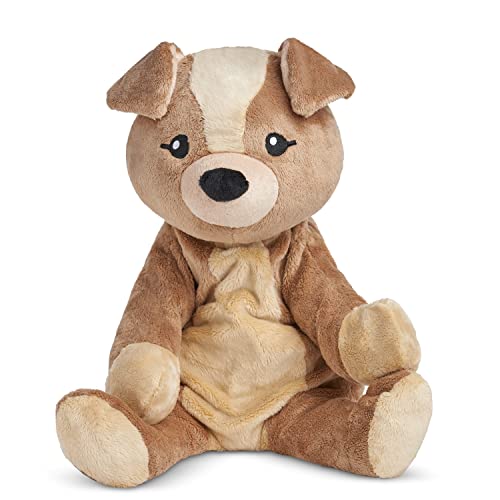
Hugimals Charlie the Puppy Weighted Plush (4.5 lb)
Best classic value: Weighted Teddy Bear
For the family who wants the input without the premium price. This is a straightforward washable weighted teddy at around three pounds, a comfortable middle weight that suits a lot of kids, in the familiar bear shape almost every child already trusts. It does the core job, steady deep pressure in a soft, huggable form, without extra features to pay for. If you are testing whether a weighted animal helps your child before investing more, or you simply want a solid everyday buddy, start here.

Weighted Teddy Bear (3 lb, Washable)
Best heavier option for bigger kids: Lilly's Love Pete the Panda
For the older child or teen who needs more to feel it. At five pounds, this panda delivers noticeably deeper pressure for a bigger body that a lighter animal barely registers on, and the weight lives in a removable insert so the plush still machine washes. The panda shape has a broad appeal that reads well past the toddler years, which matters for a teenager who wants comfort without a babyish toy. Keep the ten-percent guide and the can-they-move-it rule in mind as the weight goes up, and this is the pick for the kid the lighter ones do not reach.
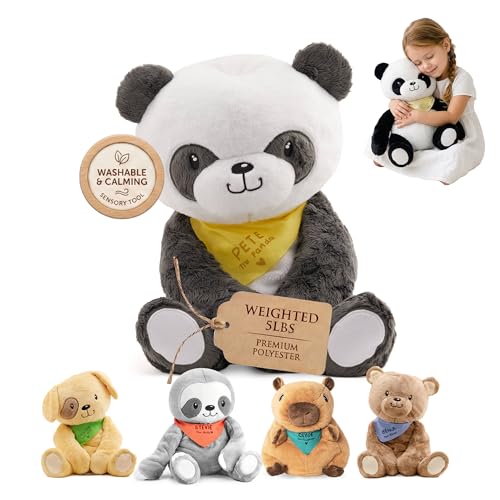
Lilly's Love Pete the Panda Weighted Plush (5 lb)
Best for bedtime warmth: Warmies Microwavable Golden Dog
For the child whose calm comes from warmth as much as weight. A minute in the microwave and this golden dog gives off gentle, spreading heat along with a soft lavender scent from its flaxseed filling, layering warmth and a calming smell on top of the light weight. That combination is soothing at bedtime, during a stomachache, or on an anxious evening, in a way plain weight is not. It is not the one you machine wash, so keep it as the bedtime-routine animal alongside a washable daytime buddy, and it can go in the freezer too for a child who is soothed by cool instead.

Warmies Microwavable Weighted Golden Dog (Lavender)
Best lighter weight for little ones: Warmies Junior Hedgehog
For a smaller or younger child who needs a gentler amount. The junior size keeps the same warmable, softly weighted design in a smaller, lighter package that suits little hands and little bodies, where a four or five pound animal would simply be too much. It is easy for a small child to carry, hug, and move on their own, which keeps it firmly on the safe side of the weight rule. For a toddler or preschooler just meeting deep pressure for the first time, a lighter animal like this is the right doorway in.

Warmies Junior Microwavable Weighted Hedgehog
Best for travel: Weighted Sloth with Carrying Bag
For the child whose hardest moments happen away from home. This five-pound weighted sloth comes with its own carrying bag, which sounds minor until you are packing for a flight, a long car trip, or a stay at grandma's and need the one thing that reliably settles your child to come along cleanly. The sloth shape has a devoted following of its own, and the machine-washable build survives the realities of travel. When the goal is portable, packable deep pressure for the trips that throw an autistic kid off, this is the one that travels.

Weighted Sloth Plush with Carrying Bag (5 lb)
A Word on Weight and Safety
Weight is a real tool, which means it deserves real care. Keep three rules and a weighted animal stays firmly in the comfort column. First, your child must always be able to lift, move, and remove it themselves; if they cannot do that independently, it is too heavy or not appropriate for them. Second, keep it off infants entirely, and supervise use for young children, especially at sleep, keeping the weight low and off the face and neck. Third, if your child mouths or bites, choose a plush with the weight sealed inside a separate removable insert rather than loose in the body, and check the seams regularly, since the pellets inside are a choking risk if a determined chewer gets to them.
A weighted animal is a comfort object, never a restraint, and it is not a substitute for a properly fitted weighted blanket when a child needs heavier input to sleep. And when the moment calls for grounding pressure while a child sits still, at a desk, the dinner table, or in the car, a weighted lap pad is the flat, daytime companion to a cuddly plush. Within those lines, a weighted animal is one of the gentlest and most portable sensory supports you can give.
The Hug That Goes Everywhere
The reason a weighted animal earns its place is simple: it delivers real, calming deep pressure in the one form a child will carry into all the moments that are hard. Pick the weight to fit your child and start light, let them choose an animal they actually love, and keep the safety rules in view. Then let it do its quiet work, on the lap in the waiting room, in the backpack at school, and against the chest at bedtime.
Where it fits best is inside a wider plan. Deep pressure is one input among several, and the sensory room guide shows how it sits alongside movement, calm-down space, and sound control, while a weighted blanket and weighted vest cover the moments an animal cannot. If you are not yet sure whether deep pressure is what your child is seeking, the sensory profile quiz is the place to start. Match the tool to the child, and a stuffed animal becomes one of the most reliable ways to hand your kid a moment of calm.
Products mentioned in this article
Hugimals Charlie the Puppy Weighted Plush (4.5 lb)
Weighted Teddy Bear (3 lb, Washable)
Lilly's Love Pete the Panda Weighted Plush (5 lb)
Warmies Microwavable Weighted Golden Dog (Lavender)
Warmies Junior Microwavable Weighted Hedgehog
Weighted Sloth Plush with Carrying Bag (5 lb)
Prices and availability are accurate as of the date/time shown and are subject to change. Any price and availability information displayed on Amazon at the time of purchase will apply to the purchase of this product.
Sensory overwhelm shows up differently in every child.
Beacon learns about YOUR child and gives guidance specific to them.
What would Beacon say?
"What sensory strategies actually work for my child?"
Beacon factors in your child's specific sensitivities (sound, light, texture, movement) and current regulation, then builds a sensory plan you can start tonight.

Spectrum Unlocked Editorial Team
Editorial Team
The Spectrum Unlocked editorial team combines lived experience as autism parents with research-backed guidance to create resources families can trust.
Frequently asked questions
- How heavy should a weighted stuffed animal be for my child?
- Lighter than most parents guess. The rule of thumb people repeat for weighted products is about ten percent of body weight, but that guidance comes from blankets a child lies under, and a stuffed animal a child holds on their lap or against their chest does its job at much less. Start on the lighter end, a two to three pound animal for a smaller child and up toward four or five pounds only for a bigger kid or teen, and watch how they respond. The one firm rule underneath all of it: your child must be able to lift it, shift it, and push it off completely by themselves. If they cannot, it is too heavy.
- What is the difference between a weighted stuffed animal, a weighted blanket, and a weighted vest?
- They deliver the same deep-pressure input in different forms for different moments. A weighted stuffed animal is portable and social, something a child holds and takes with them, ideal for a lap, a car seat, or a backpack. A weighted blanket covers the whole body for sleep and long calm-down time at home. A weighted vest wears the input on the body so a child can stay regulated while moving around, at a desk or in a classroom. Many families use more than one, matched to where and when their child needs the input.
- Are weighted stuffed animals safe to sleep with?
- For most kids who can move and remove it themselves, a light weighted animal is a fine bedtime companion, and it can genuinely help the wind-down. The safety line is repositioning: your child has to be able to push it off and change position freely in their sleep, so keep the weight low for overnight use, keep it off the face and neck, and never give a weighted item to a child who cannot move it on their own or to an infant. If your child needs heavier input to sleep, that is a job for a properly sized weighted blanket, used per its own age and weight guidance, rather than a heavier animal.
- Can a weighted stuffed animal really calm an autistic child down?
- For many kids, yes, and the reason is not mysterious. The steady weight provides deep pressure, a proprioceptive input the body reads as safe and grounding, the same principle behind a firm hug, a swaddle, or a therapist's calming squeeze. It will not stop a full meltdown that is already in full swing, but as a proactive tool, held during a tense car ride, hugged while transitioning between activities, or cuddled at bedtime, it can lower the baseline enough to keep a wobble from becoming a crash. Where it fits is as one reliable input in a wider sensory plan, which Spectrum Unlocked's sensory room guide lays out.
- Should I get a washable one or a microwavable warm one?
- They solve different problems, so choose by what your child needs. A washable weighted plush with a removable insert unzips so the outer toy goes straight in the machine, which you will be grateful for the first time it meets a stomach bug or a muddy playground, and it is the better everyday pick. A microwavable one, warmed for a minute, adds gentle heat and usually a calming scent like lavender, which is soothing at bedtime or during a stomachache but is not something you toss in the wash. Plenty of families keep a washable one for daily use and a warm one for the bedtime routine.
- My child chews or mouths things. Any concerns with weighted plush?
- Yes, supervise closely and check the build. Weighted animals are filled with small pellets or beads, usually inside a sewn or zip-in insert, and a child who bites through seams could reach them, which is a choking and ingestion risk. For a mouthing child, choose a well-made plush with the weight sealed in a separate removable insert rather than loose in the body, inspect the seams regularly, and keep use supervised. If oral input is what your child is really seeking, a safe chewable meets that need directly and pairs well with a weighted animal for the deep-pressure side.