The Best Sensory Crash Pads for Autistic Kids, and How to Place One Safely
Sensory crash pads compared by size, foam type, and cover, plus where to put one, what it is not safe for, and how to build your own from a cover and spare pillows.
Key Takeaways
- A crash pad gives a child who throws their body into furniture a target that is meant to take it. The input they are chasing is proprioceptive, the deep feedback that comes from muscles and joints under load, and it tends to be organizing rather than winding up.
- Size is the decision that matters most. A 5 x 5 ft pad suits a running start and a growing child, 4 x 4 fits most bedrooms and is far easier to move, and 3 x 3 is a toddler or small-corner pad.
- A crash pad is a landing surface for floor-level crashing, not fall protection. It is not a substitute for a certified surface under a bunk bed, loft, or climbing frame, and it should never be positioned to encourage jumping from height.
- Shredded foam packs down and shifts, foam blocks stay springier for longer. Whichever you buy, a removable and machine-washable cover is the feature you will be most grateful for.
- You can make one for far less by buying a cover only and stuffing it with spare pillows, blankets, and soft toys, which is also how you get a bigger pad without the bigger price.
Some children learn early that the fastest way to feel settled is to throw themselves at something. The sofa, the wall, a sibling, the floor. It looks like recklessness and it is usually a request: the body is asking for deep, heavy feedback, and it will keep asking until it gets some.
A crash pad is the piece of equipment that answers that request without anyone getting hurt or anything getting broken. It is a thick, soft, foam-filled cushion big enough to land on, and for a lot of families it is the single most-used thing in the house.
The short answer
- Buy on size first. 5 x 5 ft for a running start and a growing child, 4 x 4 for a bedroom and easier moving, 3 x 3 for toddlers or a small corner.
- Pick your fill. Shredded foam sinks and conforms, foam blocks stay springier and compress more slowly.
- Insist on a removable, washable cover. This is not a luxury on something a child lands on daily.
- Place it in clear space, away from corners, glass, and anything climbable.
- Do not treat it as fall protection. It is for crashing at floor level, not for landing from height.
- Short on budget? Buy a cover only and stuff it with pillows and blankets.
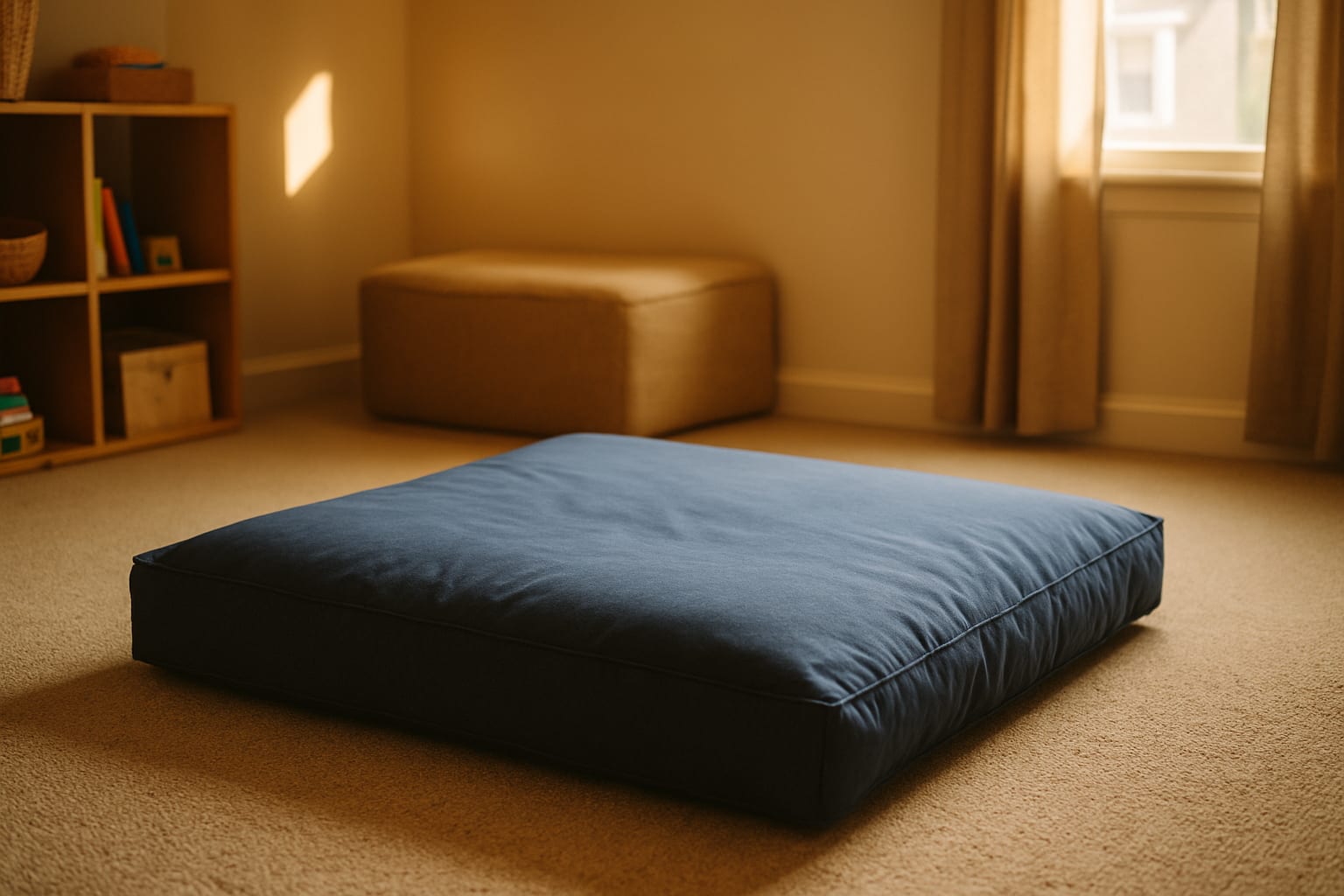
Why occupational therapists reach for these
The input a crashing child is chasing is called proprioception: the sense that tells you where your body is and how hard it is working, fed by receptors in muscles and joints. It is stimulated by pushing, pulling, carrying, squeezing, and impact.
Two things make it useful. It is one of the more reliably regulating inputs, so children who are wound up often settle after some, and children who are sluggish often wake up. And it is easy to deliver at home without special training: heavy work, deep pressure, and yes, crashing.
The child who body-slams the sofa is self-medicating with proprioception. Removing the behavior without replacing the input rarely works, which is why "stop throwing yourself around" tends to fail and "throw yourself at this instead" tends to succeed.
Crash pads pair naturally with the rest of the deep-pressure family. If crashing is one part of a bigger picture for your child, the sensory swings and movement tools roundup covers the vestibular side, and weighted blankets cover sustained deep pressure for winding down.
Safety, stated plainly
This is the section most crash pad pages skip, and it matters more than which brand you pick.
A crash pad is not fall protection. It is designed for a child crashing onto it from standing or from a short run, not for arresting a fall from height. Do not place one under a bunk bed, loft bed, or climbing frame and treat it as an impact surface. Certified fall-height surfaces are a different product tested to a different standard.
The danger is rarely the landing. It is the furniture corner two feet away, the radiator, the glass door, the stair edge. Give the pad clear space on every side and look at the room from a child's trajectory rather than from standing.
Watch what it invites. Putting a soft landing in a room reliably makes children look for somewhere higher to jump from. If there is a bed, dresser, or windowsill nearby, expect it to be used, and place the pad accordingly.
Check the zipper. Covers unzip so they can be washed, which also means they can be opened by a determined toddler. With shredded foam that means a room full of foam pieces and a genuine choking risk for the youngest children. Zips that tuck away or fasten are worth looking for.
Supervise, especially early on. New equipment gets tested hard in the first week.
How to choose
Size. The most common regret is buying small. A 5 x 5 gives room to land off-center and lasts as a child grows. The counterweight is honest: bigger pads are heavy, awkward for one adult to move, and dominate a small bedroom. A 4 x 4 is the compromise most families land on.
Fill. Shredded foam conforms and gives that sinking, enveloping feel. Foam blocks stay springier and resist compression longer. Shredded fill will pack down with daily use, so being able to unzip and top it up matters.
Cover. Removable and machine washable, ideally water resistant if the child is young. This is the part that meets spills, shoes, and noses.
Weight and handles. If the pad will be moved daily, put handles high on your list and size down.

Best overall: Milliard 5 x 5
The pad most families should look at first. It is the full 5 x 5 footprint, foam filled, with a washable cover, and it is the one whose name comes up most often when parents recommend crash pads to each other.
Buy it if you have the floor space and want the size a child will not outgrow. Skip it if the pad has to be moved daily or stored upright between uses, because at this size that is a two-adult job.
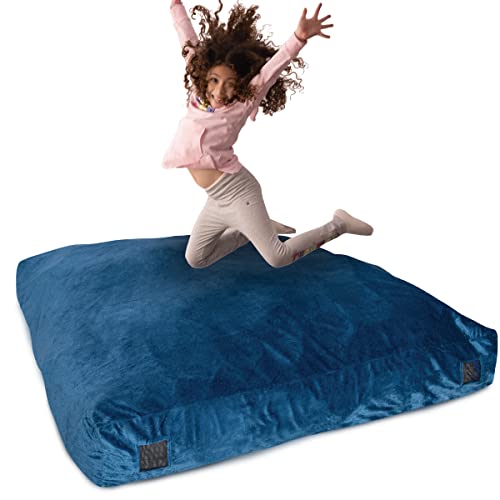
Milliard Crash Pad Sensory Pad with Foam and Washable Cover, 5 x 5 ft
Best for therapy rooms and classrooms: Skil-Care 5 x 5
Skil-Care builds for clinics, and it shows in the materials rather than the styling. This one uses high-density foam under a nylon cover with mesh vents, which is a build meant to survive many children rather than one.
The nylon wipes down, which is the right call for a shared space and the wrong call for a child who wants something soft against their face. It comes in a range of sizes; the pick here is the 5 x 5.

Skil-Care Sensory Crash Pad, High-Density Foam with Nylon Cover and Mesh Vents, 5 x 5 ft
Best value at 5 x 5: WOUDY
The same footprint as the Milliard for meaningfully less money, with high-density foam and a washable cover.
If the budget is the binding constraint but you want the big size, this is the way to get there. The trade you are making is brand track record: this is a newer listing without the years of accumulated feedback the Milliard has.

WOUDY Sensory Crash Pad with High-Density Foam and Washable Cover, 5 x 5 ft
Best 4 x 4 and easiest to move: JOYWOO
Shredded foam, anti-slip base, and, importantly, carry handles. That last detail is why this is the pad to pick if it will not live permanently in one spot, because a crash pad without handles is genuinely awkward to reposition.
Four feet square fits a bedroom without swallowing it. For most children under about eight this is enough landing area, and the shredded fill gives the sinking feel that suits children who like being buried as much as they like crashing.
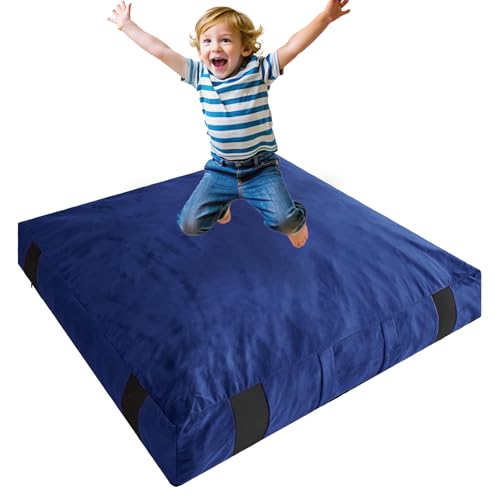
JOYWOO Sensory Crash Pad for Kids, 4 x 4 ft
Another 4 x 4 worth knowing: Cheer Collection
Effectively an alternative to the JOYWOO at the same footprint, with a washable cover. It earns a place here mostly because crash pads go out of stock constantly, especially heading into winter, and having a second verified option at the same size is more useful than a seventh distinct recommendation.
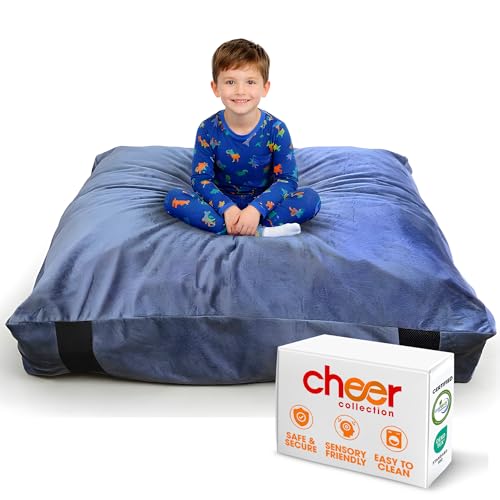
Cheer Collection Crash Landing Pad with Washable Cover, 4 x 4 ft
Best for toddlers and small spaces: 3 x 3
Three feet square is a different product in practice. It is a landing pad for a small child, and it doubles as a floor cushion for reading or seating, which is often how it ends up being used most.
It is also the cheapest way to find out whether your child actually wants one of these before committing to a large pad. If crashing is a maybe rather than a certainty, start here.

Sensory Crash Pad with Washable Cover, 3 x 3 ft
Premium pick: CordaRoy's
The most expensive option here, in terry corduroy over foam filling, from a brand better known for convertible bean bags. You are paying for materials and finish rather than for extra function.
Worth it if the pad lives in a shared family room and you want something that does not look like clinical equipment. Not worth it if it will live in a bedroom and be jumped on by a six-year-old, where the cheaper pads do the same job.

CordaRoy's Terry Corduroy Sensory Crash Pad with Soft Foam Filling
The cheapest route: buy a cover, stuff it yourself
This is the option the product pages will not tell you about, and for a lot of families it is the right one.
Crash pad covers are sold empty. You buy the shell and fill it with what you already own: spare bed pillows, folded blankets, cushion inserts, old soft toys. It costs a fraction of a filled pad, it washes, and you top it up whenever it flattens.
The honest trade-offs: a stuffed cover is lumpier than foam and needs redistributing occasionally, and pillows compress faster than proper foam. If your child wants an even, springy landing, buy the foam. If they want something enormous to sink into and the budget is tight, this wins easily.


Skil-Care Crash Pad Replacement Cover, Machine Washable, Cover Only, 3 x 4 ft
Where it fits in the room
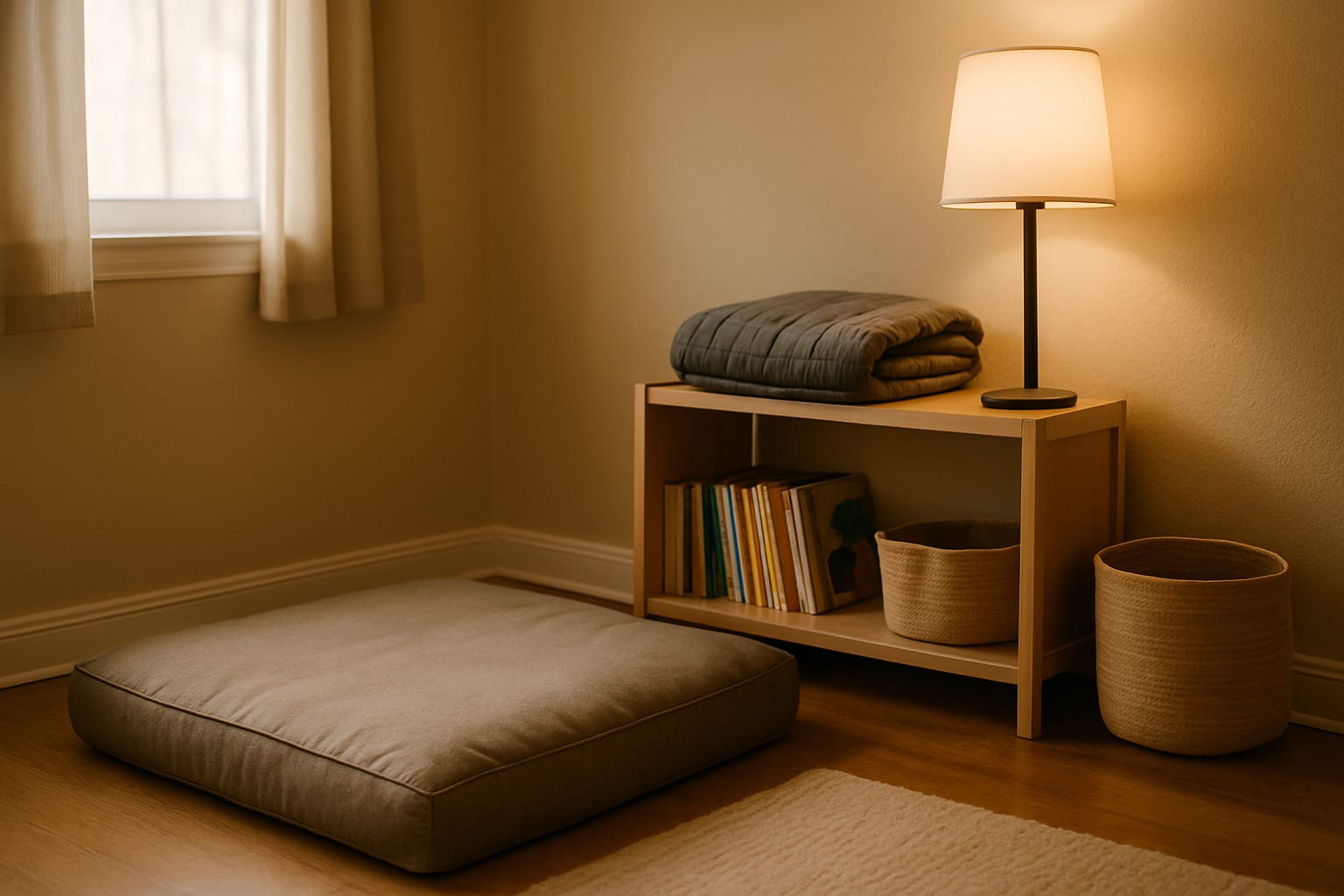
A crash pad works best as part of a defined space rather than as a thing in the middle of the floor. A corner with the pad, somewhere to retreat afterward, and low lighting gives a child a place to go before they need it, which is the whole point.
If you are putting that corner together properly, the sensory room essentials list covers what else earns its place, and the sensory diet guide explains how to schedule heavy input through the day rather than waiting for the crashing to start.
Some links on this page are affiliate links. If you buy through them, we may earn a small commission at no extra cost to you.
Products mentioned in this article
Milliard Crash Pad Sensory Pad with Foam and Washable Cover, 5 x 5 ft
Skil-Care Sensory Crash Pad, High-Density Foam with Nylon Cover and Mesh Vents, 5 x 5 ft
WOUDY Sensory Crash Pad with High-Density Foam and Washable Cover, 5 x 5 ft
JOYWOO Sensory Crash Pad for Kids, 4 x 4 ft
Cheer Collection Crash Landing Pad with Washable Cover, 4 x 4 ft
Sensory Crash Pad with Washable Cover, 3 x 3 ft
CordaRoy's Terry Corduroy Sensory Crash Pad with Soft Foam Filling
Skil-Care Crash Pad Replacement Cover, Machine Washable, Cover Only, 3 x 4 ft
Prices and availability are accurate as of the date/time shown and are subject to change. Any price and availability information displayed on Amazon at the time of purchase will apply to the purchase of this product.
Sensory overwhelm shows up differently in every child.
Beacon learns about YOUR child and gives guidance specific to them.
What would Beacon say?
"What sensory strategies actually work for my child?"
Beacon factors in your child's specific sensitivities (sound, light, texture, movement) and current regulation, then builds a sensory plan you can start tonight.

Spectrum Unlocked Editorial Team
Editorial Team
The Spectrum Unlocked editorial team combines lived experience as autism parents with research-backed guidance to create resources families can trust.
Frequently asked questions
- What is a sensory crash pad and what does it do?
- It is a large, thick, soft cushion filled with foam that a child can jump, fall, or throw themselves onto safely. The point is proprioceptive input, the deep feedback the body gets from muscles and joints working under pressure. Children who seek that input often chase it by crashing into sofas, walls, and people, and a crash pad gives the same feedback a target that is designed to absorb it. Many families find that input calming and organizing rather than stimulating, which is why crash pads often get used before bed or after school as much as during active play.
- What size crash pad should I buy?
- Match it to the room and the child rather than buying the biggest. A 5 x 5 ft pad handles a running start and gives a growing child room to land off-center, which is why it is the common recommendation. A 4 x 4 fits most bedrooms, costs less, and is realistically the largest size one adult can drag around alone. A 3 x 3 suits toddlers, small corners, and use as a reading or seating cushion. If the pad has to be moved daily or stored, size down and check for handles.
- Are crash pads safe?
- They are safe for what they are designed for, which is crashing at floor level under supervision. A crash pad is not fall protection and should not be placed under a bunk bed, loft bed, or climbing frame as if it were a certified impact surface. Give it clear space on all sides, away from furniture corners, radiators, walls, and glass, because the risk is not the landing but what a child hits on the way down or rolls into afterward. Check that the cover zipper is secure, particularly with shredded foam and younger children who might open it.
- Shredded foam or foam blocks: which is better?
- Foam blocks generally hold their loft longer and give a springier landing, while shredded foam conforms around the body more and gives a deeper, sinking feel that some children strongly prefer. The practical difference is compression: shredded fill packs down over months of daily crashing and may need topping up, which is easy if the cover unzips. Blocks are usually heavier. Neither is wrong, and children often have a clear preference once they have tried both.
- Can I make my own crash pad?
- Yes, and it is the cheapest route to a large pad. Buy a cover only, then stuff it with spare bed pillows, folded blankets, cushion inserts, or soft toys until it is full and even. It costs a fraction of a filled pad, it is machine washable, and you can top it up as it compresses. The trade-offs are honest ones: a stuffed cover is lumpier than foam, it needs redistributing now and then, and pillows compress faster than proper foam does.
- Where should I put a crash pad?
- On a clear stretch of floor with space on every side, away from furniture corners, hard edges, glass, radiators, and stairs. Carpet is kinder than hard flooring for the inevitable roll-off. Keep it away from anything a child could climb to jump from, because the pad's presence tends to invite exactly that. Many families keep it in a bedroom or a defined sensory corner rather than a main walkway, both for safety and so it does not become the thing everyone trips over.
- Do crash pads help with meltdowns?
- Sometimes, and mostly as prevention rather than as a response mid-meltdown. Regular heavy input through the day helps some children stay regulated, so a crash pad used routinely can reduce how often things escalate. During an actual meltdown a child is usually past the point where a new activity helps, and safety comes first. Treat it as one part of a daily sensory routine rather than an emergency tool, and follow the child's lead on whether crashing calms them or revs them up, because it does vary.