
Best Shoes for Toe Walking: Kids and Adults, Sorted by What Actually Helps
Six PT-informed shoes that discourage toe walking: heel squeakers, flat-soled high-tops, a light-up pick, and an AFO-ready sneaker, plus when to see a doctor.
Key Takeaways
- No shoe treats toe walking. What the right shoe does is make heel-first steps easier and more rewarding while making tiptoe steps less comfortable, which supports the habit change your child is working on. Persistent toe walking still needs a pediatrician's eyes, especially past age 2.
- Pediatric therapy practices point to four shoe features that discourage the pattern: a completely flat sole, a heel squeaker that only sounds on heel-first steps, a firm high back that presses gently at the Achilles on tiptoe, and lights that reward a flat foot.
- Heel squeakers are the most toe-walking-specific product on the market. The squeak fires when the heel lands first and stays silent on tiptoes, so the child gets instant, funny feedback on every single step without a parent saying a word.
- Avoid any heel height at all, including small wedges. A raised heel holds the calf muscle in a shortened position, which is exactly the direction a toe walker's body is already drifting.
- If your child already wears AFOs, SMOs, or inserts from a PT, the shoe question changes: you need depth, width, and a removable footbed rather than feedback features. That is a different pick, and it is on this list.
If your child pees through every sock toe, wears out the front of every sneaker, and cruises through the house on tiptoes like a tiny ballet dancer, you have probably already heard the phrase toe walking, and you have probably already discovered that most shoe advice is written for feet, not for this. This roundup is the shoe side of the toe-walking question: what footwear genuinely discourages the pattern, what is marketing, and which pick fits which situation, including the adult one nobody writes about.
One honest thing before the list, because it shapes every pick: no shoe treats toe walking. Toddlers commonly toe walk while learning, and most stop on their own, but toe walking that persists past age 2, stays constant, or comes with tightness, pain, or one-sided walking needs a pediatrician's evaluation, not a purchase. Clinical treatment, when it is needed, is stretching, physical therapy, and sometimes bracing or serial casting, and it works better started early. What shoes can do is support the habit change at home, and pediatric therapy practices are specific about how.
The Four Shoe Features That Discourage Toe Walking
Pediatric physical therapy guidance points to four features, and every pick below is built on at least one of them:
- A completely flat sole. Any heel height, even a small wedge, holds the calf in a shortened position, which is the direction a toe walker's body is already drifting. Flat keeps the calf and Achilles working at full length.
- A heel squeaker. The squeak fires only when the heel lands first, so every correct step gets instant, funny feedback and every tiptoe step gets silence. It is the most toe-walking-specific feature money can buy.
- A firm, high back. A high-top or high-backed shoe presses gently against the Achilles area when the child rises onto tiptoes, making the posture less comfortable without anyone saying a word.
- Lights at the foot. Light-up soles give a visual version of the squeaker's reward: a flat, full-foot landing gets the best show.
No lab and no invented star ratings. The picks were sorted against that published therapy guidance plus the practical realities parents report: sizing, sturdiness, whether a child will actually wear it, and whether the product claim held up when checked against the maker's own materials. Footwear stock and sizing shift constantly on Amazon, so confirm the size and color you need on the listing.
The Best Shoes for Toe Walking, Sorted by the Job
Best overall for toe walking: ikiki Squeaky Shoes
The whole product is designed around the heel-first step. The squeaker sits in the heel, and ikiki's own guidance is explicit that the sound rewards bringing weight down heel first and then rolling to the toe, which is exactly the gait a toe walker is practicing. The shoes are sturdy little sneakers in their own right, and the squeak turns a thousand daily steps into a thousand tiny wins with zero parental nagging. This is the first thing to try for a toddler or preschooler whose toe walking is habit-flavored.

ikiki Squeaky Shoes for Toddlers
Best budget squeaker: Wee Squeak Toddler Squeaky Sneakers
The same heel-squeaker idea at a lower price, from the brand that has been making squeaky shoes for decades. No squeak without a heel-to-toe step, and the squeakers pop out, so you can silence one shoe or both for church, the library, or your own sanity, then put the squeak back for practice time. A practical way to test whether the squeaker approach lands with your child before committing to a pricier pair.

Wee Squeak Toddler Squeaky Sneakers
Best visual feedback: Skechers Kids Wavy Beams Light-Up Sneaker
For the kid who is motivated by lights rather than noise, or for families who cannot live with a squeak. Light-up soles reward a full, flat landing with the best light show, giving the same feedback logic as a squeaker through the eyes instead of the ears, and this is a mainstream unisex Skechers sneaker your child will not fight about wearing. It is the gentlest entry on this list and a good pairing with a squeaker pair on rotation.

Skechers Kids Wavy Beams Light-Up Sneaker
Best high-top for kids: Converse Kids' Chuck Taylor All Star High Top
The classic Chuck does two of the four jobs passively: the sole is dead flat with zero heel lift, and the firm canvas high top presses gently at the ankle when a child rises onto tiptoes. Nothing electronic, nothing that looks therapeutic, and nothing to explain at school, just an everyday shoe whose geometry quietly argues for heels-down all day. This is the pick for school-age kids who have outgrown squeakers socially.

Converse Kids' Chuck Taylor All Star High Top
Best for AFOs, SMOs, and orthotic inserts: Stride Rite M2P Journey 3.0 Adapt
If a PT or orthotist is already involved, the shoe question stops being about feedback and starts being about hardware. This is Stride Rite's adaptive sneaker: dual removable footbeds to make depth for a brace or insert, extra-wide sizing, and an extended hook-and-loop opening so a braced foot gets in without a wrestling match. Buy it to fit the brace, not the bare foot, and defer to your orthotist's shoe list if they have one.

Stride Rite M2P Journey 3.0 Adapt Sneaker (Extra Wide)
Best for teens and adults: Converse Unisex Adult Chuck Taylor All Star High Top
Adult and teen toe walkers exist in large numbers and get almost no practical advice. The same flat-sole, high-back logic applies at every age, and the adult Chuck delivers it in a shoe nobody will read as medical. Pair it with the professional evaluation an adult toe walker deserves, because years of the pattern usually mean a genuinely tightened Achilles that stretching and therapy can still help.
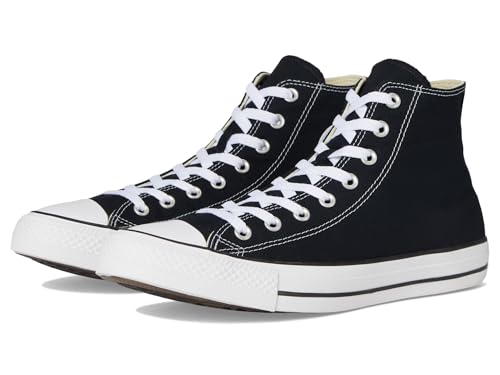
Converse Unisex Adult Chuck Taylor All Star High Top
When Shoes Are Not Enough
Shoes are the home-support layer. See a pediatrician (or, for adults, a primary care doctor or physical therapist) promptly if any of these apply:
- Toe walking that persists consistently past age 2
- Heels that cannot physically get flat to the floor, or visible tightness in the calf
- Toe walking on one side only
- Pain, stiffness, frequent falls or trips
- A child losing skills they previously had
- Toe walking alongside other developmental differences worth evaluating together
The clinical toolkit (stretching programs, physical therapy, night splints, serial casting in stubborn cases) works best started early, before the Achilles shortens enough to limit the ankle. None of that is a reason for alarm; idiopathic toe walking is common and very treatable. It is a reason not to spend a year on shoes alone if the pattern is not budging.
For autistic kids specifically, toe walking often has a sensory layer: the tiptoe posture changes what the feet and joints feel, and some kids seek that input or avoid the full-foot alternative. If that sounds like your child, the shoe features above still help, and it is worth looking at the sensory picture as a whole. Spectrum Unlocked's sensory-friendly shoes roundup covers the seam, closure, and texture battles that decide whether any shoe gets worn at all, and the signs in 2-year-olds guide puts toe walking in its wider developmental context. If you found this page as a teacher rather than a parent, the shoe question for the adult in the room is a different one, and the best shoes for teachers guide answers it.
Product facts checked against the makers' own materials and live Amazon listings on August 5, 2026, including ikiki's toe-walking guidance and pediatric therapy shoe guidance from North Shore Pediatric Therapy. Clinical framing on evaluation and treatment follows Mayo Clinic and Cleveland Clinic toe-walking guidance. This is a shopping guide, not medical advice; evaluation decisions belong with your child's clinicians.
Some links on this page are affiliate links. If you buy through them, we may earn a small commission at no extra cost to you.
Products mentioned in this article
ikiki Squeaky Shoes for Toddlers
Wee Squeak Toddler Squeaky Sneakers
Skechers Kids Wavy Beams Light-Up Sneaker
Converse Kids' Chuck Taylor All Star High Top
Stride Rite M2P Journey 3.0 Adapt Sneaker (Extra Wide)
Converse Unisex Adult Chuck Taylor All Star High Top
Prices and availability are accurate as of the date/time shown and are subject to change. Any price and availability information displayed on Amazon at the time of purchase will apply to the purchase of this product.
Routines, feeding, sleep, toileting. The stuff that fills every hour of every day.
Beacon learns about YOUR child and gives guidance specific to them.
What would Beacon say?
"How do I handle this with my specific child?"
If you asked Beacon "How do I get my child to eat more than 3 foods?" it would consider their sensory preferences and age, then give you a specific food chaining strategy to start this week.

Spectrum Unlocked Editorial Team
Editorial Team
The Spectrum Unlocked editorial team combines lived experience as autism parents with research-backed guidance to create resources families can trust.
Frequently asked questions
- Do shoes actually fix toe walking?
- No, and any product that promises to is overpromising. Shoes are a support, not a treatment. What the right shoe does is tilt the odds: a flat sole and a firm high back make tiptoe walking less comfortable, and a heel squeaker or heel lights give instant feedback that rewards heel-first steps. That nudging genuinely helps many kids practice the pattern their body needs to learn. But persistent toe walking has causes a shoe cannot touch, from a tightened Achilles tendon to sensory differences, which is why an evaluation matters if the pattern is sticking around.
- When is toe walking normal and when should I worry?
- Toe walking is common in toddlers who are just learning to walk, and most children drop it on their own. The mainstream clinical guidance is to have it looked at if a child is still toe walking consistently past age 2, or at any age if the child cannot get their heels down flat, walks on toes on one side only, seems to have pain, stiffness, or frequent falls, or is losing skills they used to have. A pediatrician will check the Achilles tendon, rule out neurological causes, and refer to physical therapy if needed. Earlier is better: intervention started young avoids the tightening that makes later treatment harder.
- Is toe walking connected to autism?
- It can be, though most toe walkers are not autistic and most autistic kids are not toe walkers. Toe walking does show up more often in autistic children, and the going explanations are sensory: the tiptoe posture changes vestibular and proprioceptive input in a way some kids seek out, and some children avoid the sensation of a full flat foot on certain surfaces. If your child toe walks alongside other differences (in communication, play, or sensory responses), mention both to your pediatrician together rather than treating the gait as an isolated quirk. Spectrum Unlocked's guide to autism signs in 2-year-olds puts toe walking in that wider context.
- Do squeaky shoes really help toe walkers?
- They are the one product category built around the exact feedback a toe walker needs, and pediatric therapy practices do recommend them as a home support. The squeaker sits in the heel, so it only sounds when the heel strikes the ground first: heel-first step, squeak; tiptoe step, silence. For a toddler, that turns heel-down walking into a game with a reward on every rep, hundreds of times a day, with no nagging. They are a habit tool rather than a treatment, they are loudest indoors, and brands like Wee Squeak include removable or silenceable squeakers for quiet places.
- What about adults and teens who walk on their toes?
- Adult toe walking is usually a long-carried habit, a shortened Achilles tendon from years of the pattern, or a sensory preference, and it deserves a professional look just as much as a child's, because a tightened tendon responds to stretching and therapy better the earlier it is addressed. On the shoe side the same principles apply: dead-flat sole, firm structure at the heel, and a high top that makes tiptoe posture less comfortable, which is why a classic flat high-top sneaker is the practical adult pick. Skip anything with a heel lift, including most running shoes with a raised heel stack.
- My child wears AFOs or orthotic inserts. What shoes work?
- You need a shoe designed to take hardware: extra depth and width, a removable footbed to make room, and a long-opening closure so the braced foot can get in without a fight. Stride Rite's adaptive line was built for exactly this, with dual removable footbeds and an extended hook-and-loop opening, in extra-wide sizing. Buy the shoe to fit the brace, not the bare foot, and bring the AFO to any in-person fitting. If your PT or orthotist has a specific shoe list, their list wins over any roundup, including this one.