Best Bed Tents for Autistic Kids: Calm, Dark Sleep Spaces
Bed tents that block light and shrink the bedroom to one calm space, safe setup, and why a tent cannot stand in for a safety bed when a child climbs or wanders.
Key Takeaways
- A bed tent dims the room, hides the clutter and turns a whole bedroom into one small space, which helps many autistic children settle.
- A bed tent is not a safety bed. It does not hold in a child who climbs, pushes or wanders at night, and it should never be zipped shut with a child inside.
- Children's Hospital of Philadelphia researchers name entrapment as the main sleep-safety risk to check, so the tent must fit the mattress snugly and leave no gap a child can slip into.
- Keep bed tents away from babies and toddlers. Federal recalls have covered infant travel tents and crib tents after entrapment and strangulation reports.
- For a child who wanders or is hurt by falls, a medical safety bed runs into the thousands of dollars, and Medicaid or insurance often pays for it.
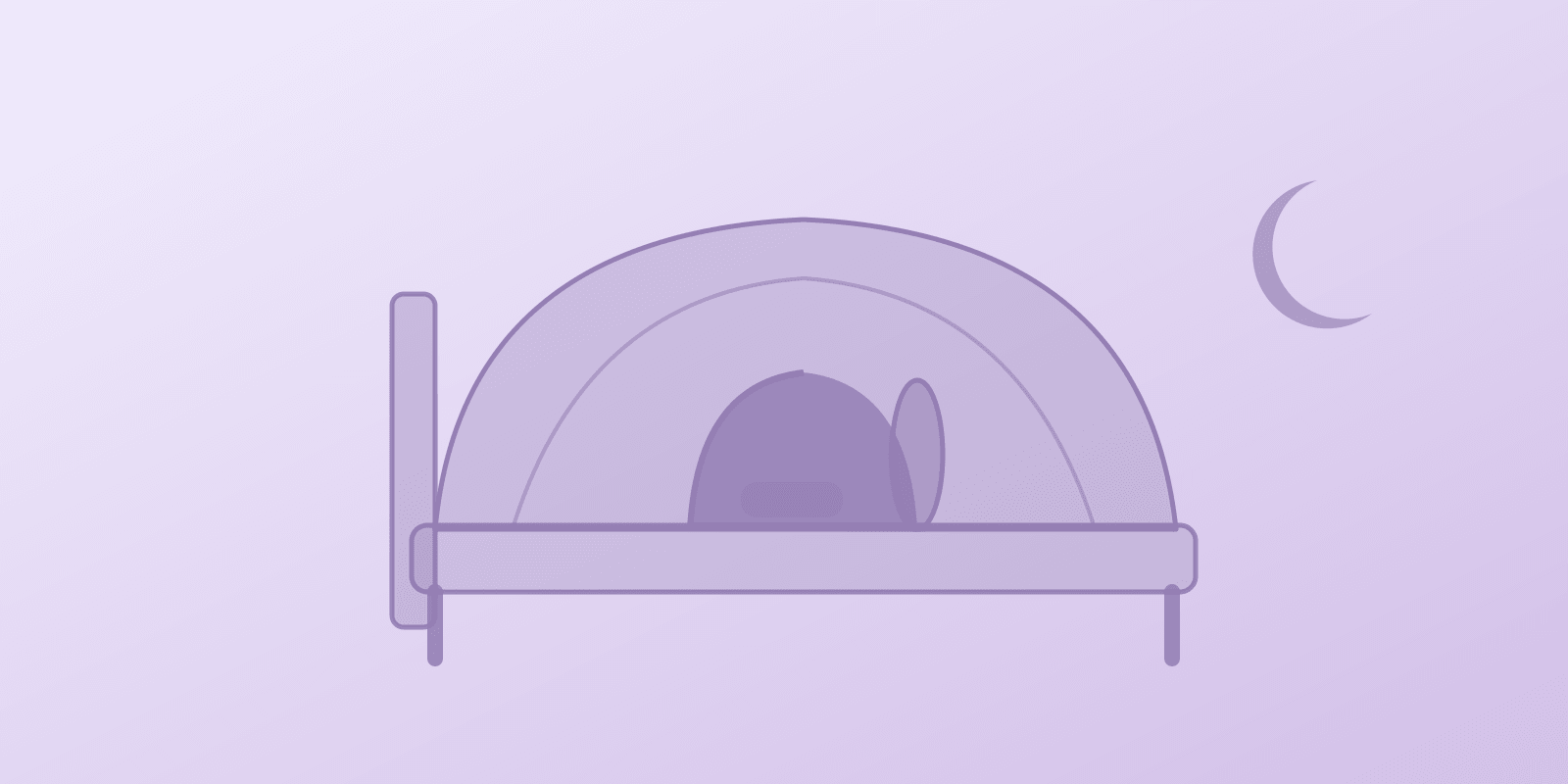
Some children cannot switch off in a big, bright bedroom. The streetlight under the blind, the shelf of toys, a sibling across the room: every one of them is something to look at when the body should be winding down. A bed tent pulls the walls in. The bed becomes a small, dim space with a door your child controls, and for many autistic children that small change decides whether they settle or stay up.
It is important to be clear about what a tent cannot do. It is not a safety bed and will not keep a child in bed who climbs, wanders or hurts themselves at night. This guide covers five bed tents worth buying, how to set one up safely, and where to turn when a tent is not enough.
Before You Buy: Safety First
- Fit it to the mattress. Researchers at Children's Hospital of Philadelphia name entrapment as the main risk to check for in any special sleep setup. The tent should sit snugly over the mattress with no gap at the sides where a child could slip down. A tent whose floor tucks under the mattress stays put better than one that only rests on top.
- Doors that open from inside. Getting out alone has to be possible every single time. Never zip, clip or tie a child in.
- Not for babies or toddlers. The US Consumer Product Safety Commission has recalled an inflatable infant travel tent after entrapment reports and crib tents after strangulation reports. A bed tent belongs on a twin bed or larger, for a child who already sleeps in one.
- Not for a child who climbs or flips. The same Children's Hospital of Philadelphia team warns that a tent-style bed over a box spring can be tipped by a child with strong behavior at night. If your child pushes, rocks hard or tries to get under the mattress, see the safety bed section below instead.
- Let air through. Keep at least one mesh panel open in warm weather, and check the tent stays upright when your child leans on a wall.
Bed Tents Compared
| Bed tent | Best for | Size (maker) | Doors |
|---|---|---|---|
| Alvantor 2-in-1 | Getting out on any side | Twin, 75 x 39 x 47 in | Every side opens |
| Alvantor Privacy | Less light, less to carry | Twin, 75 x 39 x 44 in | Double-zip doors |
| RIYDH | Full, queen and king beds | Twin to king | 3, mesh and blackout layers |
| 90% Blackout Privacy Tent | Travel and grandparents' houses | Twin, 78.7 x 41.3 x 47.2 in | Double-zip doors |
| 93% Blackout Tent With Star Lights | Lowest price, anchored floor | Twin, 75 x 39 x 51 in | 3, mesh sides |
The Bed Tents
Alvantor 2-in-1 Bed Tent
The most open design here: every side unzips, with double zippers that work from inside and outside. A child who panics when a way out is blocked can always find one, and you can reach in from whichever side of the bed faces the room. Alvantor lists it at 75 by 39 by 47 inches for a twin mattress, with a pop-up frame and shock-corded poles, and it packs into a flat bag at about 7 lb. It is the priciest pick.

Alvantor 2-in-1 Privacy Bed Tent, Twin
Alvantor Privacy Bed Tent
The plainer Alvantor, in a dark gray fabric that cuts light while still letting you see out. It is a little lower at 44 inches high and lighter at 5.8 lb, with the same pop-up frame and doors that open from either side. A good choice when the main problem is light at bedtime or early morning sun.

Alvantor Privacy Pop-Up Bed Tent, Twin
RIYDH Bed Tent
Sold in sizes from twin up to king, so it suits a full or queen bed, or for a parent who sometimes lies down beside a child at bedtime. Each of its three doors has two layers: mesh for airflow and a blackout panel rated by the seller at 80%. The frame uses fiberglass poles. Read the size chart carefully, since the listing warns buyers often mix up length and height.

RIYDH Bed Tent, Twin to King Sizes
90% Blackout Privacy Bed Tent
A twin tent that folds into a carry bag about 17 inches long and weighs 7 lb, so it travels well to a grandparent's house, a hotel or respite care, where an unfamiliar room makes sleep hardest. The seller rates the fabric at 90% light blocking and lists it at 78.7 by 41.3 by 47.2 inches, slightly roomier than a standard twin mattress, so check the fit.

Privacy Bed Tent, 90% Blackout, Twin
93% Blackout Bed Tent With Star Lights
Cheapest of the five, and the most firmly anchored. Its floor sits under the mattress and buckles at each corner, so the mattress itself holds the tent down. It has three double-zip doors, mesh on two sides for airflow, pockets inside and a string of star lights. At 51 inches it is the tallest here, so measure the space under a top bunk or sloped ceiling first.

Blackout Bed Tent With Star Lights, 93% Blackout, Twin
Sizing a Bed Tent to the Bed
- Measure the mattress. Length, width and the height from the mattress to the ceiling or top bunk. A tent that is too big leaves gaps; one that is too small bows the walls.
- Pick the darkness level. A child woken by streetlights or early sun does better with 90% or more; a child who dislikes total dark may prefer mesh doors left open with a small night light.
- Count the doors. More doors means more ways out and easier reach for you. A child who feels trapped easily needs at least two.
- Think about the floor. A floor under the mattress anchors the tent; a floorless canopy is easier to fit but easier to shift.
- Plan for travel. If sleep falls apart away from home, a light tent that packs flat is worth more than extra features.
When a Tent Is Not Enough: Safety Beds
Children who wander at night, climb out over rails, or hurt themselves through head banging or falls usually need medical equipment rather than a tent. These have high, padded, enclosed sides and are built and tested for this job. Examples include the Safety Sleeper and similar enclosed beds from specialist makers, sold through medical equipment suppliers rather than stores.
The price usually runs to several thousand dollars, so most families apply through Medicaid or private insurance with a doctor's prescription. Our safety bed funding guide takes you through each form, and our plan for preventing elopement pairs it with alarms on the doors and locks out of reach.
Making Bedtime Work
A tent works best inside a predictable routine. A printable visual bedtime routine shows each step from bath to lights out, and the same calm sequence every night helps the tent read as "time to sleep." Steady sound from a white noise machine can mask household noise, and some children settle faster under a weighted blanket sized for their weight. If sleep stays hard for weeks, our guide to why an autistic child won't sleep looks at the medical and sensory causes worth raising with your pediatrician.
Why These Bed Tents
We left out anything inflatable, any tent made for cribs or play yards, and any tent whose size and doors we could not confirm from its own listing. That ruled out one of the best-reviewed tents on Amazon, because its page would not give us its measurements. The five that remain fit a standard mattress, open from inside and could be ordered for delivery to a Georgia address on November 10, 2026. Sizes and blackout ratings are the makers' and sellers' own figures.
A bed tent is a comfort item, not safety equipment. If your child's sleep involves wandering, climbing or self-injury, ask your child's doctor or occupational therapist whether a medical safety bed makes sense.
Products Mentioned in This Article
Alvantor 2-in-1 Privacy Bed Tent, Twin
Alvantor Privacy Pop-Up Bed Tent, Twin
RIYDH Bed Tent, Twin to King Sizes
Privacy Bed Tent, 90% Blackout, Twin
Blackout Bed Tent With Star Lights, 93% Blackout, Twin
Prices and availability are accurate as of the date/time shown and are subject to change. Any price and availability information displayed on Amazon at the time of purchase will apply to the purchase of this product.
When sleep falls apart, so does everything else.
Beacon learns about YOUR child and gives guidance specific to them.
What Would Beacon Say?
"Help me fix my child's sleep"
Beacon builds the wind-down routine around your child's sensory needs and age, so bedtime becomes a sequence they can follow instead of a nightly negotiation.
Spectrum Unlocked Editorial Team
Editorial Team
The Spectrum Unlocked editorial team combines lived experience as autism parents with research-backed guidance to create resources families can trust.
Frequently Asked Questions
- Are bed tents safe for autistic children?
- For a child of school age who sleeps in a regular bed and can open the doors alone, a well-fitted bed tent is generally a comfort item rather than a hazard. Check that it fits the mattress with no gaps, that every door opens from inside, and that air moves through the mesh. Skip it for a child who climbs, pushes hard against the walls or tries to flip the mattress.
- What age is a bed tent for?
- Bed tents are made for children who already sleep in a twin bed or larger, not for babies or toddlers. Federal recalls of infant travel tents and crib tents followed entrapment and strangulation reports, so younger children should stay in a crib or play yard used as its maker directs.
- Is a bed tent the same as a safety bed?
- No. A safety bed is medical equipment with padded, high, enclosed sides built to keep a child safely in bed, and it costs thousands of dollars. A bed tent is a fabric cover with zip doors that a determined child can open, lean on or climb out of.
- Can a bed tent stop my child wandering at night?
- No, and it should not be used that way. Never zip or clip a child inside. For night wandering, door alarms, a high lock on exterior doors and a sleep plan work together; a medical safety bed may also be an option.
- What size bed tent should I buy?
- Measure the mattress, not the bed frame. Most tents here fit a standard twin mattress of about 75 by 39 inches. Also check the height above the mattress against the ceiling or top bunk.
- Do bed tents help autistic kids sleep?
- There is little research on bed tents themselves. Families use them because darkness, less to look at and a small, enclosed space can make settling easier. Pair one with a steady bedtime routine rather than expecting the tent to fix sleep on its own.