Best Toilet Seat Reducers for Autistic Kids (Potty Seats That Feel Safe)
The toilet seat reducers and potty covers that help autistic kids stop fearing the big toilet: secure non-slip seats, cushioned options for sensory comfort, handles for stability, a built-in replacement seat, a travel fold-up, and a familiar-character seat.
Key Takeaways
- A toilet seat reducer shrinks the big scary opening of the adult toilet down to a child-sized one, which solves the single most common toilet fear for autistic kids: the fear of falling in. It lets a child use the real toilet like everyone else, with no separate potty to empty.
- Match the reducer to the fear you are working around. A child scared of slipping needs a secure, non-slip seat and often handles to grip; a child bothered by the cold, hard rim needs a cushioned seat; a child who fixates on a favorite character may accept a seat that features it when they refuse a plain one.
- The loose reducer that has to go on and off the toilet is friction, and friction is where routines break down. A built-in replacement seat, where the child-sized ring is part of the adult seat and folds away, removes that step entirely and can be the difference for a child who needs the setup identical every time.
- Feet still dangle on the big toilet even with a perfect reducer, and dangling feet make pooping harder. Always pair a seat reducer with a footstool so the feet are flat and supported, which is one of the cheapest fixes for withholding and constipation.
- Keep the sensory experience the same everywhere. A foldable travel reducer means public restrooms feel like home instead of a strange full-size seat, which protects your progress when you are away from the one bathroom your child trusts.
For a lot of autistic kids, the problem with the toilet is the toilet itself: a big, cold, open bowl they are convinced they will fall into. A seat reducer solves that specific fear directly. It sits on the adult toilet and shrinks the opening to a child-sized one, so your child can use the real toilet the whole family uses, feel secure while they do it, and skip the separate potty you would otherwise be emptying.
But not every reducer solves the same fear. Falling in, the cold hard rim, needing something to hold, wanting the setup to never change, using a strange toilet away from home. Each seat below answers one of those fears, so start with the one you are actually working around.
Before You Buy Anything
- Reducer or floor potty. A reducer suits a child who wants the real toilet but fears the big opening. A child who feels safer low to the ground may do better on a floor potty chair. If the toilet itself is the fear, work through the fear-of-the-toilet guide alongside.
- Name the specific barrier. Slipping wants a secure, handled seat. A cold rim wants cushioning. Setup changes want a built-in seat. Away-from-home wants a travel fold-up. The right pick depends on which one is true for your child.
- Plan for the feet. A reducer fixes the opening but not the dangling feet. Pair it with a footstool so the feet are flat, which keeps pooping from getting harder.
How We Chose
No lab and no pretending. We sorted the market against what matters for autistic kids, using product specs, the fears parents and OTs describe most often, and our own work with toilet-averse autistic children. The rubric:
- Security. Does it lock on and stay put, so a nervous child never feels it shift.
- The right fix for the fear. Handles, cushioning, a built-in design, or portability, matched to the barrier.
- Cleanability. Balanced against comfort, because a seat that is a chore to clean gets used less.
- Sensory fit. Soft where softness helps, familiar where a special interest opens the door.
- A distinct job per pick. Secure default, handles, cushioned, built-in, travel, character. No six of the same.
No invented star ratings. Here is which seat fits which fear.
Toilet Seat Reducers That Make the Big Toilet Feel Safe
Best overall: BabyBjörn Toilet Trainer
The secure default. The BabyBjörn Toilet Trainer clamps onto the toilet with an adjustable fit that stops it sliding or shifting, which is exactly what a child afraid of falling in needs to feel. It is one wipe-clean piece with a splash guard and no fussy parts, and its stable, planted feel is what lets an anxious child trust the big toilet in the first place. When you want the reassurance of a rock-solid seat and nothing complicated, start here.
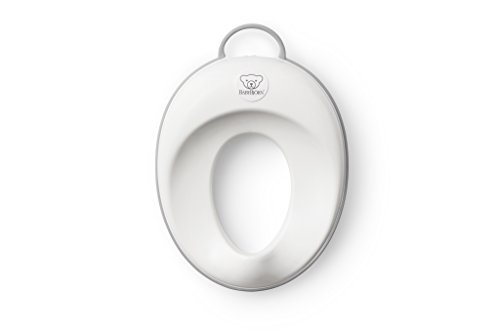
BabyBjörn Toilet Trainer (Seat Reducer)
Best with handles: Jool Baby Potty Training Seat
For the child who needs something to hold. The Jool Baby seat adds sturdy side handles a child can grip while they sit, which steadies an unsure kid and, just as usefully, gives anxious hands a job. It has a high splash guard and a non-slip underside that keeps it from sliding on the toilet rim, and it fits both round and oval toilets. The grip points double as a proprioceptive anchor, something firm to hold, which many autistic kids find calming under stress.

Jool Baby Potty Training Seat with Handles
Best cushioned: Dreambaby Soft Touch Potty Seat
For the child whose barrier is the cold, hard rim. The Dreambaby padded seat has a cushioned surface that takes the shock of a cold seat out of the equation, plus grip handles either side to hold while settling, and it fits most standard toilets. A child who resists partly because sitting is physically unpleasant will often sit longer and more willingly on something soft, and longer, calmer sits are what let a bowel movement actually happen. If the texture and temperature are the sticking point, this is the seat to try.

Dreambaby Padded Potty Toilet Seat with Grip Handles
Best built-in: Mayfair NextStep2
The friction remover, for the child who needs the setup identical every time. Instead of a loose seat that goes on and off, the Mayfair NextStep2 replaces your toilet seat entirely with one that has a child-sized ring built in, tucked under the adult lid and folded down only when your child needs it. Nothing to store, nothing to fetch, nothing that changes between uses. For an autistic child who is thrown by any variation in the routine, a setup that is always exactly the same can be the quiet thing that makes it stick.

Mayfair NextStep2 Toilet Seat with Built-In Potty Training Seat
Best for travel: Frida Baby Fold-and-Go
Public bathrooms are a sensory gauntlet, and a full-size strange seat can undo a week of progress. The Frida Baby Fold-and-Go folds flat into a bag and opens onto almost any toilet, so your child sits on their own familiar-feeling seat instead of a cold unknown one. Keeping the experience the same in every bathroom is what protects hard-won progress when you are away from the one toilet your child trusts, which matters more for autistic kids than for most.
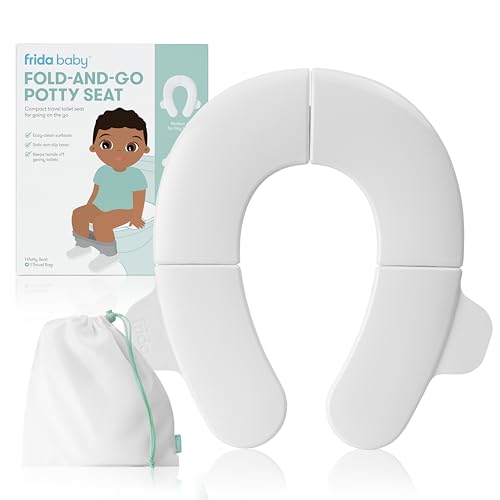
Frida Baby Fold-and-Go Portable Potty Seat
Best for a special interest: Bluey Soft Potty Seat
Sometimes the thing that gets a reluctant child to sit is a face they love. The Bluey Soft Potty Seat pairs a cushioned, child-sized seat with a character many kids are devoted to, and for an autistic child with a strong special interest, that familiar face can lower the fear enough to try when a plain seat gets a hard no. Use it as part of a calm, no-pressure introduction rather than a bribe, and lean on the same interest in your wider reward approach. If Bluey is what gets your child onto the toilet, take the win.

Bluey Soft Potty Seat
Seat and Steps in One: Potty Ladders
A plain reducer fixes the scary opening but leaves the feet dangling, so most families pair it with a separate footstool. A potty ladder does both jobs in one piece: the child climbs a small set of steps, their feet stay flat on the step while they sit, and a built-in reducer shrinks the opening. For an autistic child who is anxious about the climb up or about feet with nothing under them, having the steps and the seat as one stable unit can be the thing that finally works. These are the highest-rated, best-selling ladders right now, all 4.5 stars and up, including a pink option that is popular for girls.
Paid links: I get a commission for purchases made through the links below, at no extra cost to you.

SKYROKU 2-in-1 Potty Training Seat with Step Stool Ladder

Rabb 1st 2-in-1 Potty Training Seat with Step Stool

Orzbow Potty Training Seat with Step Stool Ladder (Adjustable)
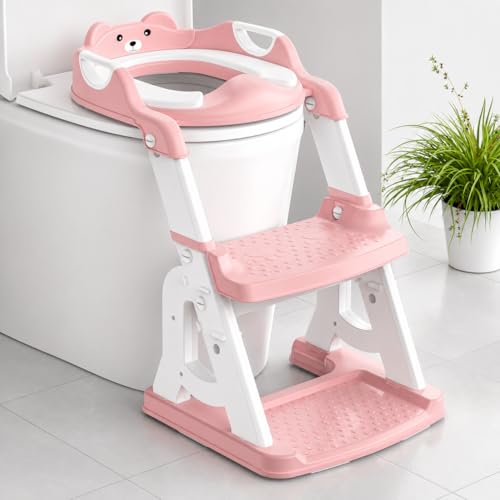
Meulife 2-in-1 Potty Training Seat with Support Bar and Step Stool (Pink)
One caution for a child with motor-planning or balance differences: a ladder adds a climb, so supervise the first weeks and check the anti-slip base on your floor. If the climb itself is the barrier, a low floor potty chair or a plain reducer plus a footstool may suit better.
The Seat Is Half of It
A reducer solves the opening, but the setup is not complete until the feet are solved too. Feet dangling off the big toilet keep the pooping muscles tense, so pair any reducer with a footstool to get the feet flat and supported, which heads off the withholding and constipation that stall so many autistic kids. The best-selling pick for this is a simple, sturdy non-slip step stool (paid link):

Dreambaby Non-Slip Step Stool for Potty Training
And the gear only works inside the routine. Whether your child lands on a reducer or a floor potty chair, the rule is the same: keep the steps identical and calm every time, start when your child is genuinely ready rather than on a schedule, and let the potty tracker show you the progress daily life hides. The complete potty training guide ties the whole setup together. Shrink the scary opening, support the feet, keep it predictable, and the toilet stops being something to fear.
Products mentioned in this article
BabyBjörn Toilet Trainer (Seat Reducer)
Jool Baby Potty Training Seat with Handles
Dreambaby Padded Potty Toilet Seat with Grip Handles
Mayfair NextStep2 Toilet Seat with Built-In Potty Training Seat
Frida Baby Fold-and-Go Portable Potty Seat
Bluey Soft Potty Seat
SKYROKU 2-in-1 Potty Training Seat with Step Stool Ladder
Rabb 1st 2-in-1 Potty Training Seat with Step Stool
Orzbow Potty Training Seat with Step Stool Ladder (Adjustable)
Meulife 2-in-1 Potty Training Seat with Support Bar and Step Stool (Pink)
Dreambaby Non-Slip Step Stool for Potty Training
Prices and availability are accurate as of the date/time shown and are subject to change. Any price and availability information displayed on Amazon at the time of purchase will apply to the purchase of this product.
Potty training an autistic child follows a different playbook.
Beacon learns about YOUR child and gives guidance specific to them.
What would Beacon say?
"Help me with potty training my child"
Beacon walks the route with you day by day, factoring in your child's sensory profile, communication, and the readiness signals that actually matter.

Spectrum Unlocked Editorial Team
Editorial Team
The Spectrum Unlocked editorial team combines lived experience as autism parents with research-backed guidance to create resources families can trust.
Frequently asked questions
- What is a toilet seat reducer and does my autistic child need one?
- A seat reducer, sometimes called a potty seat or trainer seat, sits on top of the adult toilet and shrinks the opening to a child-sized one so a small child can sit securely without the fear of falling in. It is a strong choice for an autistic child who wants to use the real toilet like the rest of the family but is scared of the big open bowl, and it skips the step of transferring from a floor potty to the toilet later. A child who is more comfortable low to the ground may do better on a floor potty chair instead, so match the tool to the fear.
- My child is scared of falling in the toilet. Which seat helps?
- A secure, non-slip reducer that holds its position, ideally with handles to grip. The BabyBjörn Toilet Trainer locks on and stays put, and handled seats like the Jool Baby give a child something firm to hold, which both steadies them and gives an anxious kid a job for their hands. Pair any of them with a footstool so the feet reach a solid surface, because feeling planted from seat to feet is what actually removes the falling-in fear. Our guide on the fear of the toilet covers the wider desensitizing steps.
- Are cushioned potty seats better for sensory-sensitive kids?
- For some kids, yes. A child who resists the toilet partly because the rim is cold and hard may sit longer and more willingly on a soft, padded seat. The trade-off is that cushioned seats can be a little harder to wipe fully clean, so they suit a child whose barrier is genuinely the texture or temperature rather than one who needs the easiest possible cleanup. If the sensory issue is broader than the seat, Spectrum Unlocked's sensory and potty training guide covers the fuller picture.
- What is the advantage of a built-in replacement toilet seat?
- It removes friction. With a loose reducer, someone has to put the child seat on and take it off around every adult use, and where the setup changes, routines wobble, which is exactly what autistic kids struggle with. A built-in seat like the Mayfair NextStep2 replaces your normal toilet seat with one that has a child-sized ring tucked inside it, so the child seat is always there and folds away when adults use it. Nothing to store, nothing to fetch, the setup identical every single time.
- Will a seat with a favorite character actually help?
- It can, and it is a legitimately autism-smart move rather than a gimmick. Many autistic kids have a strong special interest, and a toilet that features a beloved character can lower the fear enough to get a reluctant child to sit when a plain seat gets a flat refusal. It works best as one piece of a calm, no-pressure introduction, not as a bribe, and you can lean on the same special interest in your reward approach. If the character seat is what gets your child through the door, that is a win worth taking.
- Do I still need a footstool if I use a seat reducer?
- Yes, and it is not optional. Even on a perfectly secure reducer, a child's feet dangle off the big toilet, and dangling feet keep the muscles that release a bowel movement tense, which makes pooping harder and encourages holding it in. A footstool that puts the feet flat and slightly raised fixes the posture and is one of the cheapest ways to prevent the withholding and constipation that derail so many autistic kids. The step stool roundup covers the options.