Why Kids Chew Straws, and the Cups That Survive a Chewer
Why autistic kids chew straws and bite cup spouts, the cups and straws that hold up to a chewer and when chewing at drinks is worth an OT or SLP look.
Key Takeaways
- A child chews a straw for one of a few reasons: biting gives the jaw something stable to hold while the sucking and swallowing get sorted out, chewing is calming oral input, the teeth are coming in or the child is done drinking and bored. The fix is different for each one, so read the chewer before you buy the cup.
- A stability chewer needs less work per sip. A squeeze-assist straw kit, a shorter straw and a steady seat with the feet supported take the load off the jaw so it does not have to clamp.
- A sensory chewer needs the chewing to be allowed somewhere safe. Soft silicone straws do not crack into sharp edges, and a chew tool away from the table meets the need so the cup can go back to being a cup.
- When the straw itself is the problem, remove it. A 360 spoutless cup and an open cup ask the lips to do the work and give the teeth nothing to bite, which is also what feeding specialists want to see for mouth development.
- Chewing on a straw is not a diagnosis. If it comes with coughing or gagging at drinks, liquid leaking from the mouth, refusing to drink or a very narrow set of accepted textures, those are the signs ASHA lists for a feeding and swallowing look by an SLP or OT.
Chewing on straws is one of those small daily things that turns into a real problem: a cup that leaks because the spout is bitten flat, a straw with a cracked edge, a sippy cup that lasts a week. Before buying another one, it helps to know why your child chews, because the fix for a child who bites for stability is the opposite of the fix for a child who bites for the feel of it.
This guide starts with the why, then matches each reason to the cups and straws that hold up and ends with the signs that mean the chewing is worth a feeding specialist's look. It is written for the autism household, but the reasons apply to any kid who treats a straw like a chew toy.
Why Kids Chew on Straws
Feeding specialists describe four common reasons, and most children show more than one.
- Stability. A child who is new to straws, or who has low trunk and jaw stability, bites the straw to hold it still. Dawn Winkelmann, the speech-language pathologist behind ezpz's feeding advice, puts it plainly: when children are first learning straws, they often bite for stability, because biting compensates for weak core strength and for trouble with the suck, swallow and breathe sequence. The bite is doing a job the body cannot yet do another way.
- Sensory seeking. Chewing is calming. Occupational therapists working with children describe chewing, mouthing and sucking as ways some kids self-soothe and regulate, and the straw is simply the thing in reach. If your child also chews collars, pencils or hands, this is the one.
- Teething and the bite reflex. The munch and bite pattern a child uses on food, and the pressure that eases teething, both carry over to a straw that happens to be in the mouth.
- The cup is wrong, or the child is done. A straw that is too long or too wide for the child, a valve that takes more suction than the child has or a child who is no longer thirsty and is chewing out of boredom. Winkelmann notes that a disengaged child biting the straw is often a fullness cue.
Which Chewer Is Yours
The pattern usually shows up in the timing. Chewing on the first sips, with the head tipped and the body wobbly, points to stability. Chewing on the last sips, long after the drink is gone, points to fullness. Chewing at tense moments, with other chewing habits alongside it, points to sensory seeking. Chewing only on one particular cup points at the cup.
Stability chewers need the drink to take less work. Straw drinking asks a child to seal the lips, hold the jaw steady and run suck, swallow and breathe in rhythm; a child who is short on any of those grips the straw with their teeth to make up the difference. Anything that lowers the effort helps: a shorter straw with less of it in the mouth, a thinner liquid to start, a seat where the feet are supported and a straw kit that pushes liquid up for them. A study of 125 typically developing children aged six to eleven found straw drinking got faster with age and that children found a wide-bore straw the easiest and a valved therapy straw the hardest, which is a reminder that the straw's bore and valve change the work a child has to do.
Sensory chewers need the chewing allowed somewhere safe. That usually means two things: a straw made of soft silicone, which bends under a bite instead of cracking into a sharp edge, and a chew tool away from the table so the mouth gets its input without the cup paying for it. The resistive sucking a straw gives is itself an oral input some therapists suggest, so for this child the straw can be part of the answer, not just the casualty.
When the cup is wrong, change the cup. Removing the straw entirely with a 360 spoutless cup or an open cup gives the teeth nothing to bite and asks the lips to do the drinking, which is what feeding specialists want to see for mouth development anyway. For a child with a narrow set of accepted foods, that swap may need its own patient introduction.
How These Cups and Straws Were Chosen
None of these were tested by Spectrum Unlocked and none gets a score. Each one was read against the job above it: what it does for a stability chewer, a sensory chewer or a cup problem, and what its maker actually claims on the listing. Three rules held:
- One job per pick. A chewable straw, a therapist's squeeze-bear kit, a plain squeeze bear for everyday practice, a straw-training cup for the step after the bear, a spoutless cup, a cut-out cup and an open cup. No two picks answer the same question.
- Soft over hard. Anything that goes in a chewer's mouth is silicone or soft plastic that bends rather than cracks.
- Maker claims stay maker claims. Where a listing says dishwasher safe, BPA-free or dentist recommended, that is what the listing says. Nothing below was lab-checked here.
Prices on the cards are live from Amazon and change; nothing here costs more than a couple of replacement sippy cups.
Cups and Straws for a Child Who Bites Them
Best Chewy Straws for a Kid Who Needs to Bite: Softy Straws Silicone Straws
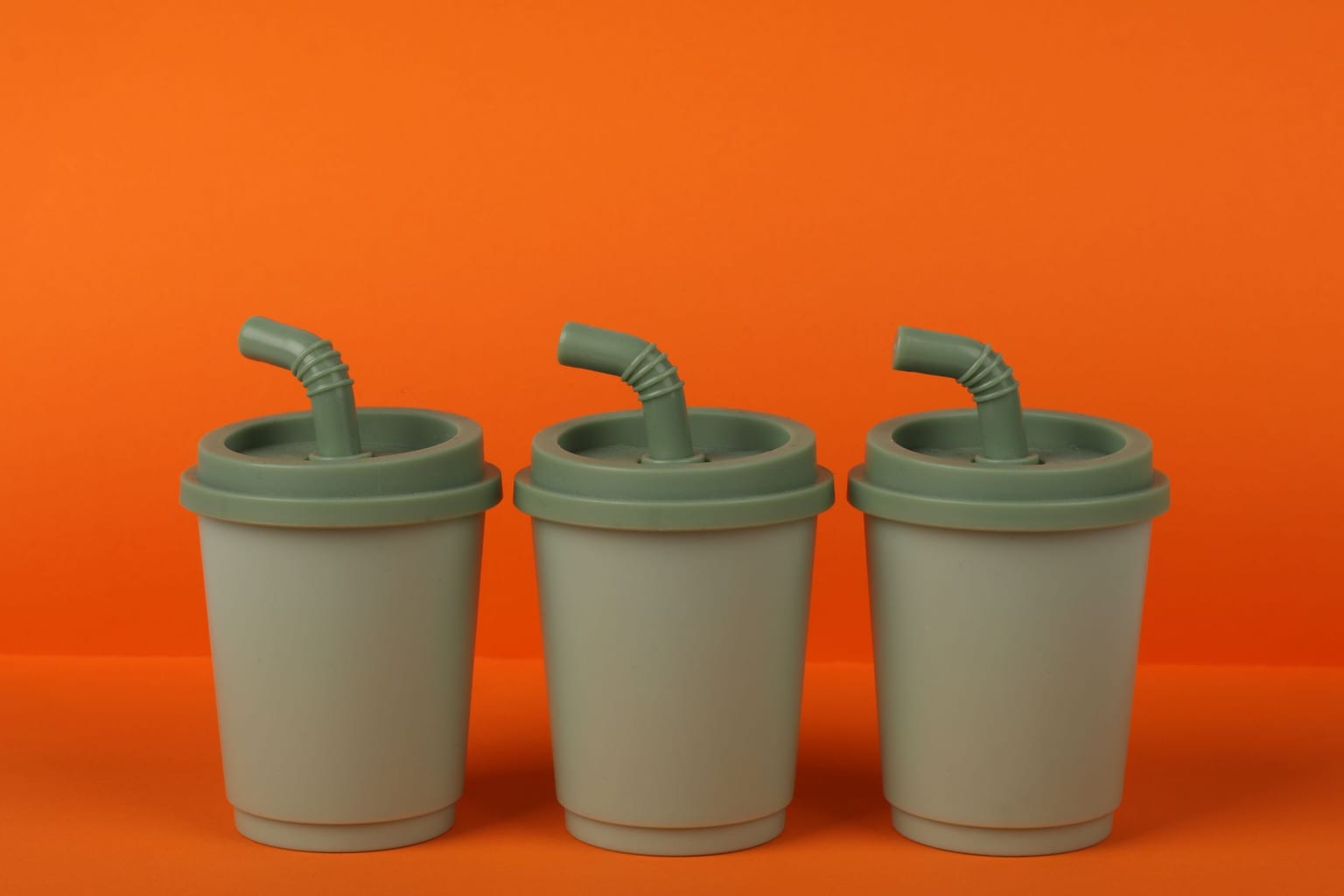
For the sensory chewer who is going to bite no matter what. These Softy Straws are standard-diameter food-grade silicone, sold as safe to bite down on and, in the maker's words, non teeth chipping, which is the whole point: a chewed silicone straw bends and keeps working, while a chewed plastic one leaves a sharp lip. They fit most cups and tumblers, so an older child can keep the cup they like and swap only the straw. The listing says dishwasher safe and includes a cleaning squeegee. Buy the multipack, keep one in the bag and treat a flattened straw as a sign the chewing needs a chew tool too.

Softy Straws Silicone Straws (Chewy, 6-Piece Set)
Best Straw-Teaching Kit for a Stability Chewer: ARK Bear Bottle Kit
For the child who bites because sucking is hard work. ARK's honey bear kit is the straw-drinking trainer speech therapists reach for: you squeeze the bear to send liquid up the straw, a one-way valve keeps it there between sips so the child never has to pull the whole column up again and a Lip Blok on the straw stops the child from biting it or pushing it too far into the mouth. ARK says it was developed by a speech-language pathologist and is made in the USA from food-grade materials, and it ships with two tubing straws. It is a training tool more than an everyday cup, with the goal of a child who no longer needs the squeeze.

ARK Bear Bottle Kit (Straw-Drinking Trainer)
Best Everyday Squeeze Bear for Practice: Special Supplies Honey Bear Straw Cup
For the same stability chewer, on an ordinary Tuesday. The ARK kit above is the therapist's tool; this is the plain squeeze bear for the practice in between, at about a third of the price. It is the same idea with less in it: a squeezable honey bear with a screw-on lid, a silicone seal the listing calls leak-resistant and three long, wide, flexible straws, with no one-way valve and no lip block, so the liquid drops back between sips and the squeeze does the work every time. The see-through body lets a child watch the drink climb, which some find motivating. Buy it for the bag and the grandparents' house, and keep the ARK for the sessions where the valve matters.

Special Supplies Honey Bear Straw Cup (1 Bottle, 3 Straws)
Best Straw-Training Cup After the Bear: ezpz Mini Cup + Straw Training System
For the child who no longer needs the squeeze but still bites a loose straw. ezpz's Mini Cup is a small silicone open cup with a lid and a short straw that stays put, so there is less straw in the mouth to grip and the cup can go on to open-cup practice with the lid off. The maker says it was designed and tested by a pediatric feeding specialist, the same one whose explanation of straw biting opens this guide, and lists it as food-grade silicone free of BPA, BPS, PVC and latex, for nine months and up. It is a practice cup at the table rather than a spill-proof cup for the car, and it is the natural step between the squeeze bear and the open cup at the end of this list.

ezpz Mini Cup + Straw Training System
Best Way to Remove the Straw Altogether: Munchkin Miracle 360
For the child whose chewing is really a straw problem. The Miracle 360 has no spout, no straw and no valve to bite: the rim seals until lips press on it, then the child sips from anywhere around the edge the way they would from a glass, and it closes again when they stop. Munchkin sells it as spoutless to support normal mouth muscle development, which lines up with what feeding specialists want to see, and lists it as BPA-free and dishwasher safe. The sensory feeding tools guide covers it as the spill-proof cup for mealtimes; here it earns its place because it gives the teeth nothing to do.

Munchkin Miracle 360 Spill-Proof Cup
Best Cut-Out Cup for a Head-Tipper: TalkTools Cut Out Cups
For the stability chewer who tips the whole head back to drink. A cut-out, or nosey, cup has a scoop taken out of the rim so the nose clears the cup and the child can finish a drink with the head level and the jaw steady, which is the position speech and feeding therapists want for a safe swallow. TalkTools, a therapy supplier, sells them in a two-pack at several sizes, with the small sizes meant for controlled sips. It is a practice cup for drinks with you at the table rather than a cup for the car, and it pairs well with the open cup below.

TalkTools Cut Out Cups (3 oz, 2-Pack)
Best Open Cup for Sipping With the Lips: ezpz Tiny Cup
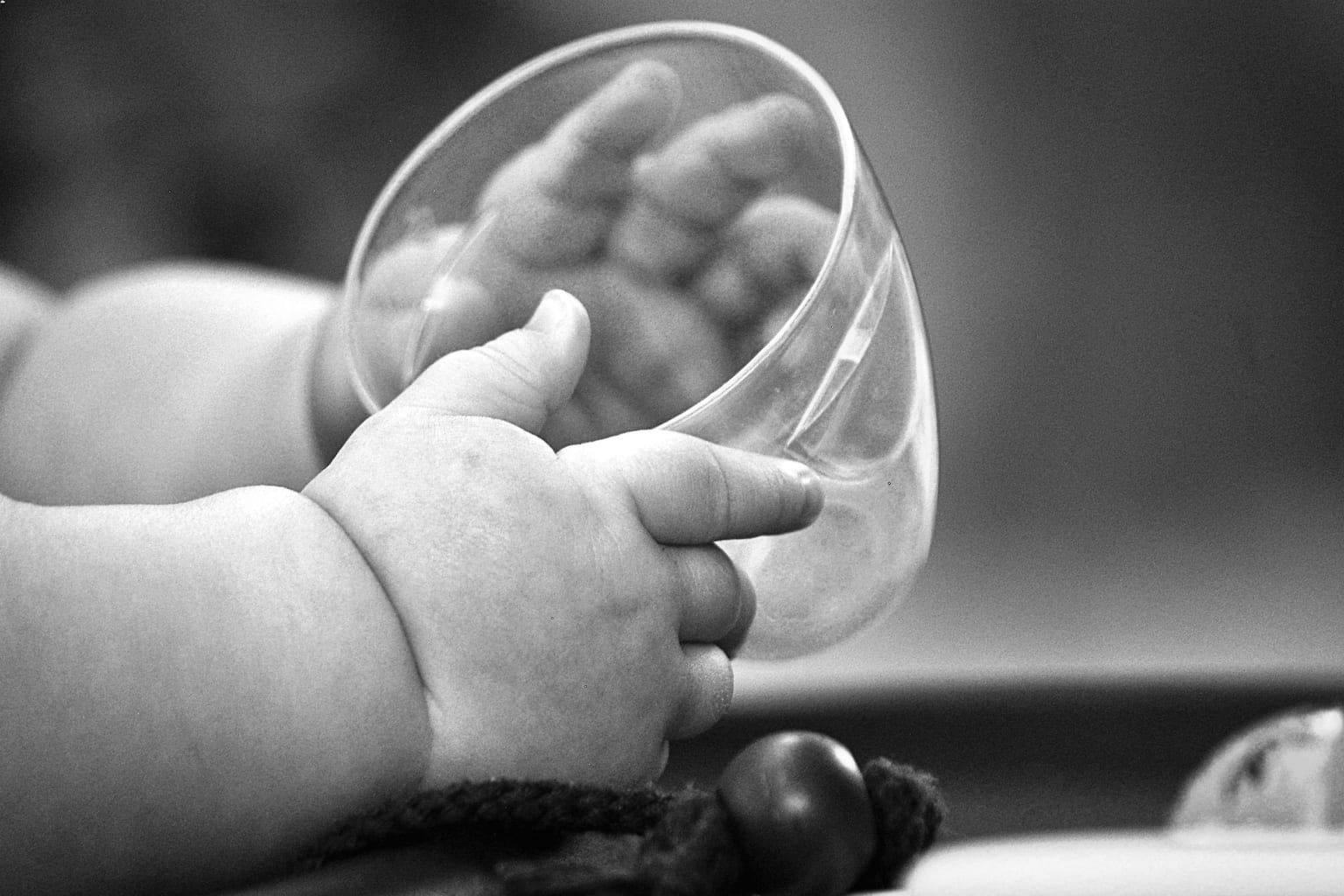
For the child who is ready to drink without a lid at all. ezpz designs with the same feeding specialist whose explanation of straw biting opens this guide, and the Tiny Cup is built for the mouth to do the work: soft silicone that is kind to gums and teeth, a weighted base so it resists tipping and an interior angle the maker says gives an even flow. It is listed as free of BPA, BPS, PVC, latex and phthalates, and as dishwasher safe. It is sized for babies and young toddlers, so for an older child the same open-cup practice works with any small, heavy-bottomed cup; the point is lips on a rim, nothing to bite.

ezpz Tiny Cup (Silicone Training Cup, 2-Pack)
When to Ask an OT or SLP
Straw chewing by itself does not need a referral. It is worth a professional look when it travels with the signs that feeding specialists use, and these are flags rather than a diagnosis. ASHA lists the following for toddlers and school-age children:
- refusing to eat or drink
- coughing or gagging during meals or drinks
- liquid coming out of the mouth or nose
- eating only certain textures, such as only soft or only crunchy food
- pocketing food in the cheeks
Add to that a child who cannot drink from a straw or a cup at an age when peers can, or whose chewing is so constant and intense that no tool satisfies it. ASHA's own advice is to start with your child's doctor; from there, a speech-language pathologist works on the drinking itself, including how well a child can suck from a bottle or drink from a cup, and an occupational therapist covers the sensory processing and the body stability underneath it. If the oral seeking is wider than the cup, the chewables and oral-sensory tools guide and the chew necklace guide cover the safe outlets, and the autism and biting guide covers biting that lands on people.
Where to Go Next
Match the cup to the chewer, not to the word on the box. A stability chewer gets an easier drink and a sensory chewer gets a straw that can take it, with a chew tool that takes the rest. A child whose cup is wrong gets a cup with nothing to bite. If you are not sure which profile you are looking at, the free sensory profile quiz maps your child's seeking and avoiding patterns in a few minutes, and the guide to stimming explains when chewing is simply regulation that deserves a safe outlet rather than a fix.
Products mentioned in this article
Softy Straws Silicone Straws (Chewy, 6-Piece Set)
ARK Bear Bottle Kit (Straw-Drinking Trainer)
Special Supplies Honey Bear Straw Cup (1 Bottle, 3 Straws)
ezpz Mini Cup + Straw Training System
Munchkin Miracle 360 Spill-Proof Cup
TalkTools Cut Out Cups (3 oz, 2-Pack)
ezpz Tiny Cup (Silicone Training Cup, 2-Pack)
Prices and availability are accurate as of the date/time shown and are subject to change. Any price and availability information displayed on Amazon at the time of purchase will apply to the purchase of this product.
Sensory overwhelm shows up differently in every child.
Beacon learns about YOUR child and gives guidance specific to them.
What would Beacon say?
"What sensory strategies actually work for my child?"
Beacon factors in your child's specific sensitivities (sound, light, texture, movement) and current regulation, then builds a sensory plan you can start tonight.
Spectrum Unlocked Editorial Team
Editorial Team
The Spectrum Unlocked editorial team combines lived experience as autism parents with research-backed guidance to create resources families can trust.
Frequently asked questions
- Why does my child bite and chew on straws?
- Feeding specialists describe a few drivers that often overlap. A child who is new to straws, or who has low trunk and jaw stability, bites the straw to hold it still while the suck, swallow and breathe sequence gets coordinated. A child who seeks oral input chews the straw because chewing is calming, the same way they chew collars and pencils. Teething and the bite reflex that goes with chewing food carry over to the straw. And a child who is no longer thirsty often chews the straw instead of putting the cup down. Watch when the chewing happens (first sips or last sips, calm moments or stressed ones) and the pattern usually tells you which one you are looking at.
- Is chewing on straws a sensory thing or a sign of autism?
- It can be a sensory thing, and it is common in autistic kids, but it is not a sign of autism on its own. Occupational therapists describe chewing, mouthing and sucking as ways some children regulate and calm themselves, and that oral seeking shows up in plenty of children with no diagnosis. If your child chews straws and also chews shirts, sleeves, pencils or their own hands, the straw is one more outlet for the same need, and a chew tool meets it more safely than a straw does. If straw chewing is the only thing you have noticed, it is far more likely a stability or teething habit than anything else.
- What cup can my child not bite through?
- No cup is truly bite-proof against a determined chewer, so the honest answer is a cup with the fewest things to bite. A spoutless 360 cup has no spout and no straw, so there is nothing to clamp on. A bite-resistant soft spout cup, such as the Munchkin Click Lock bite-proof line, survives ordinary toddler biting far longer than a standard spout and is the usual next step when a child still needs a spill-proof lid. If your child must have a straw, a thick silicone straw bends under the bite instead of cracking, and a two-pack means a chewed straw never becomes a skipped drink.
- Are there chewable straws that are safe to bite?
- Yes, as long as they are soft silicone rather than hard plastic. The danger with a chewed hard straw is the sharp edge it leaves, not the chewing itself. Food-grade silicone straws are sold as safe to bite down on, and they are the straws to put in a cup a chewer uses. A chew tube is a different product: it is shaped like a straw but it is a chew tool for chewing, not for drinking, so keep the two jobs separate and see the chewables guide for chew tubes.
- Should a child who chews straws use a spoutless 360 cup instead?
- Often, yes. A 360 cup seals until the lips press the rim, so the child drinks the way they would from an open cup but without the spills, and there is no straw or spout to bite. Munchkin's Miracle 360 is sold as spoutless to support normal mouth muscle development, and open-cup drinking is what most feeding specialists want to see once a child can manage it. The trade-off is that a 360 cup gives none of the resistive sucking that some sensory seekers find calming, so a child who chews for input may still want a silicone straw at some drinks.
- Does chewing on straws hurt teeth or speech?
- Occasional straw chewing is not something to panic about. Philips, which makes a deliberately short straw on its Avent cup so a baby sips rather than bites, says in its product FAQ that biting the straw can shift growing teeth, but that is a cup maker's reasoning rather than a dental study, and the concern is for a constant habit, not an occasional chew. The thing speech-language pathologists actually care about is how the child drinks, meaning lip seal, tongue position and a coordinated swallow, which an open or 360 cup practices and a bitten straw does not. If you are worried about teeth, your child's dentist is the right person to ask.
- When should I see a feeding therapist about straw biting?
- Straw biting on its own does not need a therapist. ASHA's list of signs for a feeding or swallowing problem in toddlers and school-age children includes refusing to eat or drink, coughing or gagging during meals, liquid coming out of the mouth, eating only certain textures and pocketing food in the cheeks. If straw chewing comes with any of those, or your child cannot drink from a straw or a cup at an age when peers can, talk to your pediatrician and ask about a feeding evaluation with a speech-language pathologist or an occupational therapist. ASHA's ProFind directory lists certified SLPs by location.